

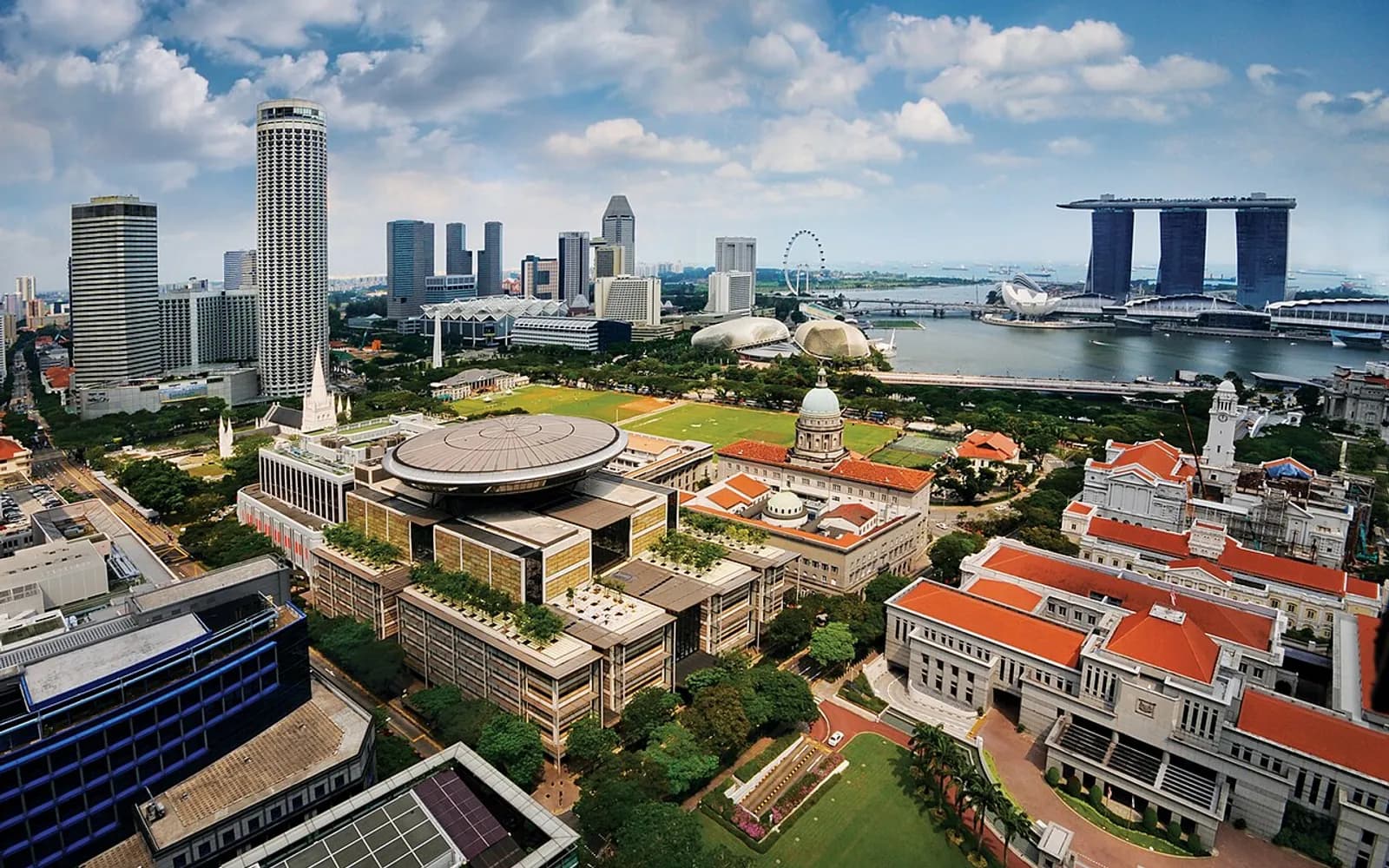
Photo: William Cho, CC BY-SA 2.0, cropped
Things to Do
Heritage & Architecture Guides
Colonial landmarks, shophouse terraces and bold modern buildings: walks that tell Singapore's story.
A Singapore heritage walk is one of the best ways to understand the city. This page collects our guides to self-guided routes past colonial landmarks, shophouse streets, temples and modern buildings.
Pick a route by area, then follow the stops on foot at your own pace. Below the list, you will find the main districts, what to look for and tips for walking in the heat.
Plan it with EatStays: Culture & Heritage and Chinatown Heritage Walk.
New guides are on the way. Browse Things to Do →
Why take a Singapore heritage walk
A Singapore heritage walk shows how a small trading port grew into a modern city. In a short stroll you can pass colonial buildings, Chinese and Hindu temples, a mosque and glass towers. The city centre is compact, and most routes take a morning or an afternoon. Walking is free, and you set your own pace.
Many districts grew up around different communities. Chinatown, Little India and Kampong Glam still keep their own temples, food and shops. Today they are open to everyone, and visitors are welcome.
Colonial landmarks in the Civic District
The Civic District, near the mouth of the Singapore River, holds many buildings from the British colonial period. Start near City Hall MRT station.
- St Andrew's Cathedral is an Anglican cathedral with white walls and a tall spire. It is a working church, so keep noise low.
- National Gallery Singapore fills the former Supreme Court and City Hall buildings. You can admire the outside for free.
- Armenian Church is often described as the oldest church in Singapore. Its small garden is a quiet stop.
- Fort Canning Park is a hill park with old gates, big trees and city views. Under the hill lies The Battlebox, a former British command bunker.
- CHIJMES is a former convent school. Its old chapel and courtyards now host restaurants and events.
Shophouse streets and places of worship
Shophouses are narrow terraced buildings with a shop below and a home above. The covered path in front is called a five-foot way, as it was meant to be about five feet wide. Look for carved details, painted tiles and wooden shutters.
Chinatown
Chinatown has places of worship of several faiths within a short walk. Thian Hock Keng Temple is one of the oldest Chinese temples in Singapore. Sri Mariamman Temple is Singapore's oldest Hindu temple, with a tall carved gateway tower. The Buddha Tooth Relic Temple is a large Buddhist temple nearby. Finish with lunch at Maxwell Food Centre, a hawker centre in the same area.
Kampong Glam and Little India
Kampong Glam is the historic Malay and Muslim quarter. Sultan Mosque, with its golden dome, stands at its heart. Nearby, Kampong Glam & Haji Lane has small shops and colourful murals. In Little India, look for spice shops, flower garland stalls and Hindu temples. Read History of Little India Singapore: Cattle to Culture before you go.
Tiong Bahru and Katong
Tiong Bahru Estate is one of Singapore's oldest public housing estates. Its curved Art Deco blocks date from before the Second World War. Our Tiong Bahru Heritage Walk: A Self-Guided Route covers the main streets. In the east, the Koon Seng Road Shophouses are colourful Peranakan-style terrace houses. Peranakan culture blends Chinese, Malay and other influences. These are private homes, so take photos from the street.
Modern architecture worth a walk
Singapore's newer buildings are just as striking. Marina Bay is the best place to see them on foot.
- The Helix Bridge is a curved steel footbridge inspired by the shape of DNA.
- Esplanade – Theatres on the Bay has two spiky domes. Many people say they look like a durian, a local spiky fruit.
- ArtScience Museum has a curved building often compared to a lotus flower.
- Jewel Changi Airport wraps a glass dome around a tall indoor waterfall.
Tips for walking heritage routes
- Go early or late. The midday heat is strong all year. Plan a museum stop for the hottest hours.
- Dress for places of worship. Cover your shoulders and knees, and wear shoes that slip off easily. See Little India Temple Etiquette: What Visitors Should Know.
- Respect residents. Many shophouses and flats are homes. Keep noise low and do not block doorways.
- Use the shade. See Singapore Areas With Covered Walkways to the MRT.
- Find official trails. The National Heritage Board shares heritage trail guides on Roots.sg.
For more routes, browse our Walking Itineraries topic.
FAQs about Singapore heritage walks
What is the best heritage walk in Singapore for first-time visitors?
The Civic District and Chinatown make a good first route. Both are central and close to MRT stations, and you can link them in one day.
Are heritage walks in Singapore free?
Yes, walking the streets is free. Some museums and sites along the way charge for entry. Some groups also run guided walks, both free and paid.
How long does a heritage walk take?
Most self-guided routes take two to three hours at an easy pace. Add more time for museums or a meal.
Can I visit temples and mosques on a walk?
Yes, most welcome respectful visitors. Dress modestly, remove your shoes where others do, and avoid entering during prayers or services.