
Skip to content
EatStays Singapore
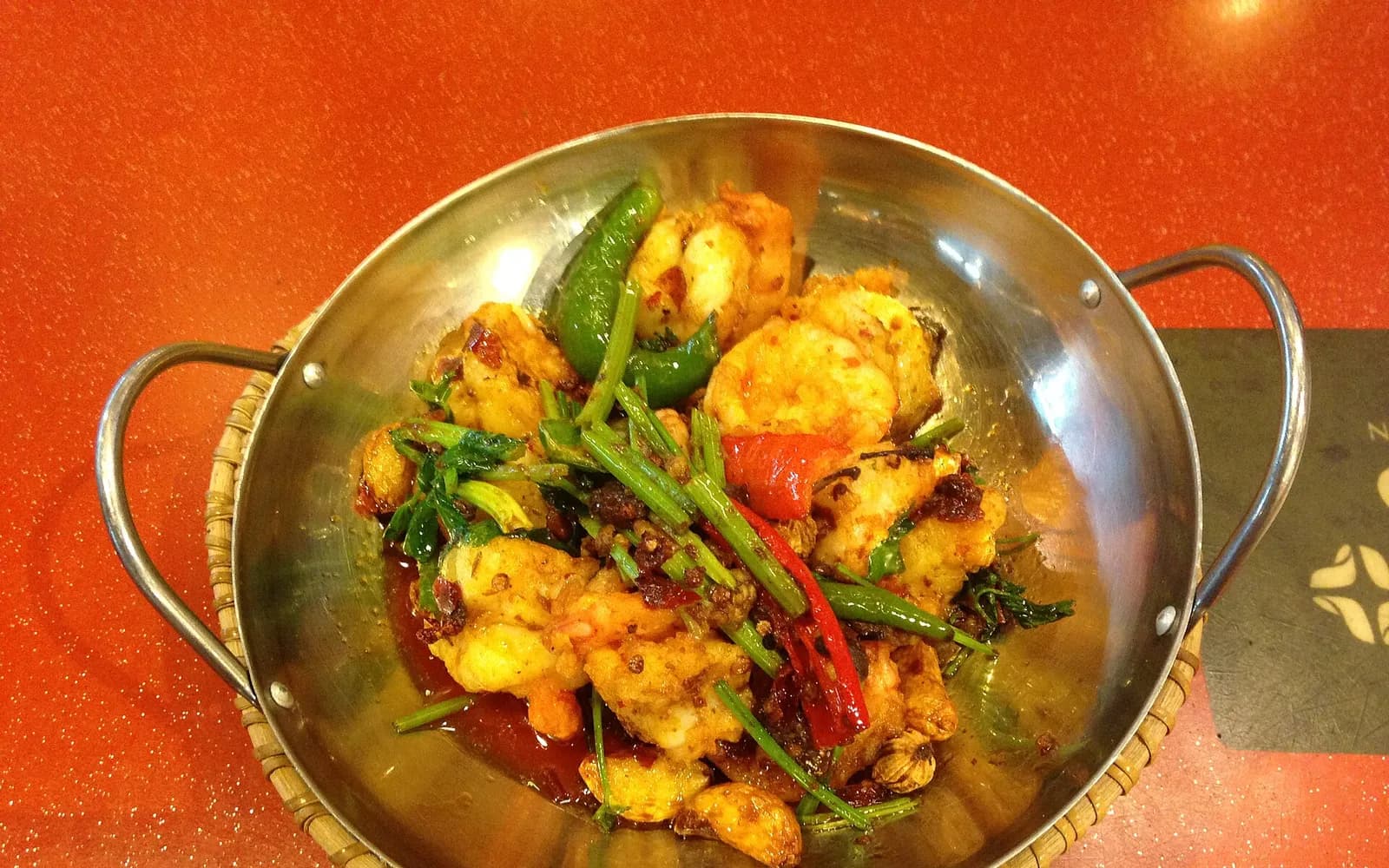
Spicy Sichuan prawns stir-fried with dried chillies, green peppers and spring onion in a small wok, Singapore

Photo: Satdeep Gill, CC BY-SA 4.0, cropped

Cuisine

Sichuan Restaurants in Singapore

There are 3 places on this page, all rated 4.0 or higher on Google, with an average of 4.3.

This page lists the best Sichuan restaurants in Singapore, all rated 4 stars or more on Google. Sichuan food comes from south-west China. It is famous for mala, a mix of numbing Sichuan pepper and hot dried chilli.

Open a listing to see its area, contact details and directions. For other Chinese regional styles, browse all Chinese & Dim Sum restaurants.

Showing 1–3 of 3 restaurants

Per page
  • Illustration for Birds of a Feather, Sichuan in Marina Bay & CBD
    Google rating 4.4 out of 5
    Sichuan

    Birds of a Feather

    Sichuan in Marina Bay & CBD, rated 4.4 on Google.

    Marina Bay & CBD

  • Illustration for Min Jiang, Sichuan & Cantonese in Orchard & River Valley
    Google rating 4.3 out of 5
    Cantonese & Sichuan

    Min Jiang

    Sichuan & Cantonese in Orchard & River Valley, rated 4.3 on Google.

    Orchard & River Valley
  • Illustration for Si Chuan Dou Hua, Sichuan in Marina Bay & CBD
    Google rating 4.3 out of 5
    Sichuan

    Si Chuan Dou Hua

    Sichuan in Marina Bay & CBD, rated 4.3 on Google.

    Marina Bay & CBD

A guide to Sichuan restaurants in Singapore

Sichuan restaurants in Singapore serve the bold food of Sichuan, a province in south-west China. The cooking is known for heat, but it is more than just spicy. Good Sichuan food balances numbing, hot, sour, sweet and savoury flavours across one meal. In Singapore you can eat it in smart dining rooms and in casual stalls across the island.

What makes Sichuan food different?

Mala: numbing and spicy

In Chinese, 'ma' means numbing and 'la' means spicy hot. The numbing comes from Sichuan pepper, the dried husk of a small berry. It makes your lips and tongue tingle. The heat comes from dried chillies and chilli oil. Together they give the mala taste that Sichuan food is known for.

Other flavours to know

  • Doubanjiang: a salty, red paste of fermented broad beans and chilli. It forms the base of many dishes.
  • Fish-fragrant: a sweet, sour and spicy sauce with garlic, ginger and pickled chilli. Despite the name, it usually contains no fish.
  • Hot and sour: dishes sharpened with dark vinegar and white pepper.

Sichuan dishes to order

  • Mapo tofu: soft tofu in a spicy sauce with minced meat, bean paste and Sichuan pepper. Eat it with plain rice.
  • Kung pao chicken: diced chicken stir-fried with dried chillies and peanuts, in a sweet and sour sauce.
  • Dan dan noodles: noodles with a spicy, nutty sauce and minced pork.
  • Water-boiled fish: fish slices poached in a broth topped with chilli oil and Sichuan pepper. It is hotter than it sounds.
  • Chongqing chilli chicken: crisp fried chicken pieces tossed with a pile of dried chillies.
  • Twice-cooked pork: pork belly that is boiled, sliced, then stir-fried with leeks and bean paste.
  • Mala hotpot: a pot of spicy broth on the table for cooking meat and vegetables. Many places offer a split pot with a mild broth on one side.

Sichuan restaurants on this list

  • Birds of a Feather serves Sichuan food in the Marina Bay and CBD area.
  • Si Chuan Dou Hua is also in the Marina Bay and CBD area. Its name refers to douhua, a soft tofu pudding.
  • Min Jiang is in the Orchard and River Valley area. It serves both Sichuan and Cantonese dishes, so it suits groups with different spice levels.

See more places to eat in Marina Bay & CBD. For a milder Chinese meal, try Cantonese restaurants or Dim Sum.

Mala at hawker centres and food courts

Sichuan flavours are also part of everyday eating in Singapore. Look for mala xiang guo stalls at hawker centres and food courts. You pick raw meat, seafood, tofu and vegetables from a display. The stall then stir-fries them with mala sauce. You usually pay by weight, and you choose the spice level. Read How to Order at Hawker Stalls in Singapore before you go.

Tips for eating Sichuan food

  • Ask about heat. Many kitchens can make a dish milder if you ask when you order.
  • Balance the table. Order one or two spicy dishes, plus steamed rice, a green vegetable and a mild soup.
  • Cool down with rice. Plain rice softens the heat between bites.
  • Leave the whole chillies. They add flavour to the dish. Most diners push them to the side.
  • Share dishes. Chinese meals are usually shared. Use the serving spoon to move food to your own bowl.
  • Mention allergies. Peanuts, sesame and shellfish are common. Tell staff before you order.
  • Know rough costs. A casual mala bowl can cost under S$20. A restaurant dinner with shared dishes often costs about S$40 to S$100 per person. Prices change, so check menus first.

FAQs about Sichuan restaurants in Singapore

What does mala mean?

Mala means 'numbing and spicy'. It describes the mix of tingling Sichuan pepper and hot chilli found in many Sichuan dishes.

Is all Sichuan food spicy?

No. Many dishes are mild, such as tea-smoked duck, some soups and stir-fried greens. Ask staff to point out milder choices.

What should I order if I cannot handle much spice?

Try kung pao chicken, which is fairly mild, or ask for a lower spice level on mapo tofu. A split hotpot with one mild broth also works well.

What is the difference between Sichuan and Cantonese food?

Sichuan food is bold, spicy and numbing. Cantonese food, from southern China, is milder and focuses on fresh, natural flavours, as in dim sum and steamed fish.

What is mala xiang guo?

It is a dry mala stir-fry. You choose your own ingredients, the stall cooks them in spicy sauce, and you usually pay by weight.