
Learning how to order at hawker stalls takes about two minutes. You join one stall's queue, then say the dish, the size and any extras. Then you say whether you will eat there or take it away. Most stalls ask you to pay when you order.
This guide walks through each step at the counter, with the words locals use. For table manners and tray rules, see our hawker centre etiquette rules. For more guides like this one, browse our Hawker Centres section.
Before You Queue: Find a Seat and Read the Signboard
At busy times, find a table first. Locals often save a seat by leaving a packet of tissues on it. This is called “chope”, which means to reserve. In a group, one person can keep the seats while the others order.
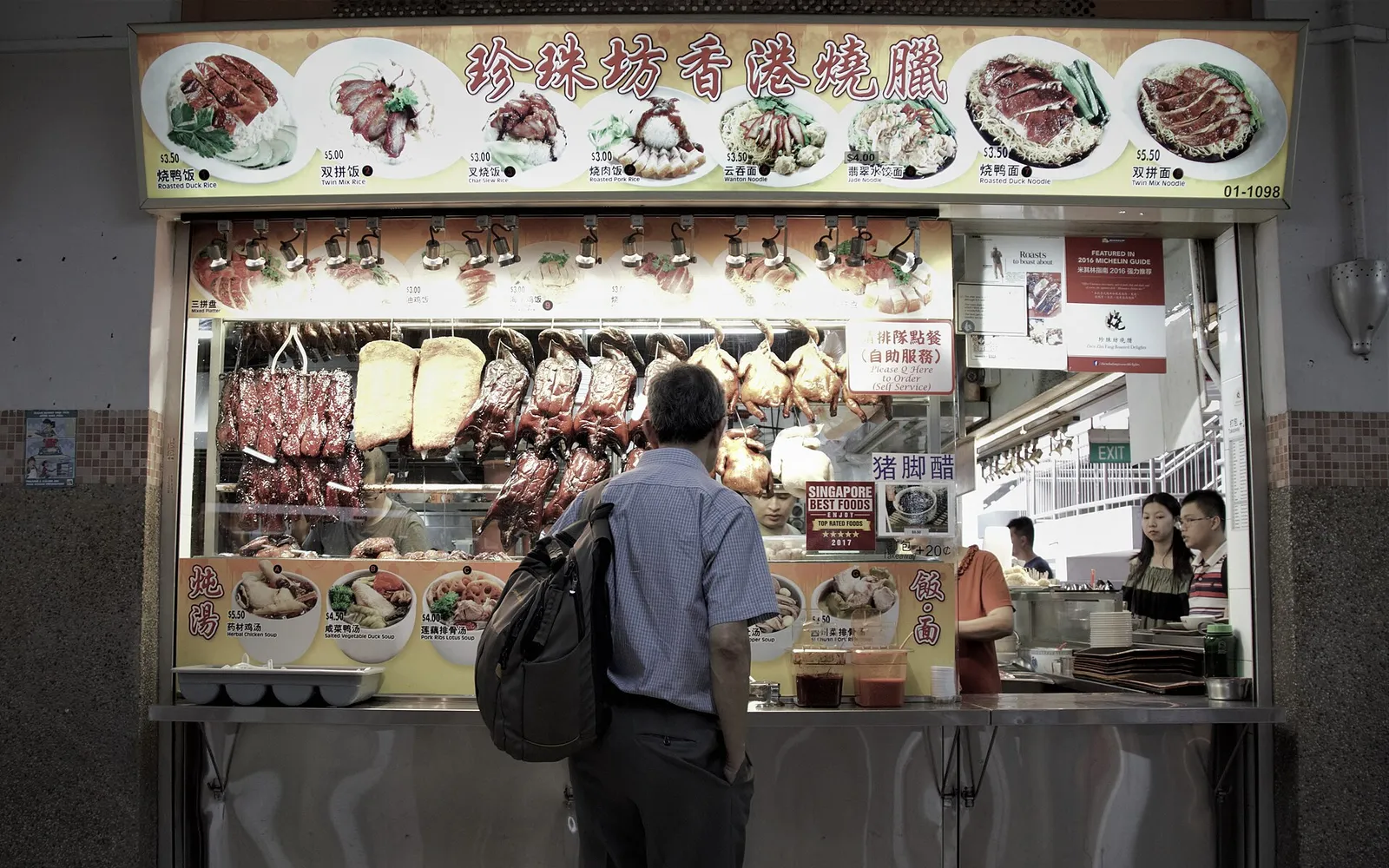
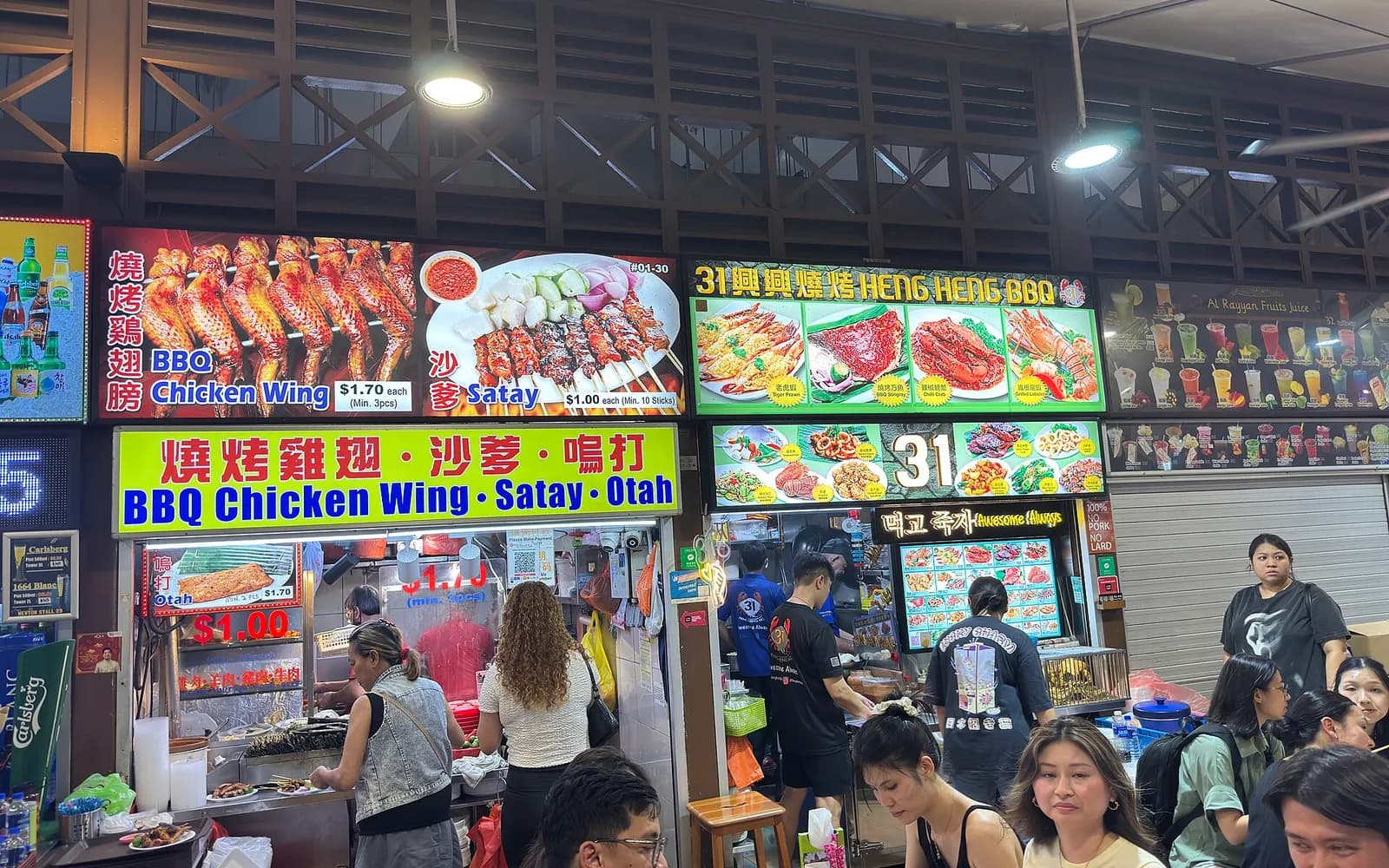
Then look at the signboard above the stall. It shows the dish names, prices and often photos. Many stalls sell only one or two dishes, so the menu is short. Each stall also has a number, such as #01-23, which helps you find it again.
Join the right queue
Each stall has its own queue. At popular stalls, the line can stretch past the stalls next door, so check where it ends. Some stalls have two windows, one to order and pay and one to collect. If you are not sure, ask the person in front of you.
How to Order at Hawker Stalls: What to Say
Hawkers work fast, so have your order ready when you reach the front. Say it in this order: dish, number, size, then extras. For example: “One chicken rice, roasted, small. Takeaway.”
Size and price
Many stalls sell portions by price rather than by name. The board might list one dish at two or three prices. A higher price means more food or more toppings. You can say the price you want, or simply point at the board. Prices change, so check the board on the day.
Add-ons and changes
Most hawkers will adjust a dish if you ask. Common requests include:
- “No chilli” or “more chilli” for noodle and rice dishes.
- “Add egg” or “add meat”, usually for a small extra charge.
- “Dry” or “soup” for noodles that come both ways, such as wanton mee.
- “No spring onion” if you dislike it.
- “Less rice” or “more rice”, which some stalls price differently.
At chicken rice stalls you also choose roasted or steamed chicken. Our guide on how to order chicken rice covers those choices.
Dine-In or Takeaway: “Eat Here” or “Da Bao”
The hawker will often ask “eat here or take away?” Say “eat here” if you are staying. Say “da bao”, which means takeaway, if you are leaving. Takeaway food comes packed in a box or bag.
Some stalls charge a little extra for takeaway boxes. If you bring your own container, hand it over when you order.
Ordering drinks
Drinks come from a separate drinks stall. Coffee and tea have their own short words, such as “kopi” for coffee with condensed milk. Our guide on how to order kopi explains them. At some drinks stalls, staff bring the drinks to your table and you pay then.
Paying and Collecting Your Food
Most stalls ask you to pay when you order. Many now accept QR code payments or cards, but some still take cash only. Carry small notes and coins, as large notes can be hard to change.
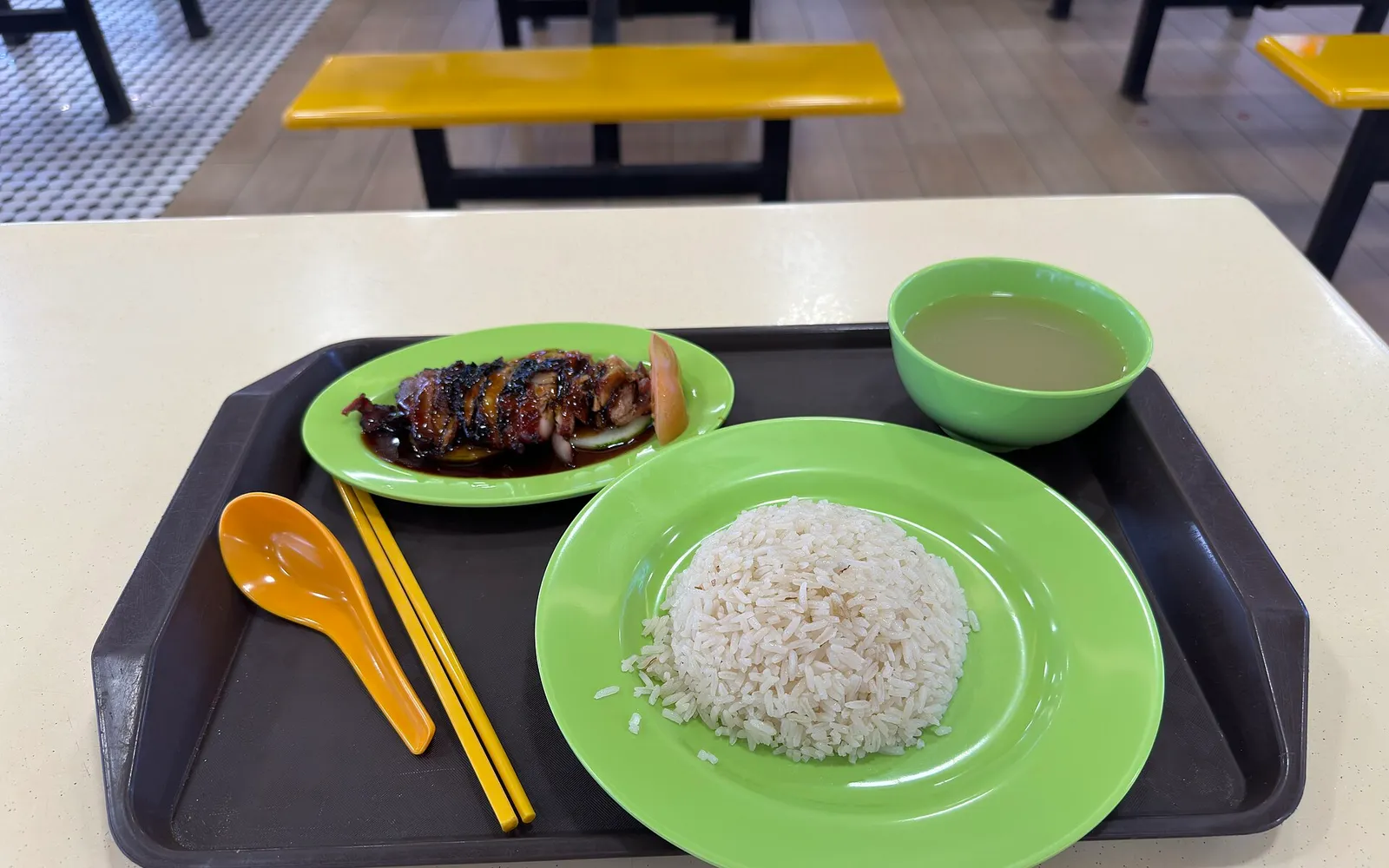
After paying, there are three common ways to get your food:
- Wait at the counter. The hawker hands you the plate, often within a few minutes.
- Take a buzzer or number. Wait for the buzzer or watch the screen, then collect.
- Give your table number. Many tables have numbers, and some hawkers bring the food over. Note your number before you queue.
Pick up spoons, forks or chopsticks and any extra chilli from the counter before you walk away.
Where to Practise Your First Order
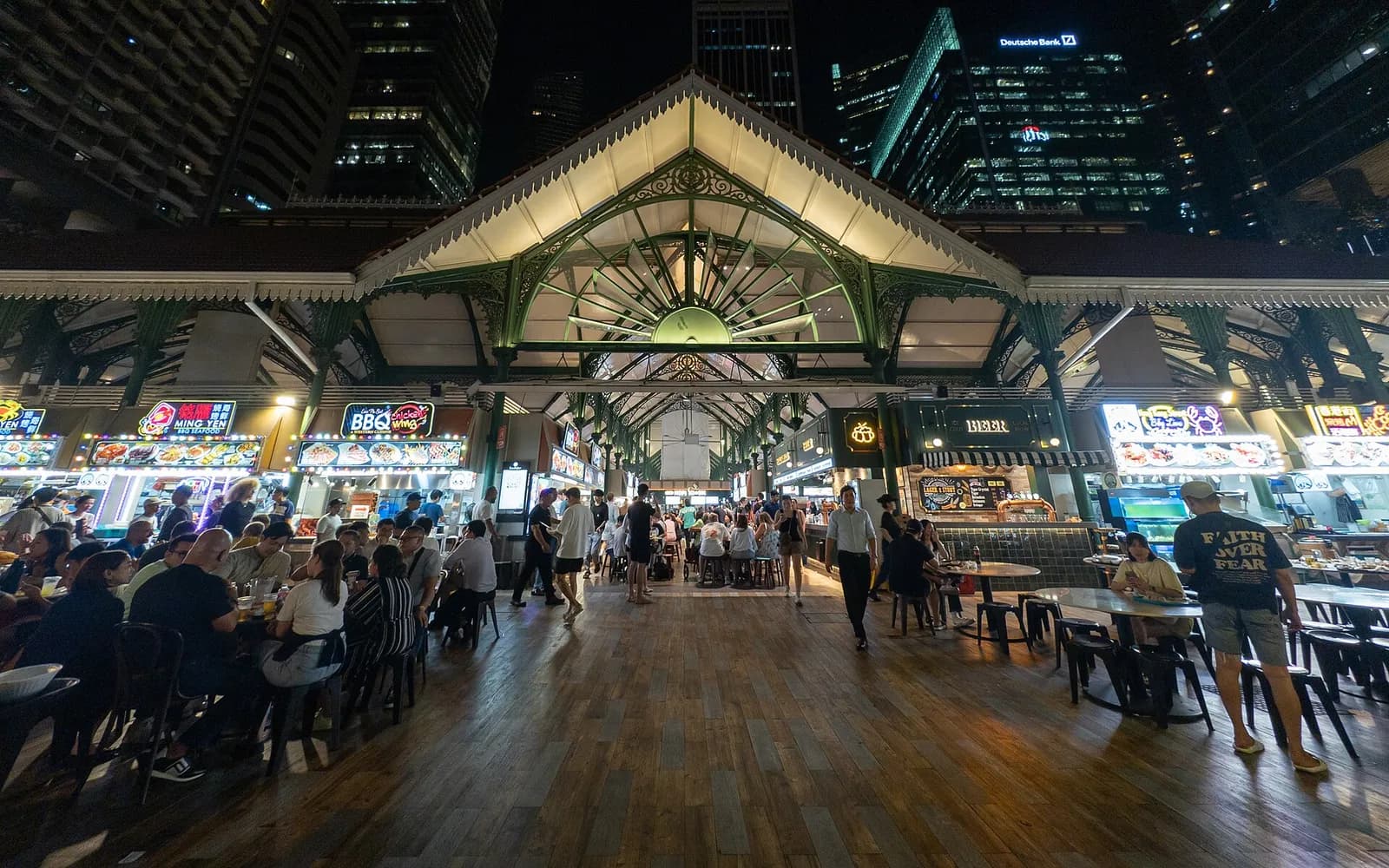
Central hawker centres are good places to start, as many stalls have English signs and photos. Maxwell Food Centre in Chinatown is close to many hotels. Its popular chicken rice stall, Tian Tian Hainanese Chicken Rice, is good practice for a longer queue. Lau Pa Sat in the CBD has a wide mix of stalls under one roof. For more ideas, see our list of the best hawker centres for tourists.
FAQs about Ordering at Hawker Stalls
Do hawkers speak English?
Most hawkers understand simple English, especially in central areas. Pointing at the signboard and holding up fingers for the number also works well.
Do I pay before or after I eat?
Usually before. You pay when you order at the counter. Drinks stalls that bring drinks to your table may ask you to pay when they arrive.
What does “da bao” mean?
“Da bao” means takeaway. Say it when you order, and the hawker will pack your food in a box or bag.
Can I order from several stalls?
Yes. Groups often order from different stalls and share one table. Queue at each stall separately, and agree on your table first.