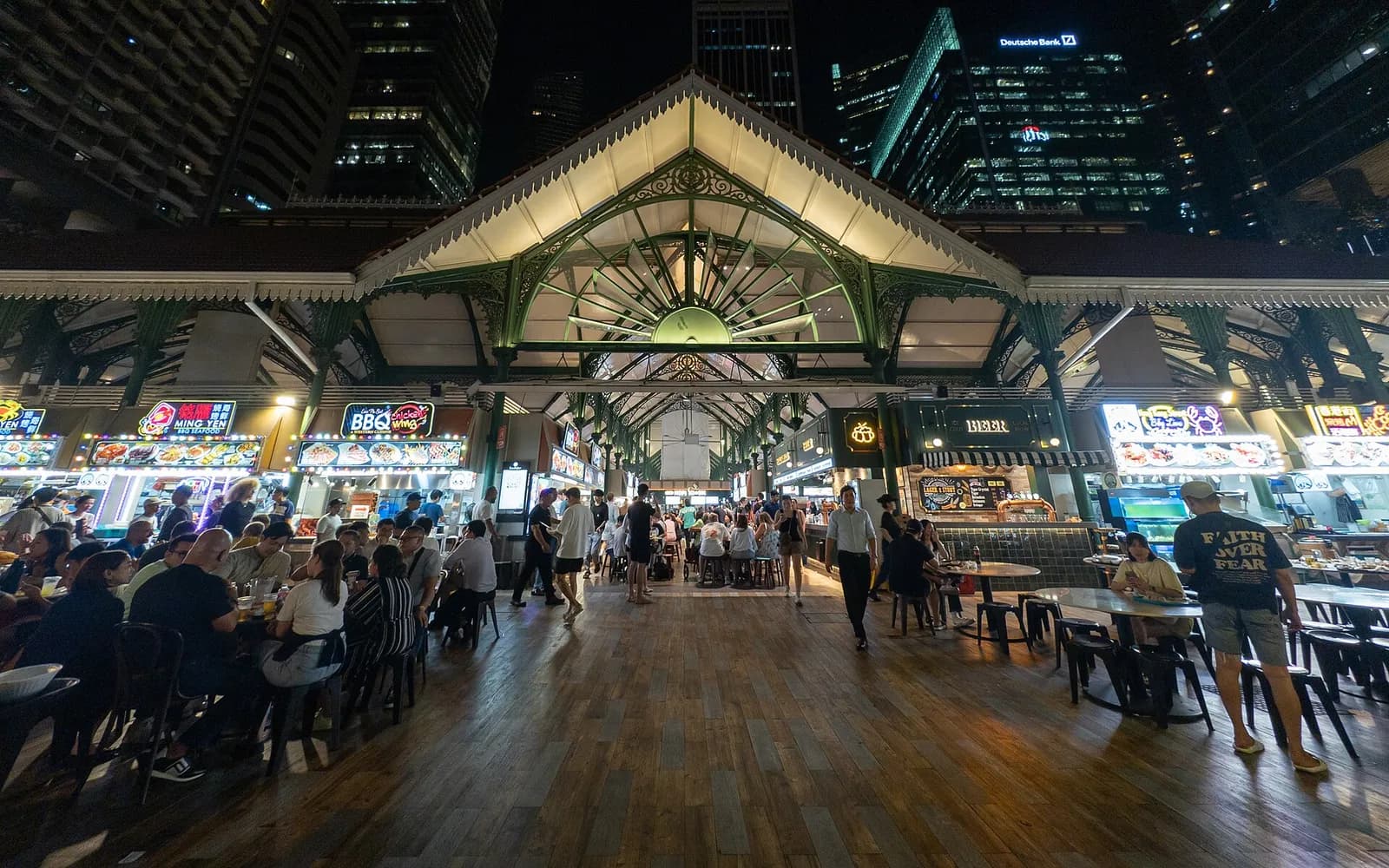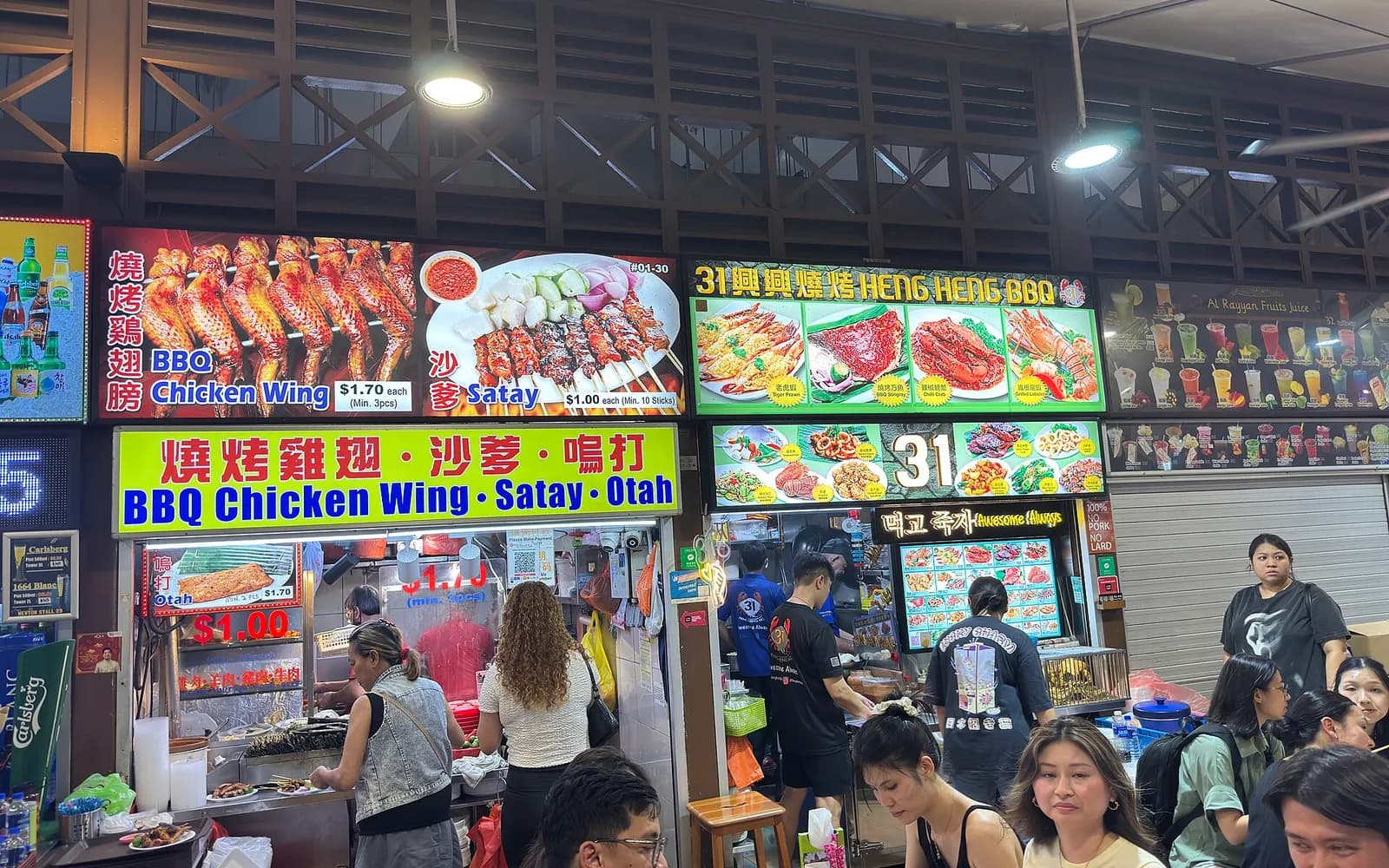


What is a hawker centre? It is a large, open-sided building full of small food stalls, each run by its own cook, with shared tables in the middle. You buy from any stall you like and sit at any free seat. Meals are cheap, quick and freshly cooked.
For many Singaporeans, the hawker centre is where everyday meals happen: breakfast before work, lunch with colleagues and dinner with family. For visitors, it is the easiest way to taste local food.
What Is a Hawker Centre? The Simple Definition
A hawker centre is a group of licensed cooked-food stalls under one roof. Most have dozens of stalls, and the biggest have more than a hundred. Each stall is a separate small business. Many sell just one or two dishes, often cooked the same way for years.
The seating is shared. Anyone can sit at any free seat, and strangers often share a table at busy times. There is no waiter and no bill at the end. You order and pay at each stall, then carry your food to your table.
Where the name comes from
A hawker is a street seller. Before hawker centres, many cooks sold food from carts and stalls along the roadside. From the late 1960s, Singapore moved these street hawkers into purpose-built centres. The new centres had clean water, drains and proper waste disposal. Many of today's centres date from the 1970s and 1980s.
How a Hawker Centre Works
The layout is similar across the island. Stalls line the edges or stand in rows, each with a signboard and a stall number. Drinks come from separate drinks stalls. Tables fill the middle, usually under ceiling fans rather than air-conditioning.
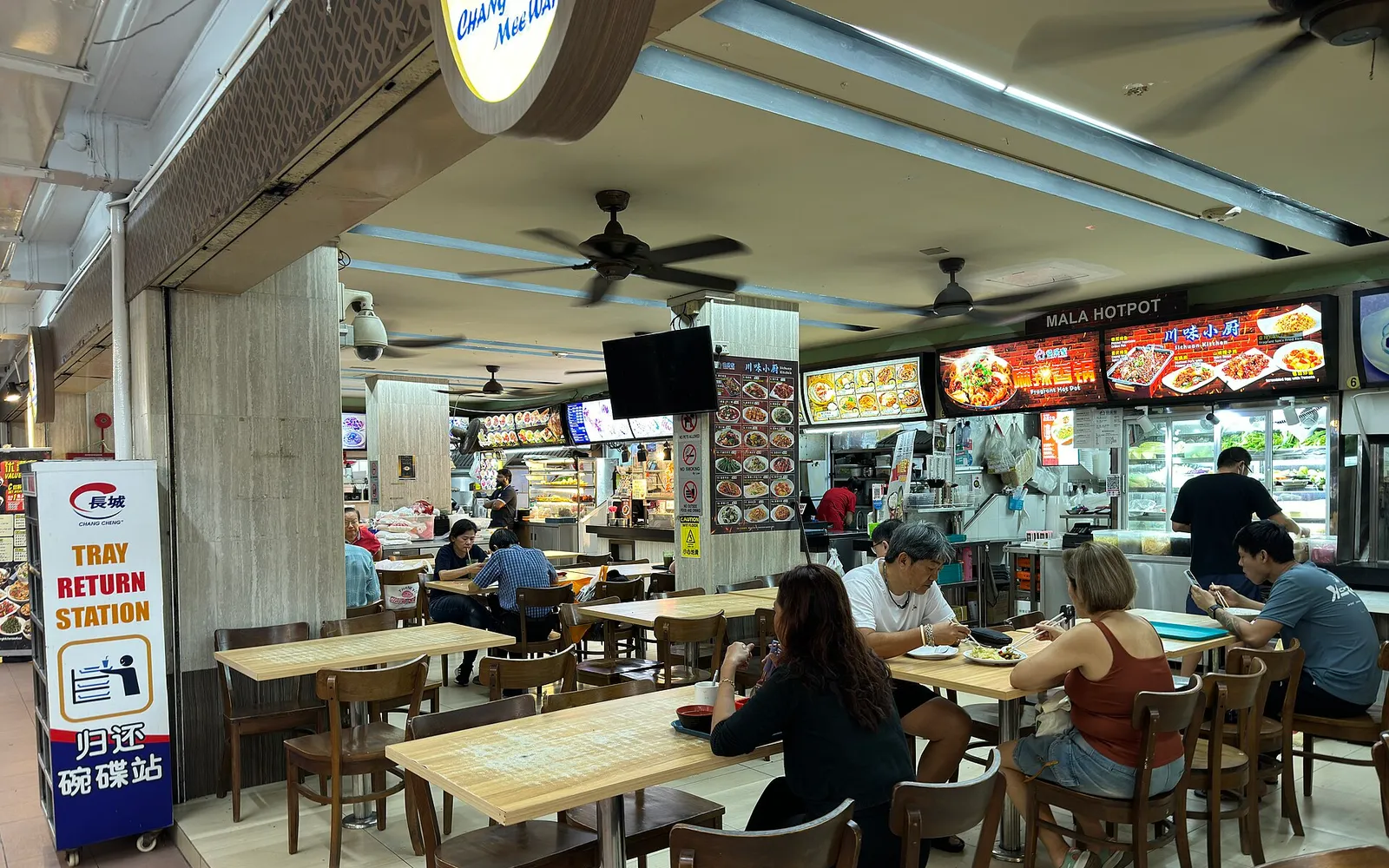
- Ordering: queue at a stall, order, pay and collect your food. Our guide on how to order at hawker stalls covers each step.
- Seating: sit anywhere free. Locals often save seats with a packet of tissues.
- Clearing up: return your tray and plates to the tray return point when you finish. This is a rule at hawker centres, not just good manners.
- Opening times: each stall sets its own hours and rest day. Whole centres also close for a few days every few months for cleaning, so check opening hours before a special trip.
Many centres sit beside or above a wet market, where locals buy fresh fish, meat and vegetables in the morning.
Why Singaporeans Eat There Every Day
Most people in Singapore live in high-rise flats, and eating out is a normal part of daily life. Hawker centres sit close to homes, offices and MRT stations. A meal costs far less than at a restaurant, and food arrives in minutes.
Hawker centres are also shared spaces. People of every age, background and income sit at the same tables. Chinese, Malay, Indian and Peranakan dishes are sold side by side, often in the same row of stalls. In 2020, Singapore's hawker culture was added to UNESCO's Representative List of the Intangible Cultural Heritage of Humanity.
What to Eat at a Hawker Centre
Each centre has its own mix, but some dishes appear almost everywhere:
- Chicken rice: poached or roasted chicken with rice cooked in chicken stock.
- Char kway teow: flat rice noodles fried with sweet dark soy.
- Laksa: noodles in a spicy coconut curry soup.
- Satay: grilled meat skewers with peanut sauce.
- Nasi lemak: coconut rice with sambal, egg and fried anchovies.
For a fuller list of what to point at, see our Hawker Dishes Explained section.
Hawker Centres Worth a First Visit
Central hawker centres are easy to reach and used to visitors:
- Maxwell Food Centre in Chinatown, a compact centre known for its chicken rice stalls.
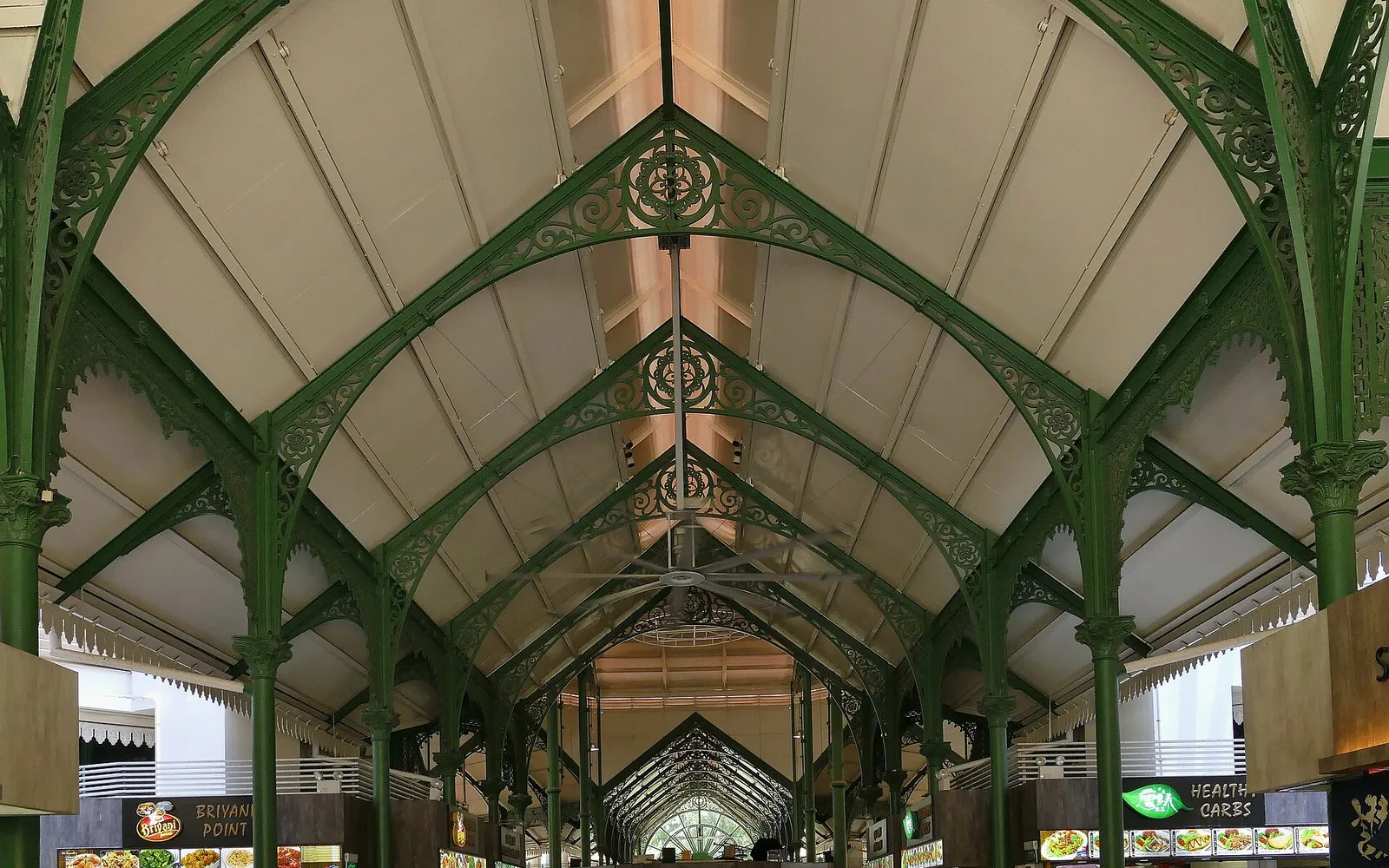
- Lau Pa Sat in the CBD, set in a historic cast-iron market building. Its name means “old market” in Hokkien.
- Tiong Bahru Market, with a wet market downstairs and food stalls upstairs.
- Old Airport Road Food Centre, a large neighbourhood centre east of the city centre.
Our list of the best hawker centres for tourists compares more options. You can also browse every guide in our Hawker Centres section.
FAQs about Hawker Centres
Is hawker centre food safe to eat?
Hawker stalls must be licensed, and they are inspected by the Singapore Food Agency. Food is usually cooked fresh and fast. As anywhere, busy stalls with a quick turnover are a good sign.
Are hawker centres air-conditioned?
Most are not. They are open-sided with ceiling fans. If you want air-conditioning, a mall food court is the closest option. See our comparison of hawker centre vs food court.
Do hawker stalls accept cards?
Some accept cards or QR code payments, but not all. Carry small notes and coins in case a stall is cash only.
Can I sit at any table?
Yes. Seating is shared, so any free seat is yours to use. If a packet of tissues sits on a table, someone has already saved that seat.