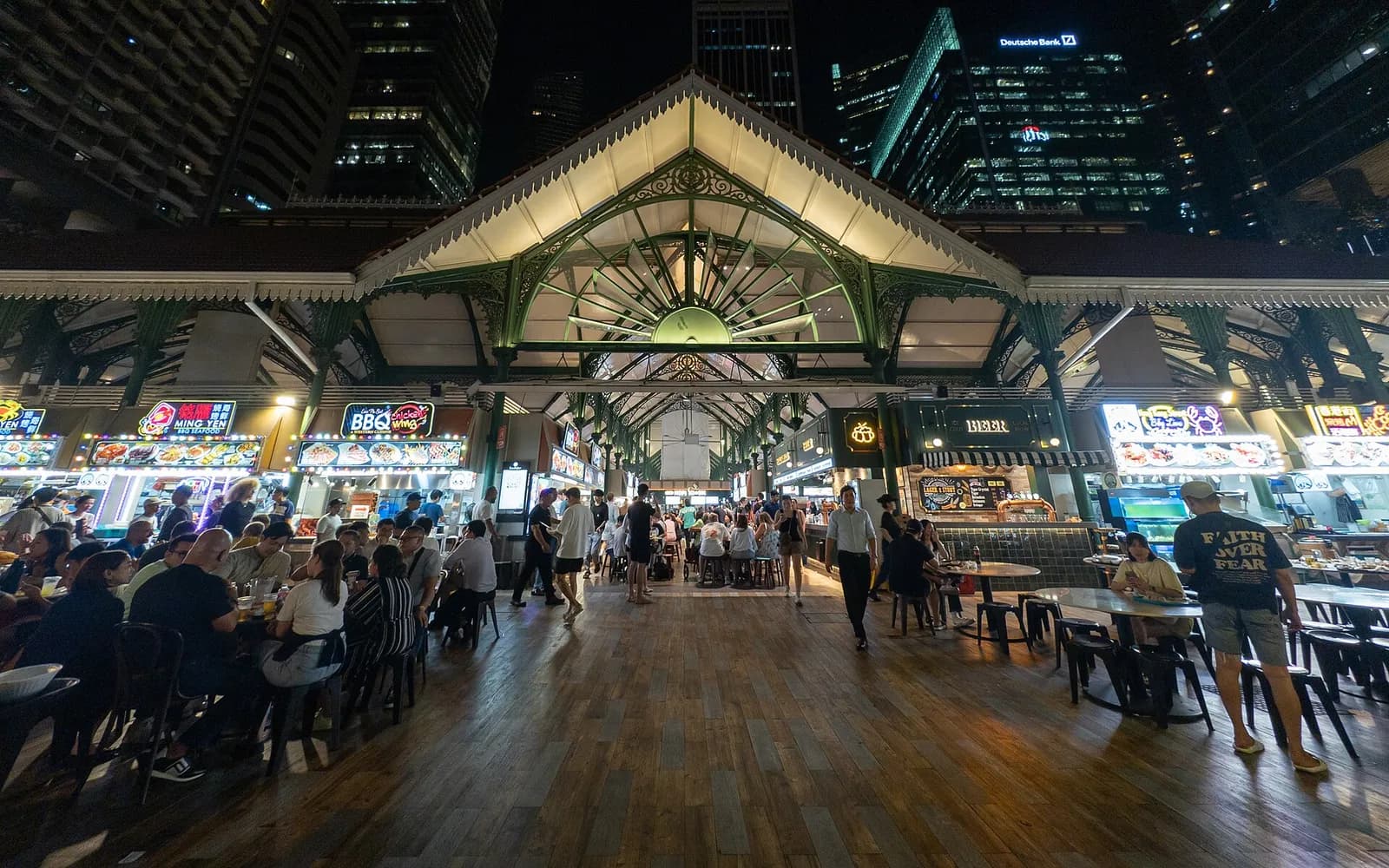

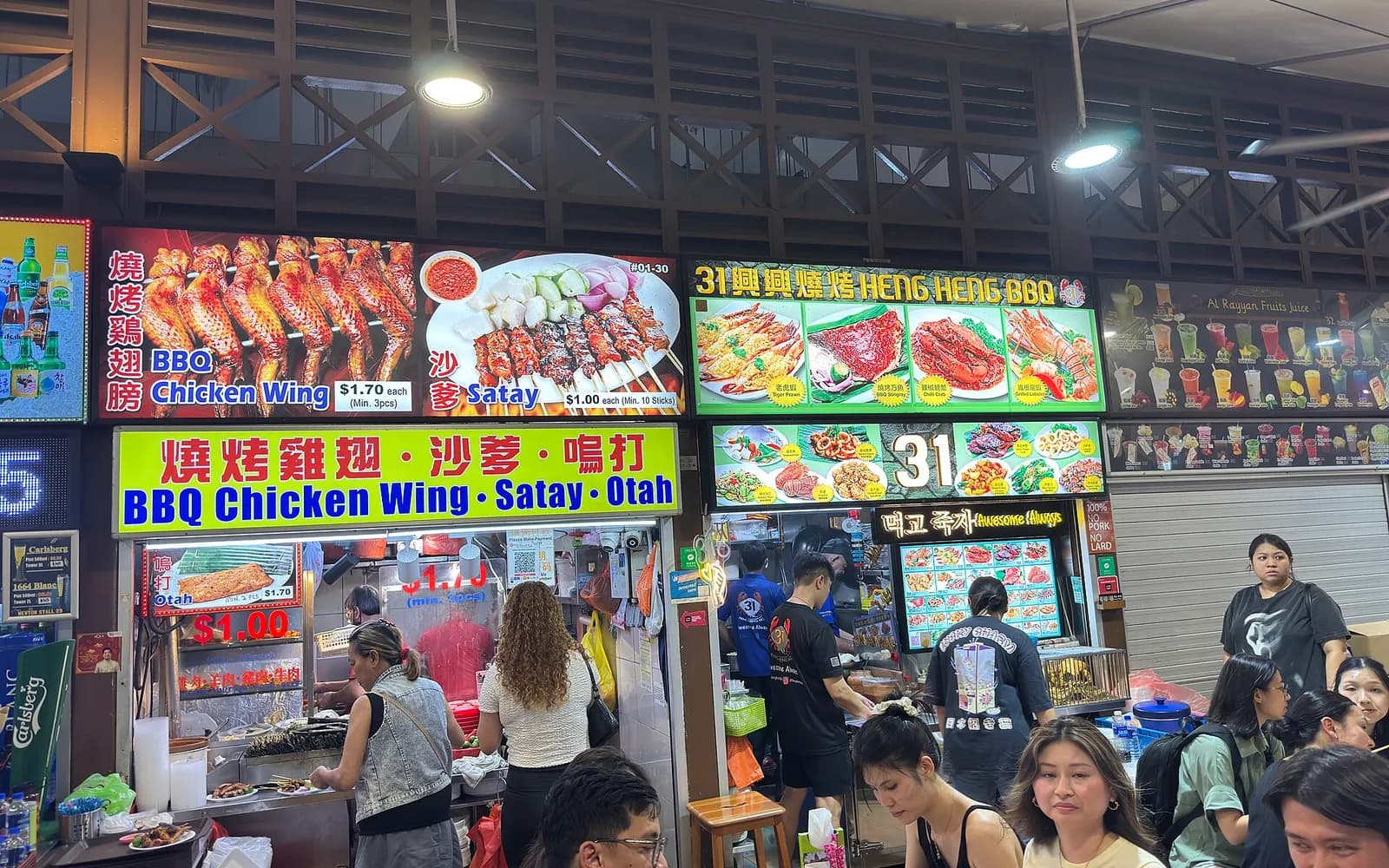
Eating at hawker centres with food allergies is possible, but it takes care. Many dishes contain peanuts, shrimp paste, egg or wheat that you cannot see. Stalls are small, and woks, ladles and oil are often shared between dishes.
The best approach is to know where these ingredients hide, ask clearly at every stall and carry your medicine. It is general advice, not medical advice, so speak to your doctor before you travel.
Why Hawker Food Is Hard to Check
A hawker stall is usually run by one or two people cooking fast. Signboards show dish names and prices, not ingredients. Many stalls buy in ready-made sauces, pastes and noodles, so the cook may not know every ingredient in them.
Cross-contact is the other risk. One wok may cook a prawn dish, then your noodles a minute later. Fried items often share the same oil. For a severe allergy, this matters as much as the recipe itself.
Hidden Ingredients by Allergy
This section covers four common allergies. Each list shows common dishes, not every dish.
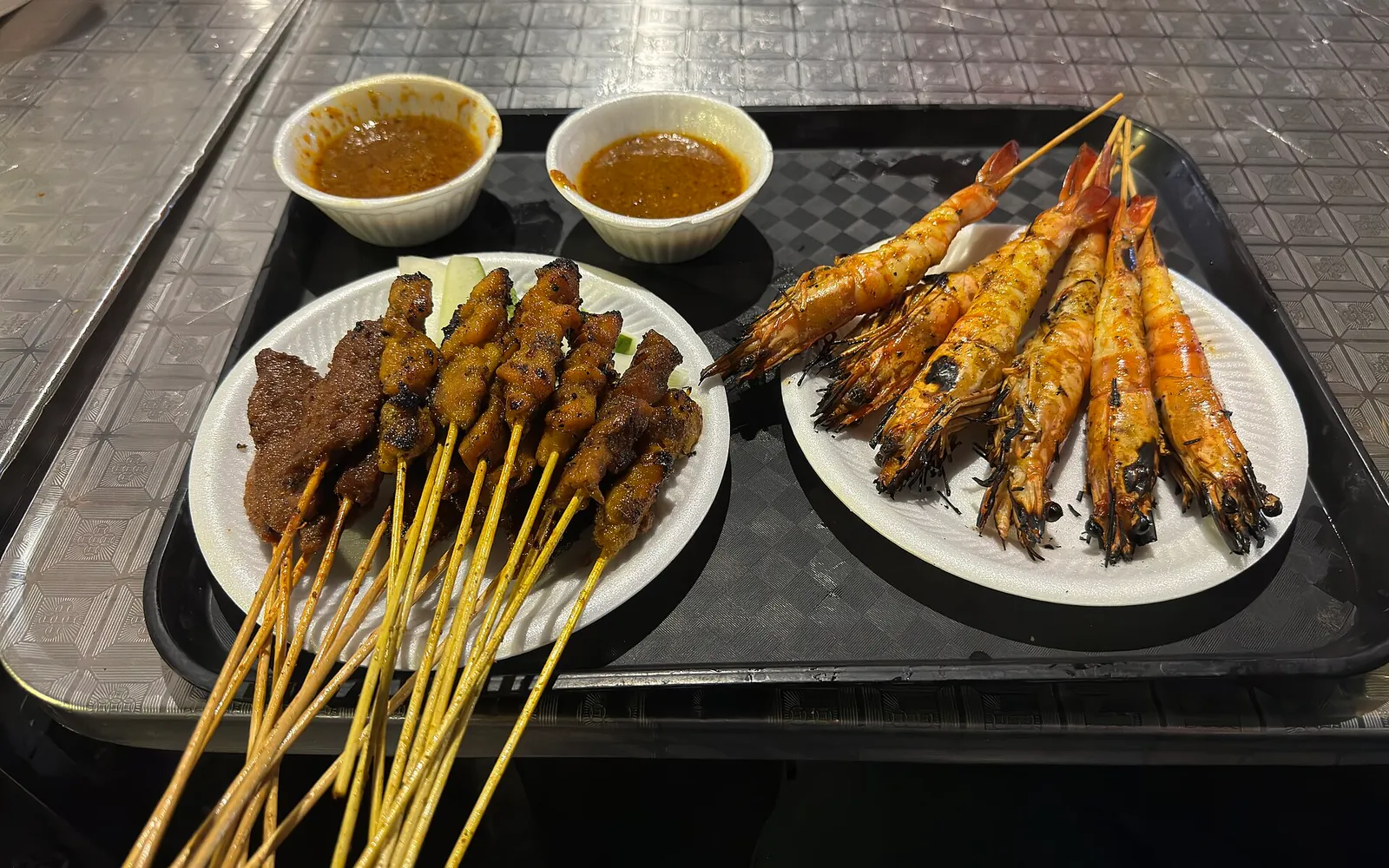
Peanuts
Peanuts are common in hawker food. Look out for:
- Satay, grilled meat skewers served with a peanut sauce.
- Rojak, a fruit and vegetable salad topped with crushed peanuts.
- Nasi lemak, coconut rice usually served with fried peanuts and anchovies.
- Popiah, fresh spring rolls that often include crushed peanuts.
- Some desserts and pancakes with peanut fillings or toppings.
Ask about cooking oil as well, since some stalls may fry in peanut oil.
Shellfish and shrimp paste
Shrimp often hides in sauces. Sambal chilli is often made with belacan, a fermented shrimp paste. Dried shrimp go into many chilli pastes and into laksa. Prawn stock is the base of prawn noodles and Hokkien mee. Oyster sauce is used in many stir-fries.
Laksa and char kway teow often come with cockles, a small clam. Rojak dressing uses a dark prawn paste.
Egg
Egg is easy to miss. Wanton mee and mee pok are made with egg noodles. Fried rice, char kway teow, fried carrot cake and oyster omelette all use egg. Kaya, the sweet coconut jam on kaya toast, is made with eggs too.
Gluten and wheat
Soy sauce and dark soy usually contain wheat, and many oyster sauces do too. These sauces go into most Chinese hawker dishes, even rice noodle dishes. Yellow noodles, wanton noodles and ban mian are wheat noodles. Fritters and other fried snacks often use a wheat batter. Gluten-free cooking is rare at hawker stalls, so coeliac travellers need extra care.
How to Ask Hawkers About Ingredients
Most hawkers in Singapore understand simple English. Keep your question short and specific. Ask before you pay, and wait for a clear answer.
- Name the ingredient: “Is there peanut in this?” is clearer than “Is this safe for me?”
- Ask about the chilli, sauces and oil, not just the main dish.
- Point at each part of the plate if you are unsure.
- If the answer is unclear, choose another stall. A polite “never mind, thank you” is fine.
Avoid the lunch peak if you can, as hawkers have more time to talk when it is quiet. Our guide on how to order at hawker stalls covers the rest of the counter routine.
Using an Allergy Card at the Counter
An allergy card is a small printed card that lists what you cannot eat. Show it at the counter with your order.
Write it in English and Chinese, as some older hawkers read Chinese more easily. Malay helps at Malay stalls. Keep the wording short, for example:
I have a severe peanut allergy. I cannot eat peanuts, peanut sauce or peanut oil. Please tell me if this dish has peanuts. 我对花生严重过敏。
Ask a trusted source, such as your hotel front desk, to check the translation. Print a few copies, and keep a photo of the card on your phone.
Lower-Risk Choices and Being Prepared
No hawker dish can be called allergen-free, but some choices give you more control:
- Cooked-to-order dishes can be changed, such as fried rice made without egg. Curries and sauces made in big batches cannot.
- Simple dishes with few parts are easier to check than mixed noodle dishes.
- Sauces on the side: ask for chilli and sauces separately so you can leave them out.
- Bigger centres give you more stalls to choose from if one answer is unclear. Lau Pa Sat and Maxwell Food Centre both have a wide range.
New to hawker food? Start with our plain guide to hawker centres and the rest of our Hawker Centres section.
FAQs about Hawker Centres and Food Allergies
Is satay sauce made with peanuts?
Yes. The sauce served with satay is peanut-based. Some marinades may contain peanuts too, so ask the stall, and skip satay if your allergy is severe.
Does sambal contain shrimp?
Often, yes. Many sambal recipes use belacan, a fermented shrimp paste, or dried shrimp. Ask before you add any chilli.
Can I find gluten-free food at a hawker centre?
It is hard, because soy sauce with wheat is used widely. Plain rice with simple sides is easier, but cross-contact is still likely.