


Hawker centres are where Singapore eats. Office workers, families and taxi drivers all share the same plastic tables, and a great meal costs only a few dollars. The food is easy to love, but the system can confuse first-time visitors. This guide to hawker centre etiquette explains, in plain terms, how to find a seat, order, pay and clean up, so you can relax and enjoy your meal.
New to Singapore food? Start with our guide to the dishes to try first, then come back here before your first hawker meal.
What is a hawker centre?
A hawker centre is a large, open-sided food court with dozens of small stalls. Each stall usually cooks one or two dishes, often from a family recipe. You buy from as many stalls as you like and eat at shared tables in the middle. Most centres also have a wet market or shops nearby, and many stay open from breakfast until late evening.
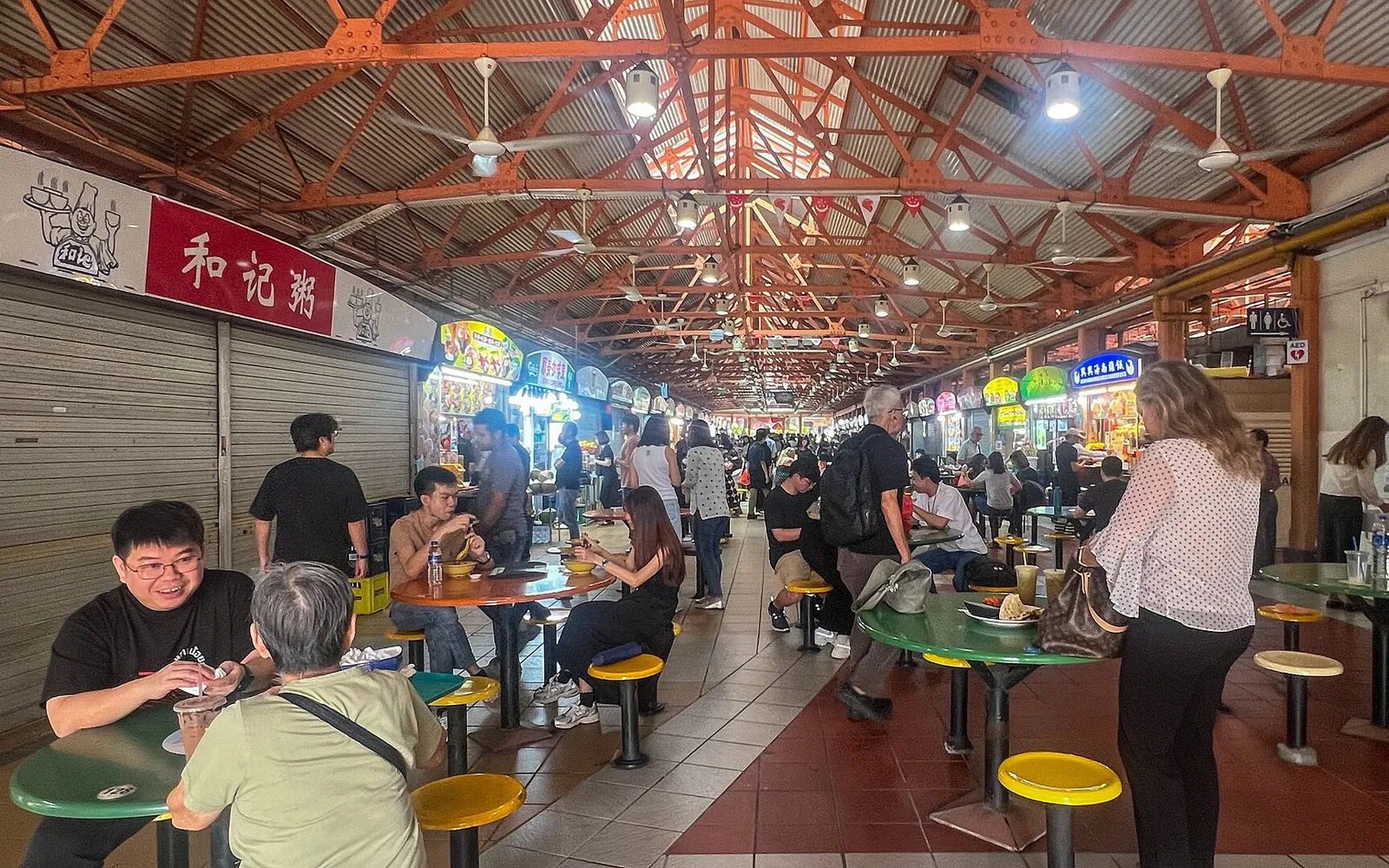
Some of the best known are Maxwell Food Centre in Chinatown, Lau Pa Sat in the business district and Newton Food Centre near Orchard Road.
The 9 rules of hawker centre etiquette
1. Find a seat before you order
At busy times, find a free table first, then go and order. If you are in a group, one person can keep the seats while the others queue. Your food may be brought to your table, so it helps to know where you are sitting.
2. "Chope" your seat with a tissue packet
Locals reserve a seat by leaving a packet of tissues on the table. This is called "choping". If you see tissues, umbrellas or a name card on a seat, that seat is taken, so look for another one. Never use your phone or bag to chope a seat.
3. Share tables
Sharing is normal, especially at lunch. If a table has empty seats, simply ask "Is anyone sitting here?" and sit down if the answer is no. Nobody will expect you to chat.
4. Queue at the stall and order clearly
Join the queue, tell the stall owner what you want and pay. Some stalls ask for your table number, which is painted on every table. Others give you a buzzer or ask you to wait and collect your food.
5. Bring cash, but look for QR codes
Many stalls still take cash only, although more now accept QR payments such as PayNow. Carry small notes and coins in Singapore dollars, because stall owners may not have change for large notes early in the day.
6. Buy drinks from the drinks stall
Food stalls rarely sell drinks. Look for the drinks stall, which sells local coffee (kopi), tea (teh), fresh lime juice and sugar cane juice. Many drinks stalls also collect cups and glasses later.
7. Eat and move on at peak hours
The lunch rush, from about 12pm to 1.30pm, is the busiest time. Office workers have short breaks, so do not keep a table long after you finish eating. Outside peak hours, nobody minds if you stay a little longer.
8. Return your tray and dishes
Returning your tray and used dishes to the tray return points is required at hawker centres, and repeat offenders can be fined. Look for separate return points for halal and non-halal crockery, and use the right one.
9. Be patient with queues
A long queue usually means good food. Famous stalls can have waits of 20 minutes or more, and some sell out by mid-afternoon. If you are short on time, try a stall with a shorter queue nearby. It is often just as good.
How to order at a hawker stall
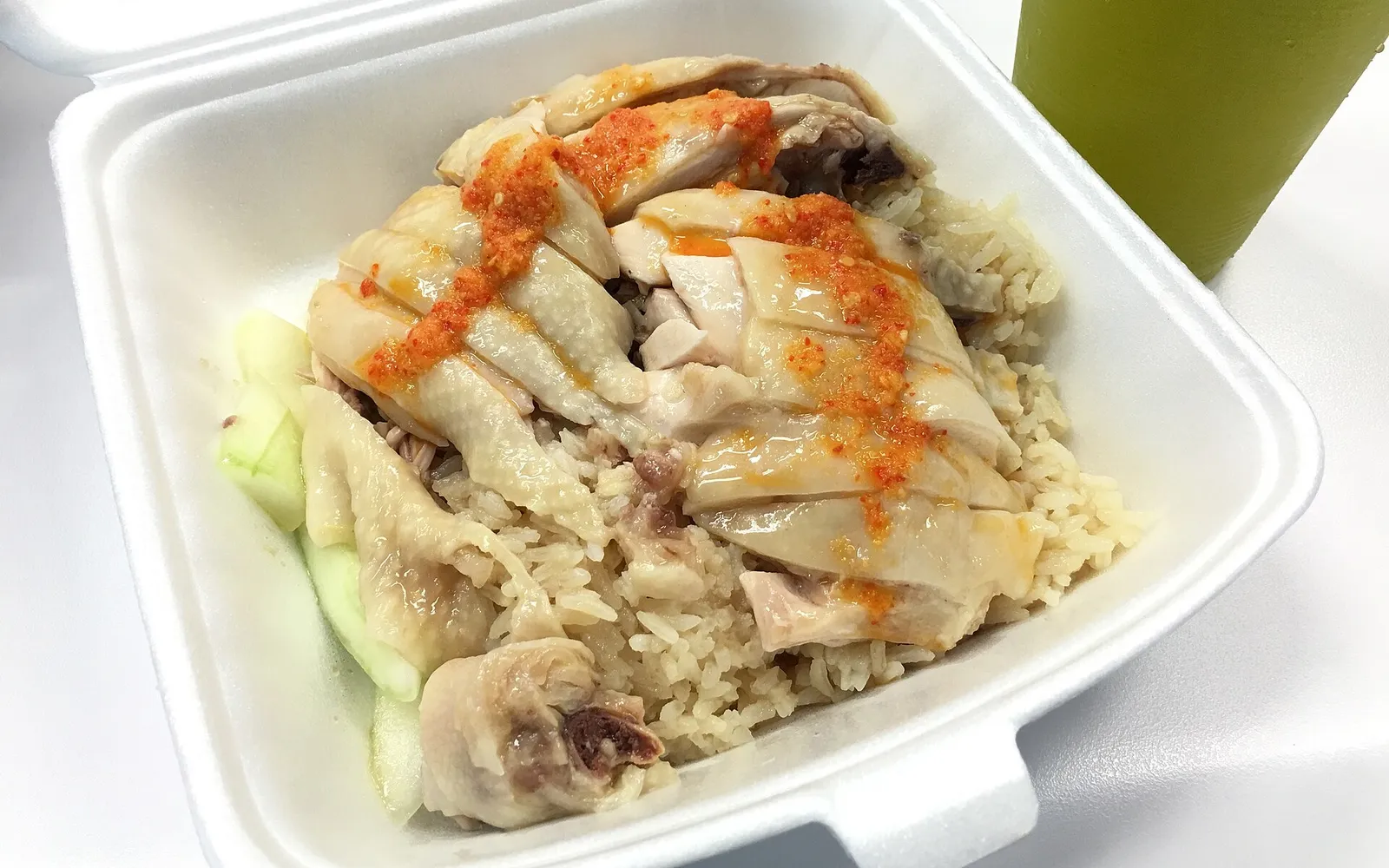
Keep your order short and clear. At a chicken rice stall, for example, you might say "One chicken rice, roasted, small". Say "takeaway" or "da bao" if you want to take it with you. If you do not eat spicy food, ask for "no chilli". Stall owners are busy, so pointing at the photos on the stall sign is perfectly fine too.
For drinks, local coffee has its own language. "Kopi" comes with condensed milk, "kopi O" is black with sugar and "kopi C" uses evaporated milk. Add "peng" for iced.
Where to practise your hawker centre etiquette
For a first visit, choose a centre that is easy to reach and full of choice:
- Maxwell Food Centre: compact and central, and home to Tian Tian Hainanese Chicken Rice.
- Lau Pa Sat: a historic market building in the business district, with satay grills on the street outside in the evening.
- Old Airport Road Food Centre: one of the largest, with a mostly local crowd.
- Tiong Bahru Market: a wet market downstairs and a busy food centre upstairs.
See all our hawker favourites or read our guide to the best hawker centres in Singapore.
FAQs about hawker centre etiquette
What does "chope" mean in Singapore?
To chope means to reserve a seat, usually by leaving a packet of tissues on the table. If a seat has tissues on it, treat it as taken.
Do I have to return my tray at a hawker centre?
Yes. Returning trays and used dishes is required at hawker centres in Singapore, and people who repeatedly leave them on the table can be fined.
Can I pay by card at hawker centres?
Some stalls accept cards or QR payments, but many are cash only. Carry small notes and coins so you are never stuck.
Is it rude to share a table with strangers?
No. Sharing tables is normal at hawker centres. Ask if a seat is free, sit down and enjoy your meal.
When are hawker centres least busy?
Mid-morning and mid-afternoon are the quietest times. Avoid the lunch rush from about 12pm to 1.30pm on weekdays if you want an easy seat.
Find more food tips in our hawker centre guides.


