

Google rating 4.1 out of 5
Singaporean
Geylang Lor 29 Fried Hokkien Mee
Hokkien mee in Katong & Joo Chiat, rated 4.1 on Google.
Katong & Joo Chiat
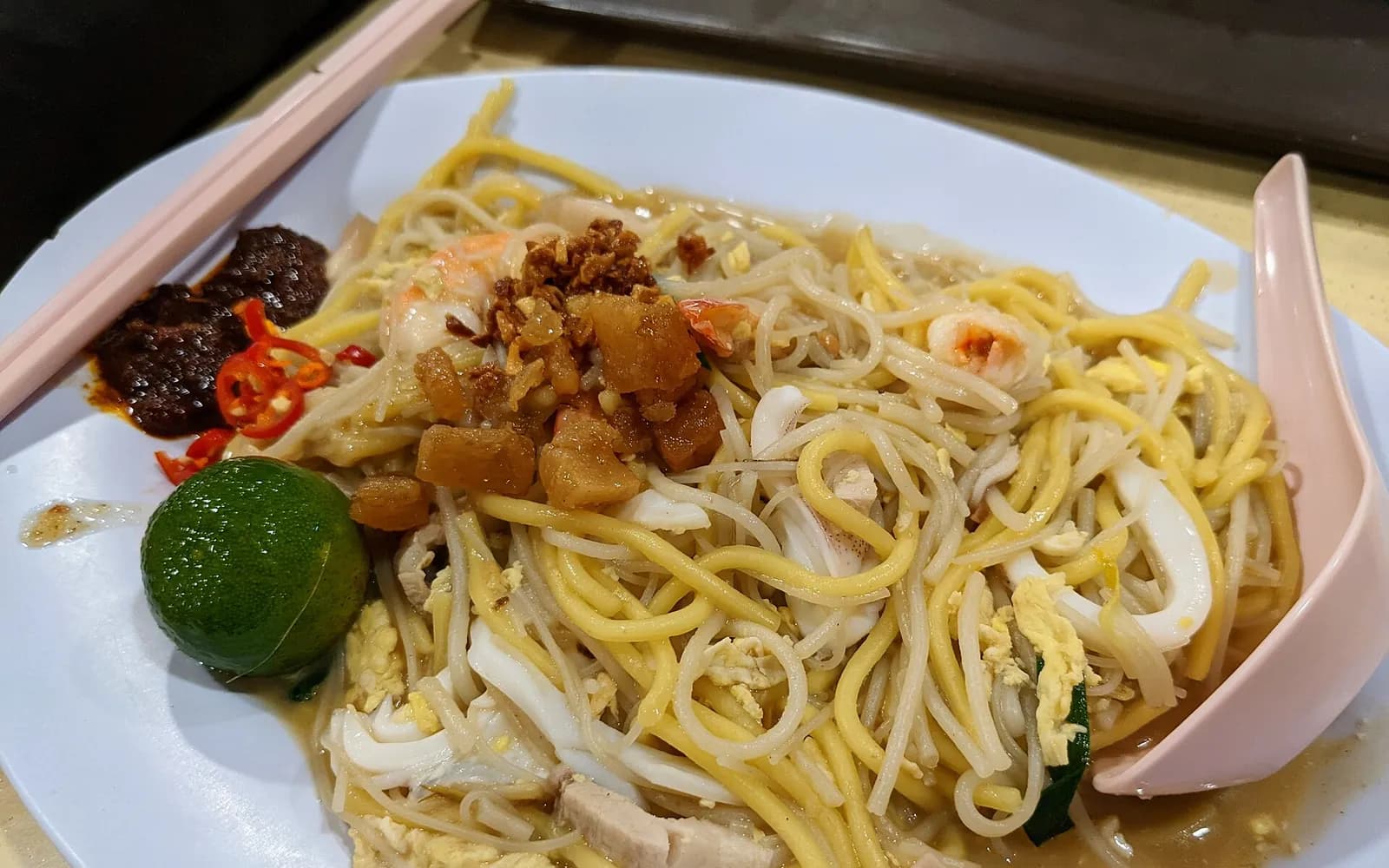
Photo: Jpatokal, CC BY-SA 4.0, cropped
Must-try dishes
There are 2 places on this page, all rated 4.0 or higher on Google, with an average of 4.0.
This page lists top places for Hokkien mee in Singapore, all rated 4.0 or higher on Google. The dish is yellow noodles and rice noodles fried in a rich prawn stock with prawns, squid and egg. It comes with lime and sambal chilli on the side.
Tap a place for its address, contact details and directions. Browse more stalls on our Hawker Favourites list.
Showing 1–2 of 2 restaurants
Hokkien mee in Katong & Joo Chiat, rated 4.1 on Google.
Katong & Joo Chiat
Hokkien mee in Geylang & Paya Lebar, rated 4.0 on Google.
Geylang & Paya Lebar
Hokkien mee in Singapore is a plate of fried noodles cooked in a seafood stock. It is one of the best-loved hawker dishes on the island. Mee means noodles. Hokkien refers to a Chinese community with roots in Fujian province, and to its language. This guide explains what is on the plate, how to order and where to try it.
The cook fries yellow egg noodles and thick rice noodles together in a large wok. Egg goes in first, then prawns, squid and noodles. A rich stock made from prawn heads and pork bones is added bit by bit. The noodles soak it up and turn soft and full of flavour.
The plate comes with a small local lime, called calamansi, and a spoon of sambal. Sambal is a chilli paste. Squeeze the lime over the noodles and mix in as much sambal as you like.
Styles vary from stall to stall. Some cook the noodles until they are wet and saucy. Others keep them drier, with a smoky taste from the wok. Some stalls cook over charcoal, and a few serve the noodles on a leaf. Neither style is wrong, so try more than one.
The name can confuse visitors from Malaysia. In Kuala Lumpur, Hokkien mee means thick noodles fried in dark soy sauce. In Penang, the name refers to a prawn noodle soup. In Singapore, that soup is called prawn noodles, and you can find it on our Prawn Noodles page. If you like wok-fried noodles, also try Char Kway Teow, a sweeter dish of flat rice noodles.
Both places on this page are in the east of the island. Geylang Lor 29 Fried Hokkien Mee is a hawker favourite in the Katong & Joo Chiat area. Nam Sing Hokkien Fried Mee is in the Geylang & Paya Lebar area.
The two areas sit next to each other, so you can plan a food trip that covers both. Old Airport Road Food Centre, a large hawker centre with many stalls, is in the same part of town. In Katong, you can add a bowl of 328 Katong Laksa or walk past the Koon Seng Road Shophouses. See more on our Katong & Joo Chiat and Geylang & Paya Lebar pages.
It is savoury and rich, with a strong taste of prawns. The lime adds a fresh, sour note, and the sambal adds heat.
The noodles are not spicy. The heat comes from the sambal on the side, so you control it.
Not in Singapore. Here, Hokkien mee is a plate of fried noodles. Prawn noodles are a separate dish, served in soup or dry with soup on the side.
It is popular at lunch, dinner and as a late-night meal. Opening times differ a lot between stalls, so check before you go.