

 Getting Around
· 3 min read
How to Use the MRT in Singapore: A Tourist Guide
Paying, planning routes, fares and the rules to know before you ride Singapore's MRT.
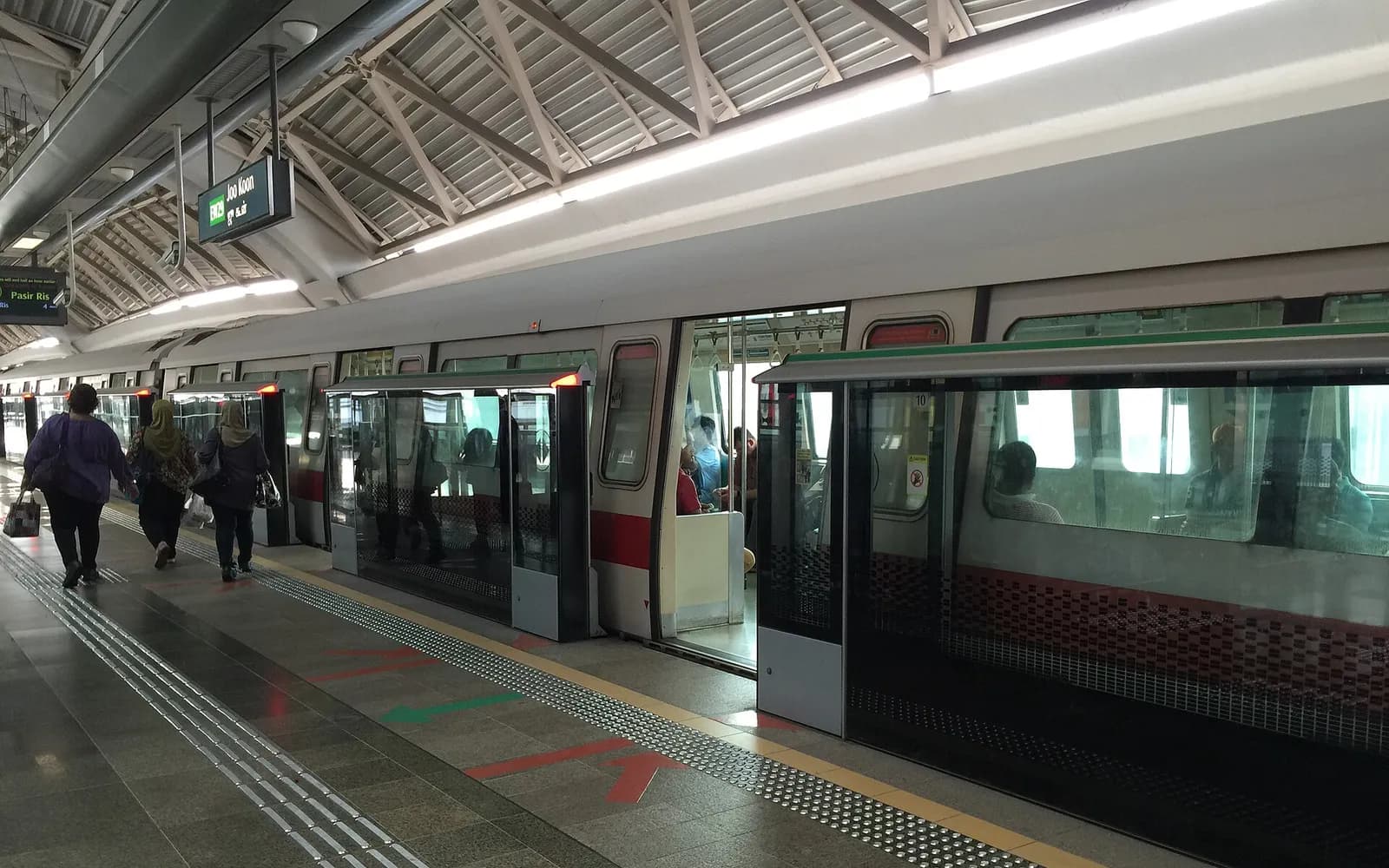
Photo: StormFire2016, CC BY-SA 4.0, cropped
Travel Tips
Singapore's transport is easy once you know the basics: MRT, buses, taxis and apps explained.
Getting around Singapore is simple once you know the basics. The list below starts with our guide to the MRT, the city's metro. Under the list, you will find how buses, taxis, ride-hailing apps, walking routes and boats fit together, with rough costs and tips. Use it to choose the quickest and easiest way between sights.
Showing 1–1 of 1 guides
Getting Around· 3 min read
Paying, planning routes, fares and the rules to know before you ride Singapore's MRT.
Getting around Singapore is easy, cheap and safe. The island is small, and public transport reaches almost every corner. The MRT, Singapore's metro, is the backbone of the system, and buses fill in the gaps. Taxis and ride-hailing cars are widely used for short hops, late nights and trips with luggage.
One card or phone covers both trains and buses. You can tap a contactless bank card or a phone wallet at the gates. You can also buy a stored-value travel card, such as an EZ-Link card, at convenience stores and station ticket offices.
Trains are clean, frequent and air-conditioned. Signs, maps and announcements are in English. Each line has its own colour and letter code. The main lines for visitors are:
Tap in at the gate when you enter and tap out when you leave. The fare depends on distance. Most trips cost roughly S$1 to S$3, and prices change from time to time. Use the same card or phone for the whole journey, or you may pay more. Trains run from early morning until around midnight, not through the night.
For a step-by-step guide, read How to Use the MRT in Singapore: A Tourist Guide.
Public buses reach places the MRT does not, such as some beaches, parks and quieter neighbourhoods. They take the same cards and phone payments as the MRT. Tap when you board and again when you get off. If you forget to tap out, you may pay the highest fare for that route. Bus stops show the route numbers, and maps apps show arrival times. Many buses are double-deckers, and the front of the top deck gives a good view of the city.
Taxis are metered. You can hail one on the street in many areas, or join the queue at a taxi stand. In the city centre, taxis usually pick up only at taxi stands, so look for the signs. Extra charges apply at peak hours, late at night, for airport pick-ups and for some city-centre trips. Road tolls may be added too.
Ride-hailing apps, such as Grab and Gojek, are widely used. You see the fare before you book, and you can pay by card in the app. Prices rise when demand is high, for example during heavy rain.
Central Singapore is good for walking, especially around Marina Bay, the Singapore River and Chinatown. The heat is the main challenge, so walk in the morning or evening. Covered walkways link many MRT stations to nearby buildings. Singapore Areas With Covered Walkways to the MRT shows where they help most. For one of the busiest areas, see How to Get to Marina Bay by MRT, Bus and Taxi.
Cycling is popular on park connectors, which are paths that link parks across the island. East Coast Park is a favourite, with bike rental along the seafront.
Boats are a fun way to see parts of the city:
Yes. Most contactless Visa and Mastercard cards work at the gates, as do phone wallets. Your bank may charge a fee for foreign transactions.
Yes. The Singapore Tourist Pass gives unlimited rides on standard buses and trains for a set number of days. For short stays, a contactless bank card is often just as easy.
No. Trains stop around midnight and start again early in the morning. Late at night, take a taxi or a ride-hailing car.
Usually, yes. It can be harder at peak hours and in heavy rain, when booking through an app helps.