

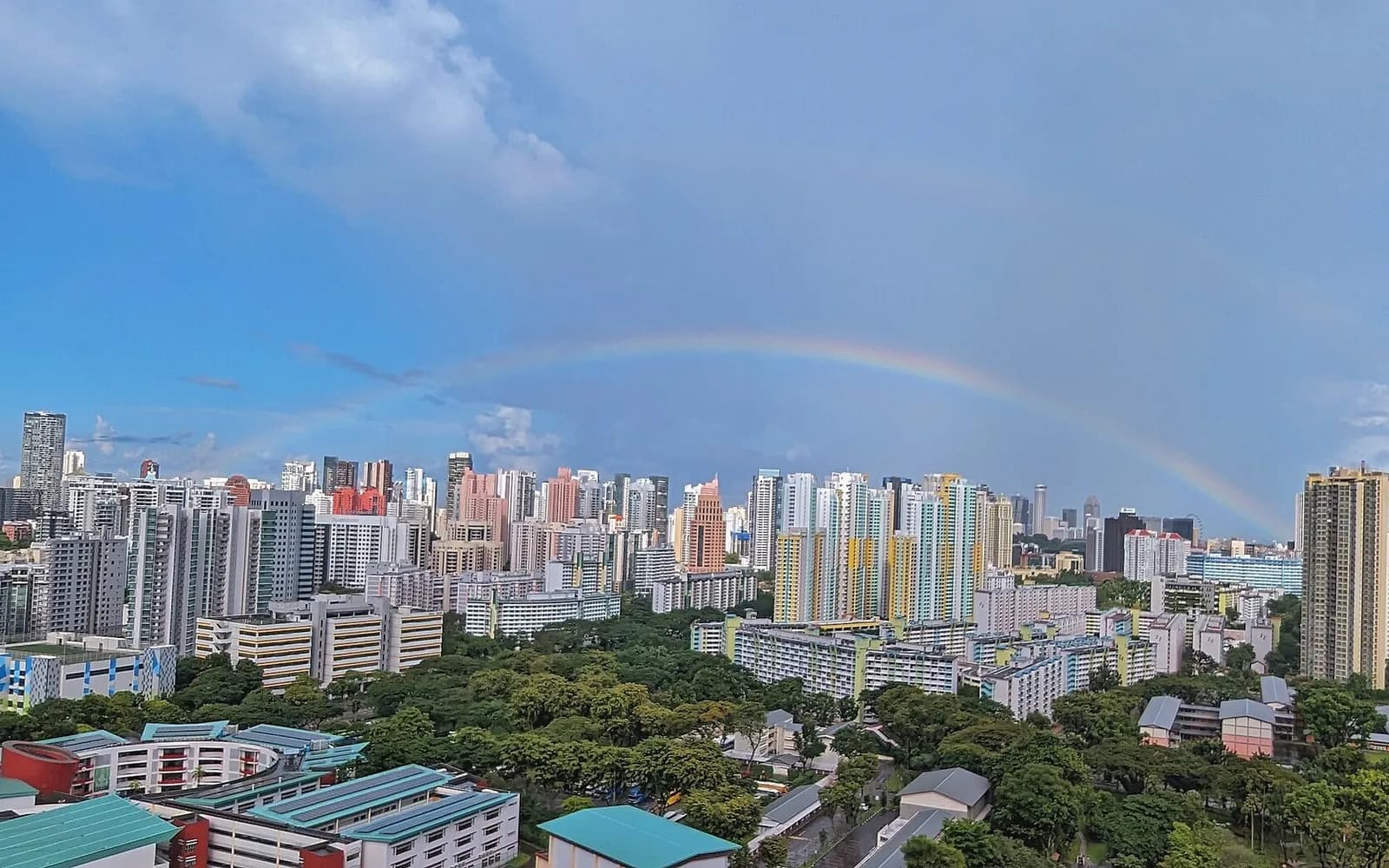
Photo: Ngerng21, CC BY-SA 4.0, cropped
Travel Tips
Weather & When to Visit
Hot, humid and green all year: how the seasons, rain and festivals should shape your travel dates.
Wondering about the best time to visit Singapore? This page explains the weather, the rainy seasons and the festivals that shape the year. Below, you will find a plain guide to each season, the main festival periods and the busiest travel times. Use it to choose your dates, plan your days around the heat and pack the right clothes.
New guides are on the way. Browse Travel Tips →
When is the best time to visit Singapore?
There is no bad time to visit Singapore. The city sits just north of the equator, so it is hot and humid all year. There is no winter and no true dry season. Rain falls in every month, usually in short, heavy showers. The best dates for your trip depend more on festivals, crowds and prices than on the weather.
For drier weather, February is often a good choice. If you love festivals, plan around Chinese New Year, Hari Raya, Deepavali or Christmas. If you want lower hotel rates, avoid big events and school holidays.
Singapore weather through the year
Most days reach the low 30s °C, and nights stay warm, in the mid-20s. Humidity is high, so it often feels hotter than the number suggests. The year falls into two monsoon seasons, with calmer inter-monsoon periods in between. A monsoon is a seasonal change in wind direction that brings different rain patterns.
December to early March: Northeast Monsoon
December and January are usually the wettest part of the year. Expect longer spells of rain, sometimes lasting much of the day. Temperatures are a little lower too. From late January or February, the weather often turns drier and windier.
Late March to May: inter-monsoon
Winds are light and the air feels still. Afternoon and evening thunderstorms are common. This is also one of the hottest stretches of the year.
June to September: Southwest Monsoon
This period is hot and a little drier. Storms often arrive before dawn or in the early morning as squalls, which are sudden bursts of strong wind and heavy rain. Smoke haze from land fires in the region sometimes affects air quality around these months.
October and November: inter-monsoon
Afternoon and evening thunderstorms return, and rain becomes more frequent. November is often one of the wetter months. For forecasts and rain warnings, check the Meteorological Service Singapore website.
Festivals and events worth planning around
Singapore's festivals follow several calendars, so many dates move each year. Check the dates before you book.
- Chinese New Year (January or February): red lanterns and street lights fill Chinatown. Some shops and hawker stalls close for a few days. See What's Open During Chinese New Year in Singapore?
- Hari Raya Puasa (date moves each year): the festival that marks the end of Ramadan, the Muslim fasting month. Geylang Serai holds a large festive bazaar during Ramadan. See Hari Raya.
- National Day (9 August): marks Singapore's independence, with a parade, fireworks and flags across the city. See National Day.
- Singapore Grand Prix (usually September or October): a night-time Formula One race on streets around Marina Bay. Nearby hotels fill up fast. See Singapore Grand Prix.
- Deepavali (usually October or November): the Hindu festival of lights. Little India puts up bright street decorations. See Deepavali.
- Christmas (December): from about mid-November, Orchard Road puts up lights and decorations. See Christmas.
For other dates, browse our Events Calendar.
Busy periods, prices and crowds
Hotel rates in Singapore rise and fall with demand. They tend to climb around big events, such as the Grand Prix, and during major holidays. School holidays also bring more families to attractions. Singapore's longest school break runs from around mid-November to the end of December. There is a shorter break of about four weeks around June.
For a quieter trip, aim for weekdays outside these periods. If your dates match a big event, book hotels and popular attractions early. Prices change often, so compare a few dates if you can.
Planning your days around heat and rain
A few habits make the weather much easier to enjoy:
- See outdoor sights early in the morning or after dark, when it is cooler.
- Keep an indoor plan for the afternoon, when storms are common. Museums such as the National Museum of Singapore work well. See Rainy Day Activities for more ideas.
- Enjoy the free evening light show at Gardens by the Bay. Free Light Shows in Singapore: Spectra & Garden Rhapsody explains how it works.
- Use sheltered routes between the MRT and your hotel. See Singapore Areas With Covered Walkways to the MRT.
What to pack
Pack light, breathable clothes, a hat, sunglasses and sun cream. A small umbrella helps in both sun and rain. Bring comfortable shoes or sandals that can get wet. Malls, cinemas and trains are cold, so carry a light layer. Insect repellent is useful in parks and gardens. See Packing Lists for more.
FAQs about the best time to visit Singapore
What is the rainiest month in Singapore?
November and December are usually the wettest months. Rain still falls all year, so pack an umbrella whenever you go.
Is Singapore too hot to visit in summer?
Singapore has no real summer or winter. It is hot and humid all year, and the warmest stretch is usually around April to June. Plan outdoor sights for the morning or evening.
Does it rain all day in Singapore?
Usually not. Most rain comes as short, heavy showers or thunderstorms. Longer spells of rain are more common in December and January.
When is the cheapest time to visit Singapore?
Weekdays outside school holidays and big events often have lower hotel rates. Rates change often, so compare a few dates before you book.