

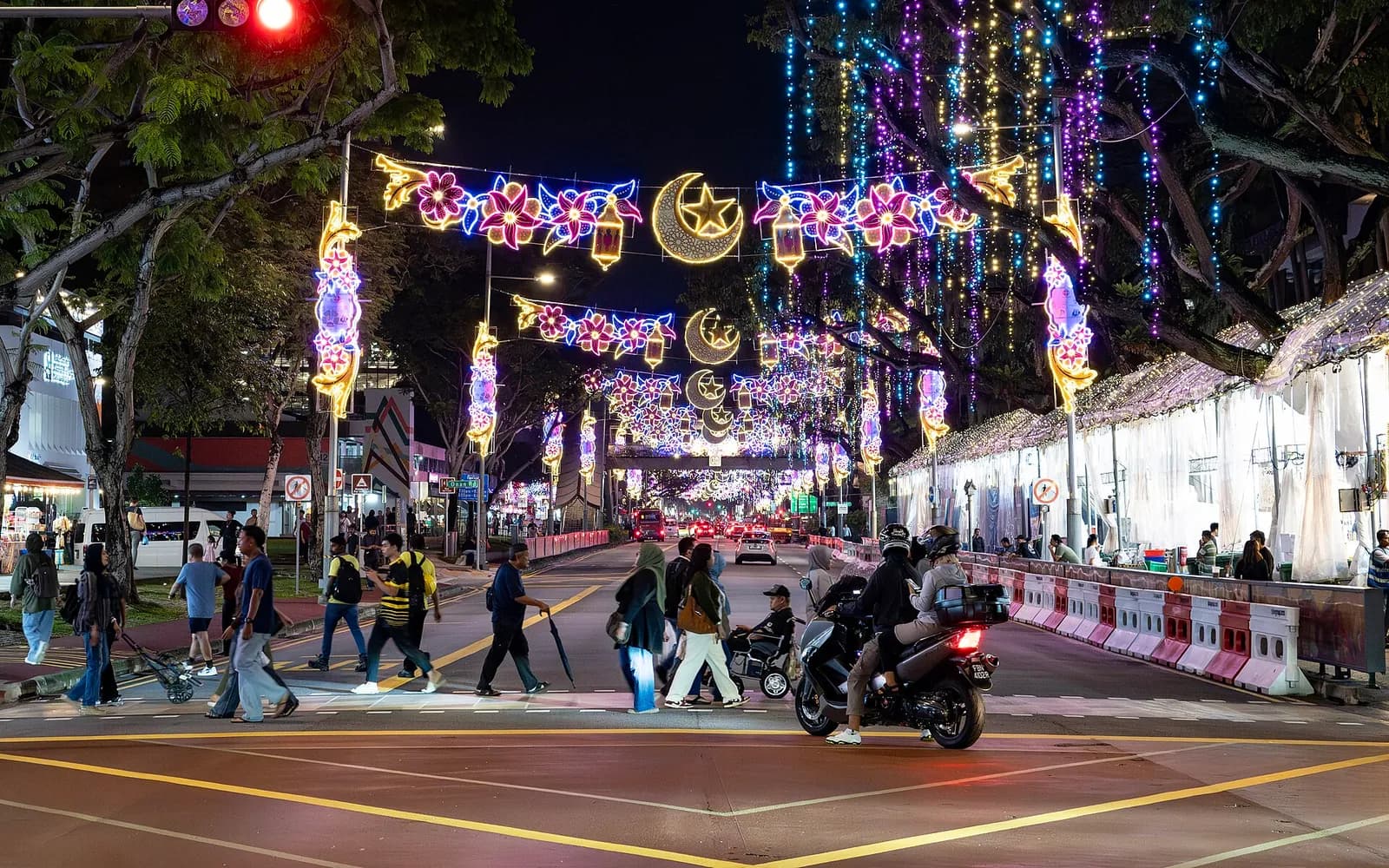
Photo: ScribblingGeek, CC BY-SA 4.0, cropped
Festivals & Events
Hari Raya Guides
Ramadan bazaars and Hari Raya feasts: where to experience the Malay festive season in Singapore.
Hari Raya is the main festive season for Singapore's Muslim community. This page is your guide to Hari Raya in Singapore, from Ramadan bazaars and street light-ups to festive dishes and Kampong Glam. Read the tips below to enjoy the season with respect, then find Malay food nearby.
Plan it with EatStays: Geylang Serai Market and Malay.
New guides are on the way. Browse Festivals & Events →
What is Hari Raya in Singapore?
Hari Raya means day of celebration in Malay. Hari Raya in Singapore covers two Muslim festivals, and both are public holidays. Hari Raya Puasa, also called Hari Raya Aidilfitri, marks the end of Ramadan, the fasting month. Hari Raya Haji, or Hari Raya Aidiladha, comes about two months later. It is the festival of sacrifice, held during the season of the pilgrimage to Mecca.
Both dates follow the Islamic calendar, which moves about 11 days earlier each year. For visitors, Hari Raya Puasa is the bigger celebration to see, with a month of build-up during Ramadan.
Ramadan bazaars and light-ups
Geylang Serai
During Ramadan, Muslims fast from dawn to sunset. In the evenings, the streets around Geylang Serai Market fill with a large bazaar. Rows of stalls sell snacks, drinks, clothes and home decorations. Lights also go up along the main roads of Geylang Serai. The bazaar is busiest around sunset, when people buy food to break their fast. Paya Lebar MRT station is a short walk away.
Inside Geylang Serai Market, the hawker centre upstairs serves Malay food all year round. For more places in the area, see our list of restaurants in Geylang & Paya Lebar.
Kampong Glam
Kampong Glam is the historic Malay and Muslim quarter near Bugis. It centres on Sultan Mosque, with its large golden dome. During Ramadan, the streets around the mosque are lively in the evenings, and food stalls often set up nearby. Restaurants in the area serve Malay, Indonesian and Middle Eastern food. Bugis MRT station is a short walk away.
Festive dishes to try
Hari Raya food is rich and made for sharing. Families cook for days before the holiday. Look out for these dishes:
- Ketupat: rice cooked inside small pouches of woven palm leaves, then cut into cubes.
- Rendang: a slow-cooked dry curry, usually beef, with coconut and spices.
- Lontong: rice cakes served in a mild coconut vegetable gravy.
- Sambal goreng: a spicy stir-fry, often with tempeh (fermented soybean cake), tofu and long beans.
- Kuih: small cakes and cookies, such as layered kueh lapis and pineapple tarts.
At the bazaars, you will also find murtabak, a stuffed and pan-fried bread, plus satay and sweet drinks. In Kampong Glam, Zam Zam Restaurant is known for murtabak. For Malay rice dishes, try Hjh Maimunah or Rumah Makan Minang. The latter serves nasi padang, rice with a choice of side dishes. Our guide to Malay hawker dishes explains more.
If you need halal food, look for the MUIS halal certificate at the stall or restaurant. MUIS is the Islamic Religious Council of Singapore.
Etiquette for visitors
- Be thoughtful during Ramadan. Restaurants and hawker centres stay open as usual, and visitors can eat normally. Still, try not to eat in front of friends who are fasting.
- Visit mosques at the right time. Sultan Mosque welcomes visitors outside prayer times. Dress modestly, and use the robes provided at the entrance if needed. Avoid the morning of Hari Raya, when mosques are full for prayers.
- Learn the greeting. Say Selamat Hari Raya, which means happy Hari Raya. People also say maaf zahir dan batin, which asks forgiveness for any wrongs.
- Join an open house if invited. Many families welcome friends of all faiths into their homes. Dress neatly, remove your shoes at the door and take food with your right hand.
- Notice the clothes. Families often wear matching traditional outfits in the same colour. It is fine to compliment them, but ask before taking photos.
Planning your Hari Raya visit
The Ramadan bazaar runs for the whole fasting month, so you have about four weeks to see it. Weekday evenings are calmer than weekends. Some Malay food stalls close for a few days around Hari Raya Puasa while their owners celebrate. Malls and most restaurants stay open. To stay near Sultan Mosque, browse hotels in Bugis & Kampong Glam.
FAQs about Hari Raya in Singapore
When is Hari Raya in Singapore?
The dates follow the Islamic calendar and move about 11 days earlier each year. Check the official public holiday list for the exact dates.
Is the Geylang Serai bazaar open every day?
It usually runs every day during Ramadan. It is busiest in the evenings, when people buy food to break their fast.
Can tourists visit a mosque during Ramadan?
Yes, outside prayer times. Dress modestly and follow any signs or guidance from mosque staff.
What is the difference between Hari Raya Puasa and Hari Raya Haji?
Hari Raya Puasa marks the end of the fasting month. Hari Raya Haji is the festival of sacrifice, held during the pilgrimage season. Both are public holidays.