

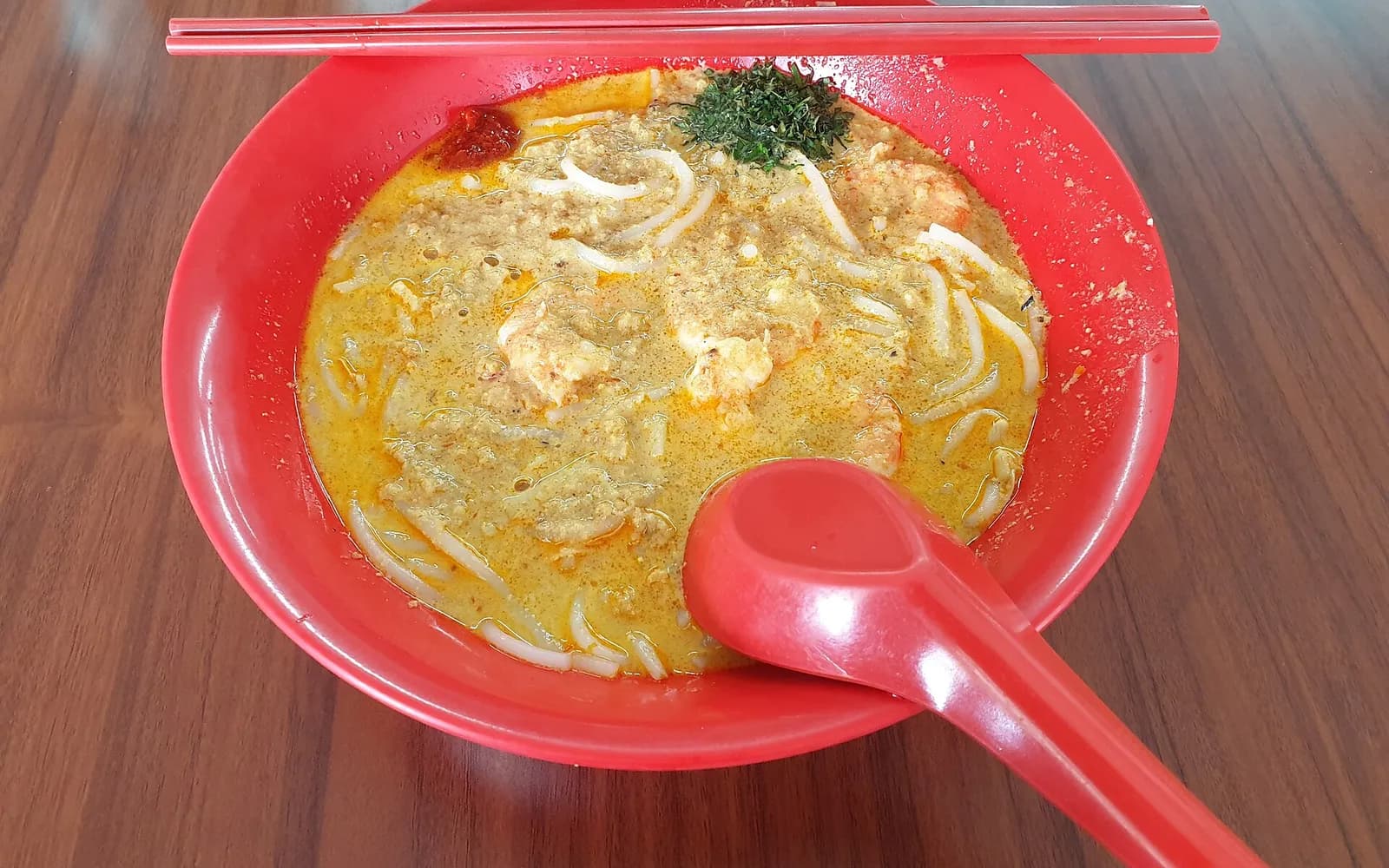
Photo: JaventheAlderick, CC BY-SA 4.0, cropped
Food & Drink
Laksa Guides
Coconut-rich curry noodles in every style: where to eat Katong laksa and the stalls locals rate highest.
This is our Singapore laksa guide, with what you need to know before your first bowl. Laksa is a spicy noodle soup, and the best-known local version is rich with coconut milk. This page explains the main styles, what goes into each bowl and the areas where locals go for it.
Heading east for a bowl? Our Katong & Joo Chiat guides help you plan the rest of the day.
Plan it with EatStays: best laksa in Singapore and 328 Katong Laksa.
New guides are on the way. Browse Food & Drink →
A Singapore laksa guide for first-timers
Laksa is a bowl of rice noodles in a rich, spicy soup. This Singapore laksa guide covers the styles you will meet, how to order and where to try them. In Singapore, the word usually means curry laksa. Its soup is made with coconut milk, chilli, spices and dried shrimp.
The dish is closely linked to Peranakan cooking. The Peranakans are descendants of early Chinese settlers in the region. Their food blends Chinese and Malay ways of cooking. Recipes vary from family to family, and the exact origins of laksa are often debated.
Laksa styles explained
Curry laksa
This is the everyday style at hawker centres. The soup is orange, creamy and gently spicy. Toppings usually include prawns, fish cake, bean sprouts and cockles. Many stalls also add tau pok, which are fried tofu puffs that soak up the soup.
Katong laksa
Katong laksa is named after the Katong area in the east. The thick noodles are cut short, so you can eat the whole bowl with a spoon. The soup tends to be thick and rich. 328 Katong Laksa in the Katong and Joo Chiat area is one of the best-known names.
Asam laksa
Asam laksa is linked to Penang in Malaysia. Its soup is sour and spicy, made with fish and tamarind, and it has no coconut milk. It is less common in Singapore, but you will find it at some stalls and Malaysian restaurants.
Close relatives
Curry noodles use a similar coconut curry, often with chicken and potato instead of seafood. See Curry Noodles if you want to compare the two.
What goes into a good bowl
- Rempah: the spice paste behind the soup. It is pounded from chillies, shallots, lemongrass, galangal and candlenuts. Galangal is a root related to ginger.
- Coconut milk: gives the soup its body and softens the heat.
- Dried shrimp: adds a deep seafood taste. It is in the soup even if you skip the prawns.
- Laksa leaf: a sharp, slightly minty herb, chopped and scattered on top. It is also called Vietnamese coriander.
- Sambal: a chilli paste served on the side or on top.
Locals often judge a bowl by how fragrant and thick the soup is. Taste it first, then add sambal a little at a time.
Where to eat laksa in Singapore
Katong and Joo Chiat
This is the classic area for a laksa trip. After your bowl, walk past the colourful Koon Seng Road Shophouses. The area also has several Peranakan restaurants and kueh shops. To stay nearby, see hotels in Katong & Joo Chiat.
Little India and Jalan Besar
Sungei Road Laksa is a hawker stall in this area. It serves Peranakan-style laksa at hawker prices. Pair it with a walk around Little India.
Tiong Bahru and Alexandra
Janggut Laksa is another name locals know well. It is in the Tiong Bahru and Alexandra area.
Hawker centres around the island
Most large hawker centres have at least one laksa stall. It is an easy dish to add to a shared meal. See Best Hawker Centres in Singapore for Tourists for places to start.
How to order and eat laksa
- Pick a size. Many stalls offer small and large bowls. The price gap is usually small.
- Decide on cockles. Cockles are small, dark red clams. Ask for no cockles if you do not eat them.
- Use the right tools. With Katong laksa, a spoon is all you need. Elsewhere, use chopsticks for the noodles and a spoon for the soup.
- Add a side. Some stalls sell otah, a spiced fish paste grilled in a leaf. It goes well with the soup.
- Know the price. A hawker bowl usually costs around S$4 to S$8. Prices change, so check the board.
- Mind allergies. The soup contains shrimp and often other shellfish. Read Eating at Hawker Centres With Food Allergies.
- Protect your clothes. The orange soup stains, so take it slowly.
FAQs about laksa
What does laksa taste like?
It is rich, creamy and spicy, with a seafood depth from dried shrimp. The laksa leaf adds a fresh, sharp note.
Is laksa halal?
Some laksa stalls are halal-certified, but many are not. If you need halal food, look for the MUIS halal certificate at the stall before you order.
Can vegetarians eat laksa?
Standard laksa is not vegetarian, because the soup uses dried shrimp. Some vegetarian stalls sell a meat-free version, so ask.
Why is Katong laksa eaten with a spoon?
The noodles are cut into short pieces. That makes it easy to scoop up noodles and soup together without chopsticks.
Is laksa from Singapore or Malaysia?
Both countries have their own kinds. Curry laksa and Katong laksa are closely linked with Singapore. Asam laksa is more closely linked with Penang.