

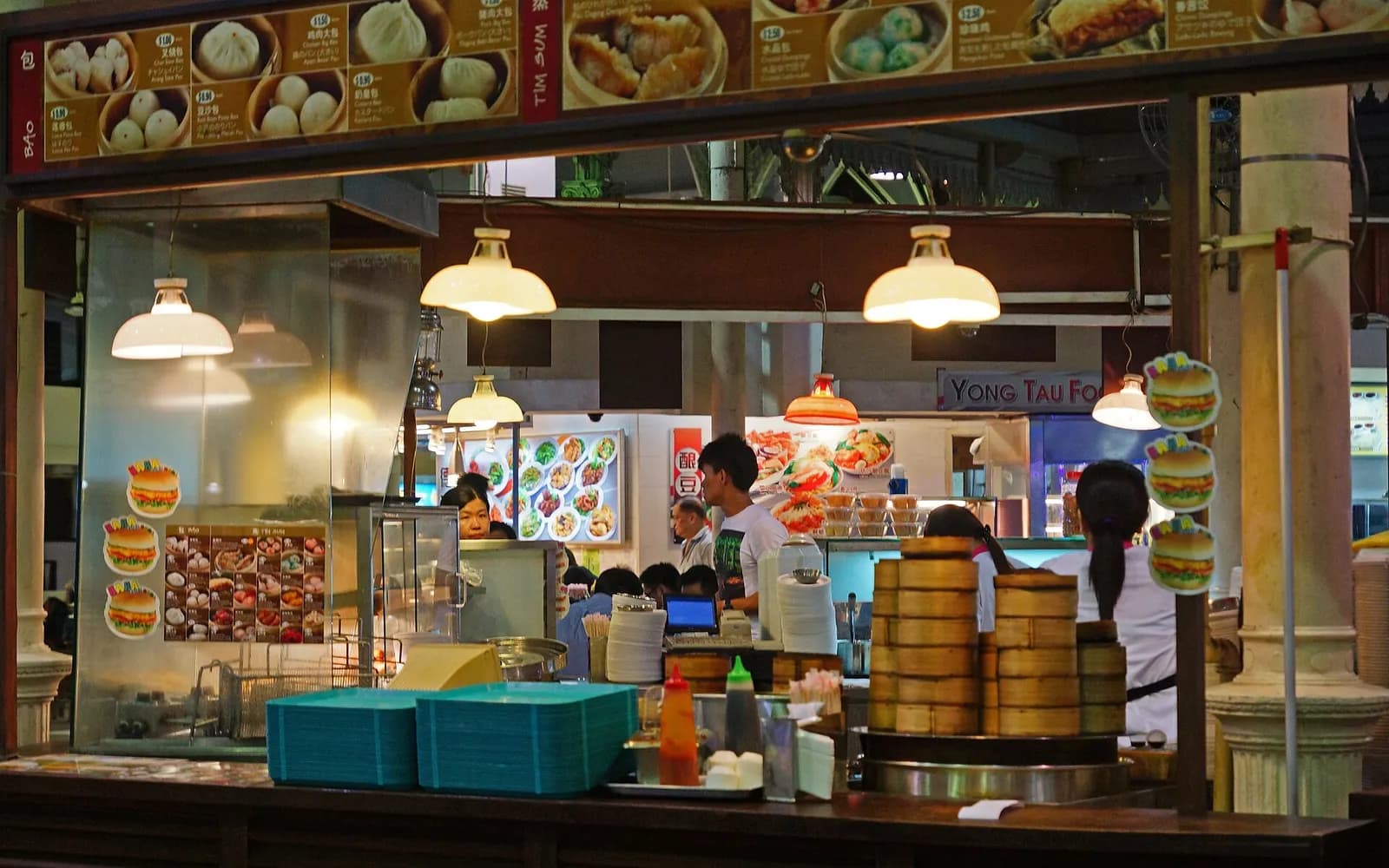
Photo: Allie_Caulfield, CC BY 2.0, cropped
Food & Drink
Dim Sum & Cantonese Food Guides
Har gow, siew mai and roast meats: the Cantonese restaurants and casual dim sum spots worth booking.
This dim sum guide for Singapore explains how a dim sum meal works and what to order first. It also covers tea etiquette, rough prices and the Cantonese dishes worth trying beyond dumplings.
Read the guide below, then open a restaurant's page for its area and directions. Book ahead for weekend lunch.
Plan it with EatStays: Chinese & Dim Sum and best dim sum in Singapore.
New guides are on the way. Browse Food & Drink →
What is dim sum?
Dim sum is a Cantonese meal of small dishes, such as dumplings, buns and rice rolls. People share them at the table with a pot of Chinese tea. In Cantonese, going for dim sum is called yum cha, which means "drink tea". This dim sum guide for Singapore covers what to order, how the meal works and how to pick a place. Many Cantonese restaurants serve dim sum mainly at lunch, and weekends are the busiest time.
Dim sum dishes to order first
Menus can be long, so start with the classics. You will find most of these everywhere.
Steamed dishes
- Har gow: prawn dumplings in a thin, clear wrapper.
- Siew mai: open-topped pork and prawn dumplings.
- Char siew bao: fluffy buns filled with sweet barbecued pork.
- Chee cheong fun: soft rice noodle rolls with prawn or pork, in a light soy sauce.
- Lo mai gai: sticky rice with chicken, steamed in a lotus leaf.
- Chicken feet: steamed in a savoury black bean sauce. Try them if you are curious.
Fried and baked dishes
- Radish cake: pan-fried slices of white radish and rice flour.
- Spring rolls: crisp rolls that are easy to share.
- Baked char siew pastry: flaky pastry with a sweet pork filling.
- Egg tarts: small, flaky tarts with smooth custard.
- Liu sha bao: steamed buns with a runny salted egg yolk filling. Bite gently, as it is hot.
Start with two or three dishes per person. You can order more as you go.
How the meal works
Most places give you an order sheet and a pencil. Tick the dishes and the number of portions, then hand it to the staff. Dishes arrive as they are ready, usually in small bamboo baskets or plates of three or four pieces.
Tea and table manners
- Pick a tea first. Staff often ask before anything else. Jasmine, oolong, pu-erh and chrysanthemum are common.
- Pour for others. Fill the cups of the people beside you before your own.
- Tap to say thanks. Many people tap two fingers on the table when someone pours for them.
- Ask for more water. Leave the teapot lid open or tilted, and staff will refill it.
Rough costs
Expect a small charge per person for tea. Some places also charge for snacks such as peanuts placed on the table. Most restaurants add a service charge and GST. A casual dim sum meal often costs about S$20 to S$40 a person, and hotel restaurants charge more. Prices change, so check the menu.
Where to eat dim sum
Cantonese restaurants
Many Cantonese restaurants serve dim sum at lunch. They suit a special meal or a family gathering. Check the menu when you book, and book ahead at weekends.
- Hai Tien Lo, Summer Pavilion and Jade are Cantonese restaurants in the Marina Bay and CBD area.
- Li Bai, Hua Ting and Crystal Jade Golden Palace are in the Orchard and River Valley area.
- Shang Palace, Summer Palace and Jiang-Nan Chun are in the Dempsey, Tanglin and Holland area.
- Lei Garden, Wah Lok Cantonese and Man Fu Yuan are in the Bugis and Kampong Glam area.
Casual dim sum
Swee Choon Tim Sum is a casual dim sum spot in the Jalan Besar area. It is a popular choice for a late meal, but check its hours before you go. Din Tai Fung (Paragon) is a Taiwanese restaurant on Orchard Road, popular for xiao long bao, or soup dumplings. These are not Cantonese, but they make a good partner to dim sum.
For the full list, see Cantonese restaurants.
Cantonese food beyond dim sum
Cantonese cooking is also known for roast meats and clean, simple flavours. Look for these at restaurants and hawker stalls.
- Roast meats: char siew (sweet roast pork), siew yuk (crisp roast pork belly) and roast duck, served over rice or noodles.
- Wanton mee: thin egg noodles with dumplings and char siew. Try Eng's Wantan Noodle in Katong, or browse Wanton Mee.
- Claypot rice: rice cooked in a clay pot with toppings such as chicken and Chinese sausage. Lau Wang Claypot is in the Balestier area.
- Porridge: smooth Cantonese rice porridge, also called congee. Soon Lee Porridge is in the Jalan Besar area.
FAQs about dim sum
When is the best time to eat dim sum?
Lunch is the classic time, and weekends are busiest. Some casual places serve dim sum later in the day too.
How many dishes should I order?
Two or three dishes per person is a good start. Most dishes come in portions of three or four pieces.
Do I need to book?
For hotel restaurants and weekend lunch, yes. Casual spots are often walk-in only, so expect a short wait.
Is dim sum good for vegetarians?
Many places offer a few vegetable dumplings and buns. Ask the staff, as many fillings use pork or prawn.