

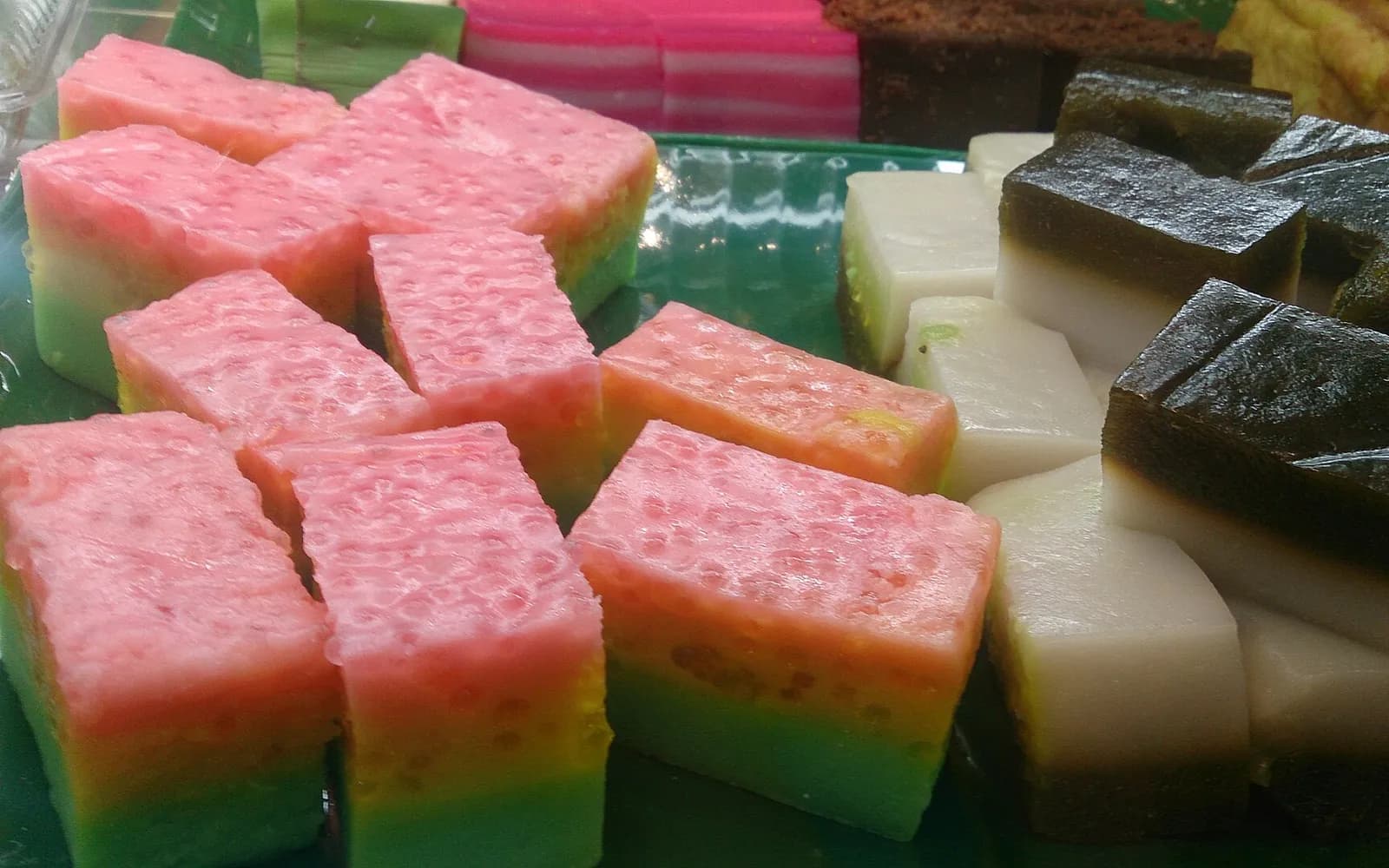
Photo: ProjectManhattan, CC BY-SA 3.0, cropped
Food & Drink
Peranakan Food Guides
Nyonya cooking explained, from buah keluak to colourful kueh, and the restaurants keeping Peranakan recipes alive.
This is our Peranakan food guide for visitors to Singapore. Peranakan cooking, also called Nyonya food, mixes Chinese ingredients with Malay spices and methods. Use this page to learn the key dishes, from ayam buah keluak to colourful kueh, and to find the areas and restaurants where you can try them.
To see the culture behind the food, plan a visit to the Peranakan Museum as well.
Plan it with EatStays: Peranakan and National Kitchen by Violet Oon.
New guides are on the way. Browse Food & Drink →
A Peranakan food guide: who are the Peranakans?
Peranakan food has deep roots in Singapore and Malaysia. This Peranakan food guide explains where it comes from, how it tastes and what to order. The best-known Peranakans in Singapore descend from early Chinese traders and settlers who made their homes in the region. Many married local women. Over generations, they built their own culture, dress and cooking. Men are called Baba and women are called Nyonya. That is why the food is often called Nyonya cooking.
The flavours behind the food
Peranakan dishes are rich, spicy, sour and fragrant all at once. A few key ingredients do most of the work.
- Rempah: a spice paste pounded from chillies, shallots, garlic, lemongrass, galangal and candlenuts. Galangal is a root related to ginger.
- Belacan: a fermented shrimp paste, used in sambal and many sauces.
- Asam: tamarind, a sour fruit pulp that adds tang to curries and fish dishes.
- Taucheo: fermented soybean paste, a Chinese ingredient used in slow braises.
- Coconut milk and pandan: used in curries and sweets. Pandan is a fragrant green leaf.
Many dishes take hours of pounding, frying and slow cooking. That is part of why a good Peranakan meal feels special.
Peranakan dishes to know
Mains
- Ayam buah keluak: chicken stewed with keluak nuts. Each nut holds a black, earthy paste. You scoop it out and mix it with rice.
- Babi pongteh: pork and potatoes braised in fermented soybean paste.
- Itek tim: a sour duck soup with salted mustard greens.
- Assam fish: fish cooked in a sour, spicy tamarind gravy.
- Chap chye: mixed vegetables braised with glass noodles.
Starters and snacks
- Kueh pie tee: thin, crisp pastry cups filled with stewed turnip and topped with prawn.
- Ngoh hiang: five-spice meat rolls wrapped in beancurd skin, then fried.
- Otak-otak: spiced fish paste wrapped in leaves and grilled.
- Nyonya laksa: noodles in a spicy coconut curry soup. See our Laksa guides.
Kueh and desserts
Nyonya kueh are small cakes made from rice flour, glutinous rice, coconut and palm sugar. Look for these:
- Ondeh ondeh: pandan rice balls filled with palm sugar and rolled in grated coconut.
- Kueh salat: a layer of glutinous rice topped with a green pandan custard.
- Kueh lapis: a steamed cake made of many thin, coloured layers.
- Chendol: shaved ice with coconut milk, palm sugar and green rice-flour jelly.
Green Nyonya kaya, a coconut jam, is another Peranakan favourite. Read Hainanese vs Nyonya Kaya: Brown or Green Coconut Jam.
Where to eat Peranakan food in Singapore
City centre
National Kitchen by Violet Oon is inside National Gallery Singapore. True Blue Cuisine and Godmama are also in the City Hall and Clarke Quay area, as is the Peranakan Museum. Blue Ginger is in Chinatown and Tanjong Pagar.
Katong and Joo Chiat
This part of the east has long links with Peranakan culture. Guan Hoe Soon and Chilli Padi Nonya Restaurant are both here. Kim Choo Kueh Chang is a good stop for kueh and chang, which are rice dumplings. Walk past the colourful Koon Seng Road Shophouses after your meal.
Elsewhere
Candlenut is in the Dempsey, Tanglin and Holland area. Indocafe The White House is in Orchard and River Valley.
Tips for a Peranakan meal
- Order to share. Meals are served family style. Pick a few dishes and plain rice for the table.
- Ask about spice. Sambal belacan often comes on the side, so you can control the heat.
- Check for pork. Many Peranakan dishes use pork. If you need halal food, look for the MUIS halal certificate. MUIS is the Islamic Religious Council of Singapore.
- Book ahead. Popular restaurants fill up for dinner and at weekends.
- Check prices. Costs range from casual to special-occasion. Prices change, so look at the menu before you go.
FAQs about Peranakan food
What is buah keluak?
It is a hard black nut from a tree that grows in the region. It is poisonous when raw, so cooks soak and prepare it for days. The paste inside tastes rich and earthy.
Is Peranakan food the same as Malay food?
No. It shares many spices with Malay cooking, but it also uses Chinese ingredients and methods. Many Peranakan dishes also include pork.
Where is the best area for Peranakan food?
Katong and Joo Chiat has the strongest links to Peranakan culture. The City Hall area also has several restaurants, close to the Peranakan Museum.
What Peranakan dessert should I try first?
Try ondeh ondeh. The palm sugar inside bursts out when you bite, so eat each one whole.