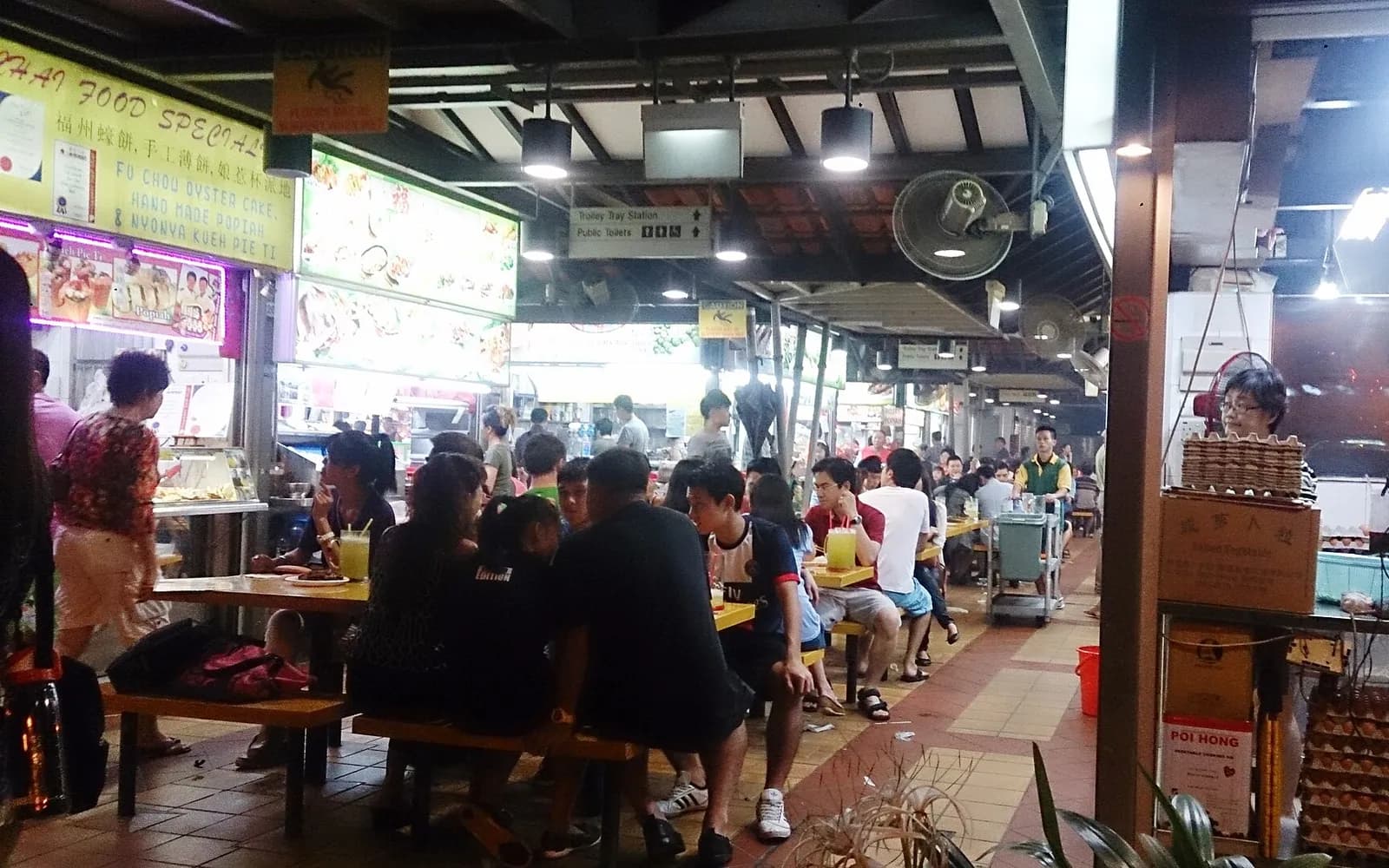

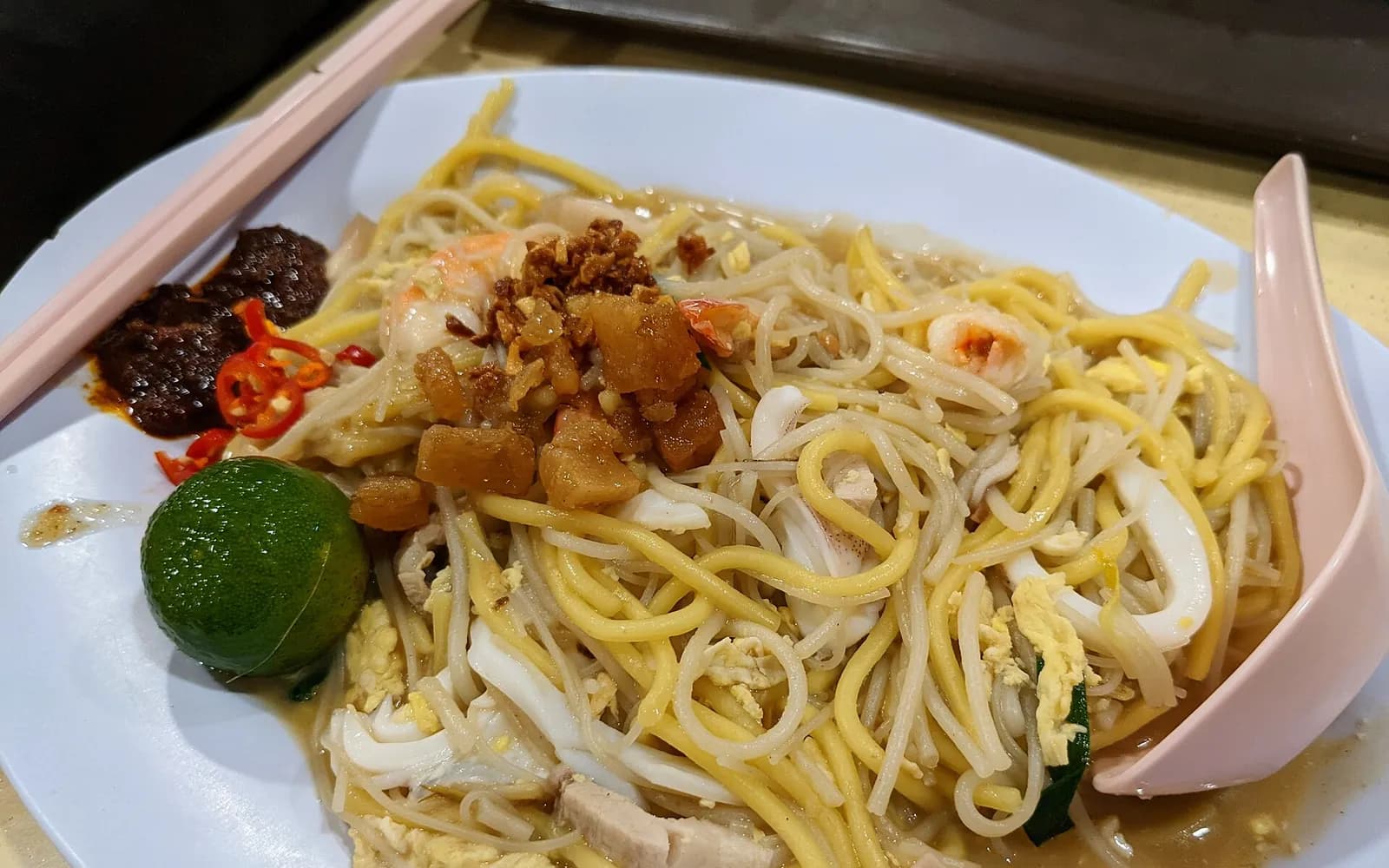
What is Singapore Hokkien mee? It is a plate of yellow egg noodles and thin rice noodles, fried with egg and then simmered in a rich stock made from prawns and pork. It comes with prawns, squid, sambal chilli and a small lime on the side.
It is one of the most popular fried noodle dishes at Singapore hawker centres. This guide explains how it is made, what is on the plate and how to order. For more local dishes, see our Hawker Dishes Explained section.
How Singapore Hokkien mee is made
The name joins Hokkien, a southern Chinese dialect group, with “mee”, the local word for noodles. Locals also call it fried prawn noodles.
Two kinds of noodles
- Yellow noodles: round wheat and egg noodles with a firm, springy bite.
- Bee hoon: thin rice noodles, also called rice vermicelli. They are soft and soak up the stock.
The prawn and pork stock
The stock is the heart of the dish. Cooks simmer prawn heads and shells with pork bones for a long time. This gives the noodles a sweet, deep prawn taste.
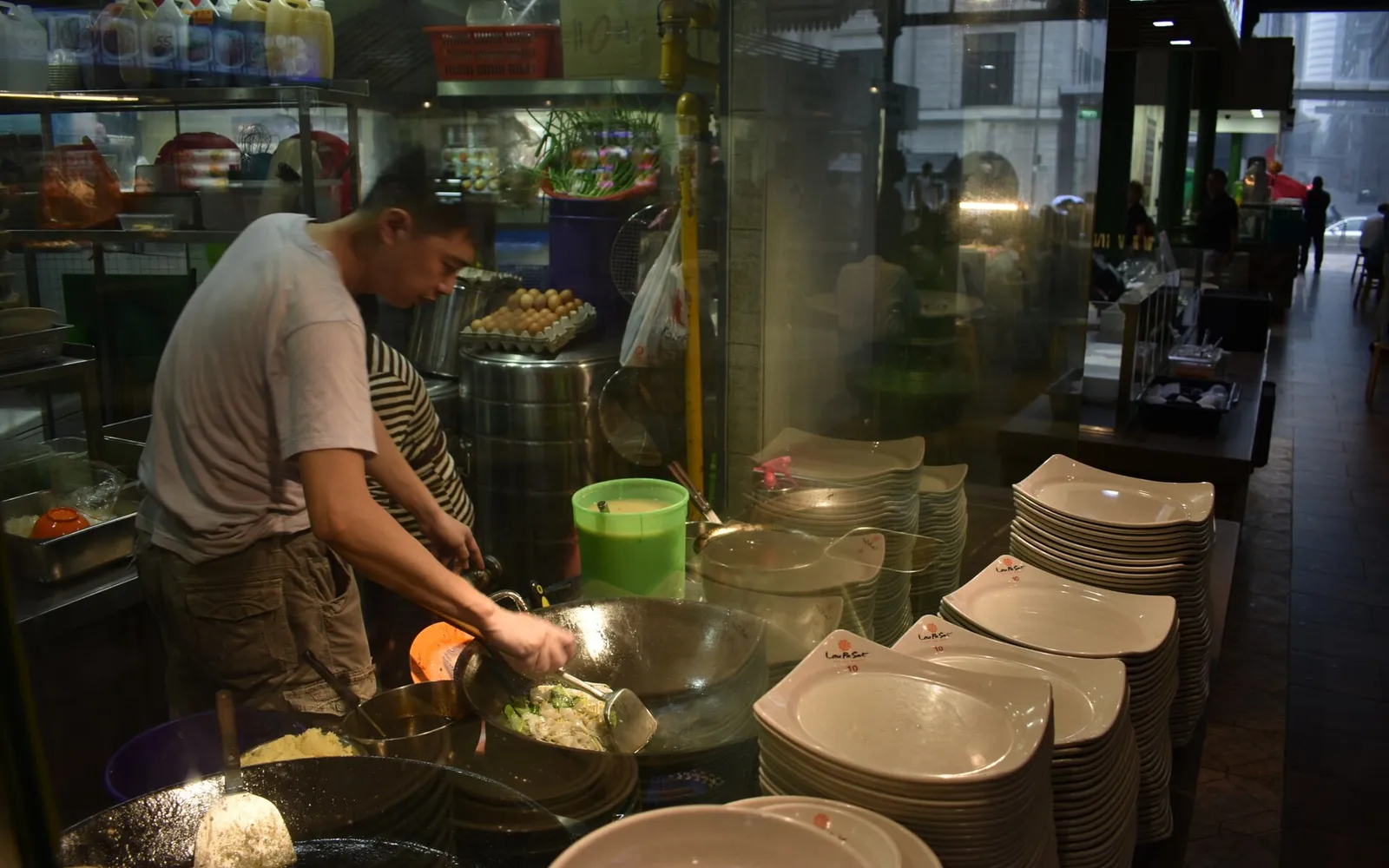
Frying in the wok
- Egg is fried in hot oil or pork lard with garlic.
- Both noodles go in and are tossed until they start to brown.
- The cook pours in ladles of stock and lets the noodles soak it up.
- Prawns, squid, bean sprouts and Chinese chives go in near the end.
Some stalls serve it wet, with a thick, gravy-like sauce. Others fry it drier, so the noodles pick up more “wok hei”, the smoky taste from a very hot wok. Our char kway teow guide explains wok hei too.
What comes on the plate
Toppings vary by stall, but most plates include these:
- Prawns: usually peeled or half-peeled.
- Squid: sliced into rings or strips.
- Pork belly: thin strips of boiled pork, at many stalls.
- Crispy pork lard: small fried cubes on top, at some stalls.
- Sambal: a chilli paste, often made with shrimp paste, served on the side.
- Lime: a calamansi, a small, sour local lime.
Squeeze the lime over the noodles first. Then stir in as much sambal as you like. The lime cuts through the rich stock, and the sambal adds heat.
A few stalls serve the noodles on an opeh leaf, a dried leaf from the areca palm. It adds a light, woody smell.
How to order Hokkien mee at a hawker stall
English is widely understood at hawker stalls. Say the size first, then any changes.
Pick a size
Most stalls sell small, medium and large plates, often named by price. A small plate is usually enough for one person. Expect roughly S$5 to S$10, but prices change, so check the menu board.
Chilli, lard and extras
- Say “no chilli” for a mild plate, or ask for more sambal.
- Say “no lard” to skip the crispy pork pieces.
- Some stalls offer a larger plate with more or bigger prawns.
- Ask for “da bao”, which means takeaway.
While you wait
Many stalls cook one large batch for several orders. So you may wait even when the queue looks short. Some stalls give you a number or a buzzer. Our guide on how to order at hawker stalls covers paying and table numbers.
Dietary notes before you order
The classic dish has pork in the stock, the lard and the pork belly. It also has prawns and squid. Asking for no lard or pork belly does not remove the pork and prawn in the stock. If you have an allergy, read our guide to eating at hawker centres with food allergies.
Where to eat Hokkien mee in Singapore
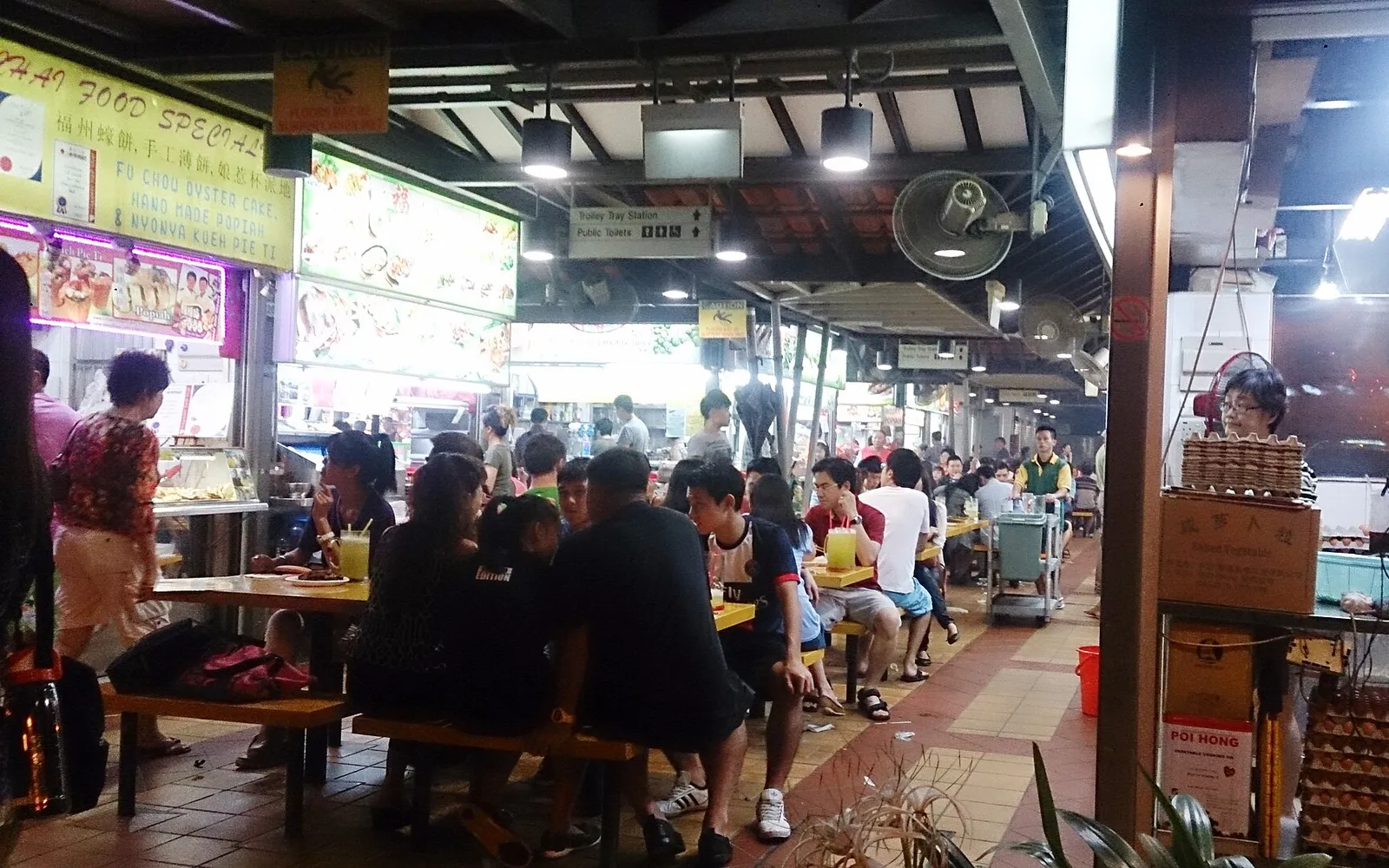
Most large hawker centres have at least one Hokkien mee stall. Look for a cook at a big wok with a pot of stock nearby.
- Nam Sing Hokkien Fried Mee, a stall in the Geylang and Paya Lebar area that focuses on this dish.
- Geylang Lor 29 Fried Hokkien Mee, in the Katong and Joo Chiat area. “Lor” is short for lorong, the Malay word for lane.
- Chomp Chomp Food Centre, a hawker centre in Serangoon Gardens where Hokkien mee is a popular order.
- Old Airport Road Food Centre, a large hawker centre with many noodle stalls.
See more places on our Hokkien mee restaurant list. To stay near the eastern stalls, browse hotels in Katong & Joo Chiat, such as Hotel Indigo Singapore Katong.
FAQs about Singapore Hokkien mee
- Is Singapore Hokkien mee spicy?
Only if you add the sambal. The noodles are mild, with a sweet prawn taste.
- What is the difference between Hokkien mee and prawn mee?
In Singapore, Hokkien mee is fried noodles cooked in prawn stock. Prawn noodles, or prawn mee, come in a prawn soup, or dry with the soup on the side.
- Is it the same as Hokkien mee in Malaysia?
No. In Kuala Lumpur, Hokkien mee is thick noodles fried in dark soy sauce. In Penang, the name means a prawn noodle soup. Singapore's version is pale and moist.
- Why does Hokkien mee take long to arrive?
Stalls often cook it in batches, and the noodles need time to soak up the stock. A short wait is normal.
References
- Hokkien Mee | SG101, SG101
- Hokkien mee, Wikipedia
- Nam Sing Hokkien Fried Mee – Singapore - a MICHELIN Guide Restaurant, MICHELIN Guide
- Singapore's Best Bowls of Prawn Noodles, MICHELIN Guide