

This Sri Veeramakaliamman Temple guide covers what you need for a first visit to the Kali temple on Serangoon Road. It is a working Hindu temple, and visitors of any faith are usually welcome. Entry is free. Take off your shoes, cover your shoulders and knees, and keep your voice low.
It is one of the oldest temples in Little India and an easy stop on a walk around the area. For more on the neighbourhood, see our Little India neighbourhood guides.
Who is Kali?
Kali is a Hindu goddess linked to time, change and the power to destroy evil. She is often seen as a fierce form of Parvati, the wife of Shiva. The temple's name is often translated as "Kali the Courageous". Amman is a Tamil word for mother, used for many goddesses.
To worshippers, Kali is a protector. People pray to her for strength, safety and help in hard times. Her images may show dark skin, many arms and weapons. They show her power to defeat evil and are not meant to frighten anyone.
A short history of the temple
The temple dates back to the 1800s. It was started by Indian workers who lived and worked nearby, when the area was full of kilns and cattle yards.
It has been rebuilt and enlarged several times since then. To see how the wider area grew, read our history of Little India Singapore.
The gopuram and the main shrines
The gopuram
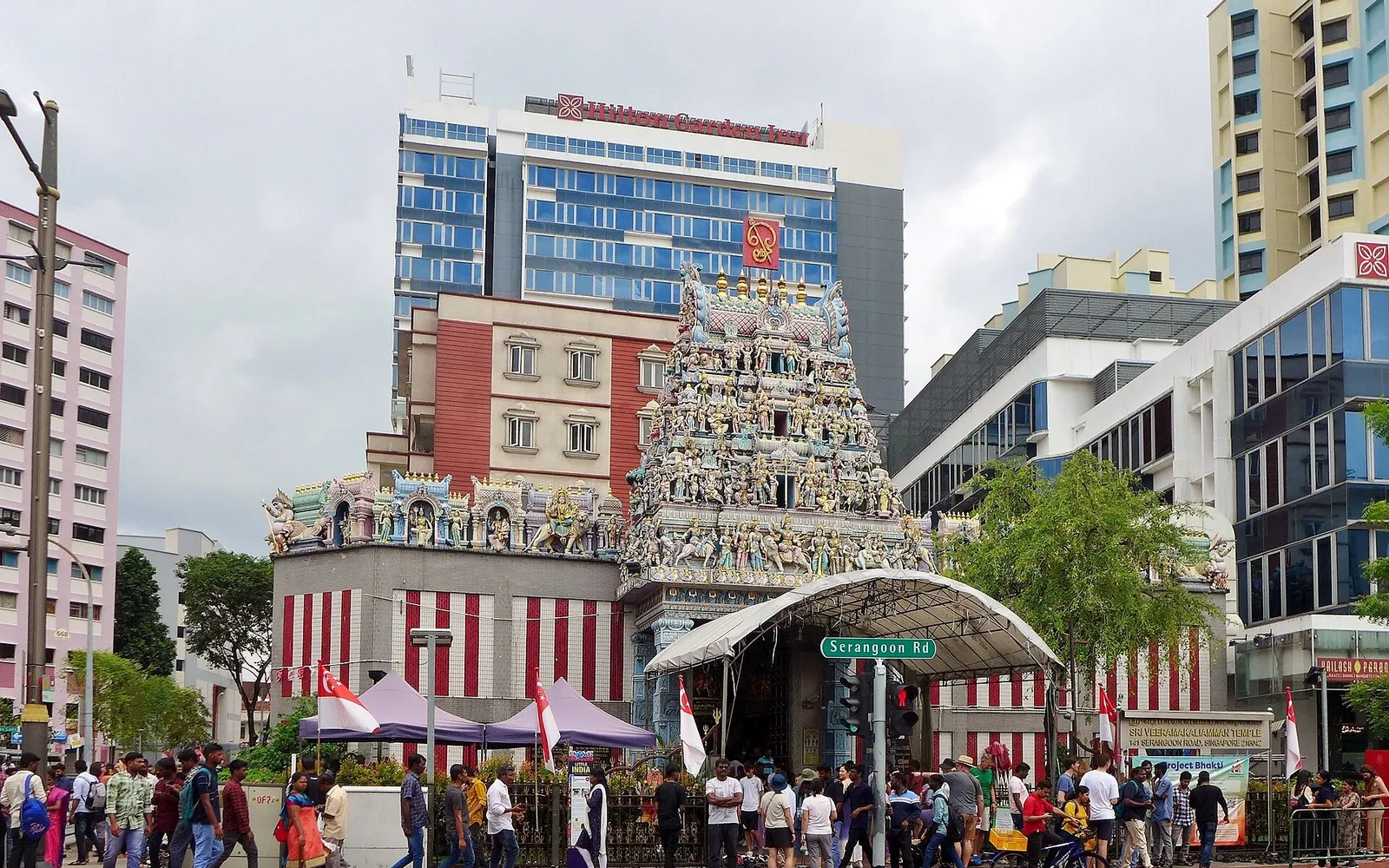
The first thing you see from the street is the gopuram. This is the tall gateway tower over the entrance, a feature of South Indian temples. It is covered in painted figures of gods, goddesses and scenes from Hindu stories. Cross to the opposite pavement for the best view.
The main shrine of Kali
At the heart of the temple is the main shrine of Kali. Priests dress her image in fine cloth and garlands. Only priests enter the inner shrine. Worshippers stand in front of it to pray.
Other shrines inside
Smaller shrines are dedicated to other deities. Look for Ganesha, the elephant-headed god who removes obstacles. Look also for Murugan, a son of Shiva who is much loved by Tamil Hindus.
What happens inside the temple
Worshippers arrive with flowers, fruit and garlands, and priests lead prayers through the day. You are welcome to watch quietly from the side.
Prayers and offerings
Prayers, called puja, take place several times a day. A priest chants, rings a bell and waves a lamp in front of the deity. Worshippers pass their hands over the flame and touch their eyes to receive the blessing. The priest may then offer holy ash, called vibhuti, which people put on the forehead.
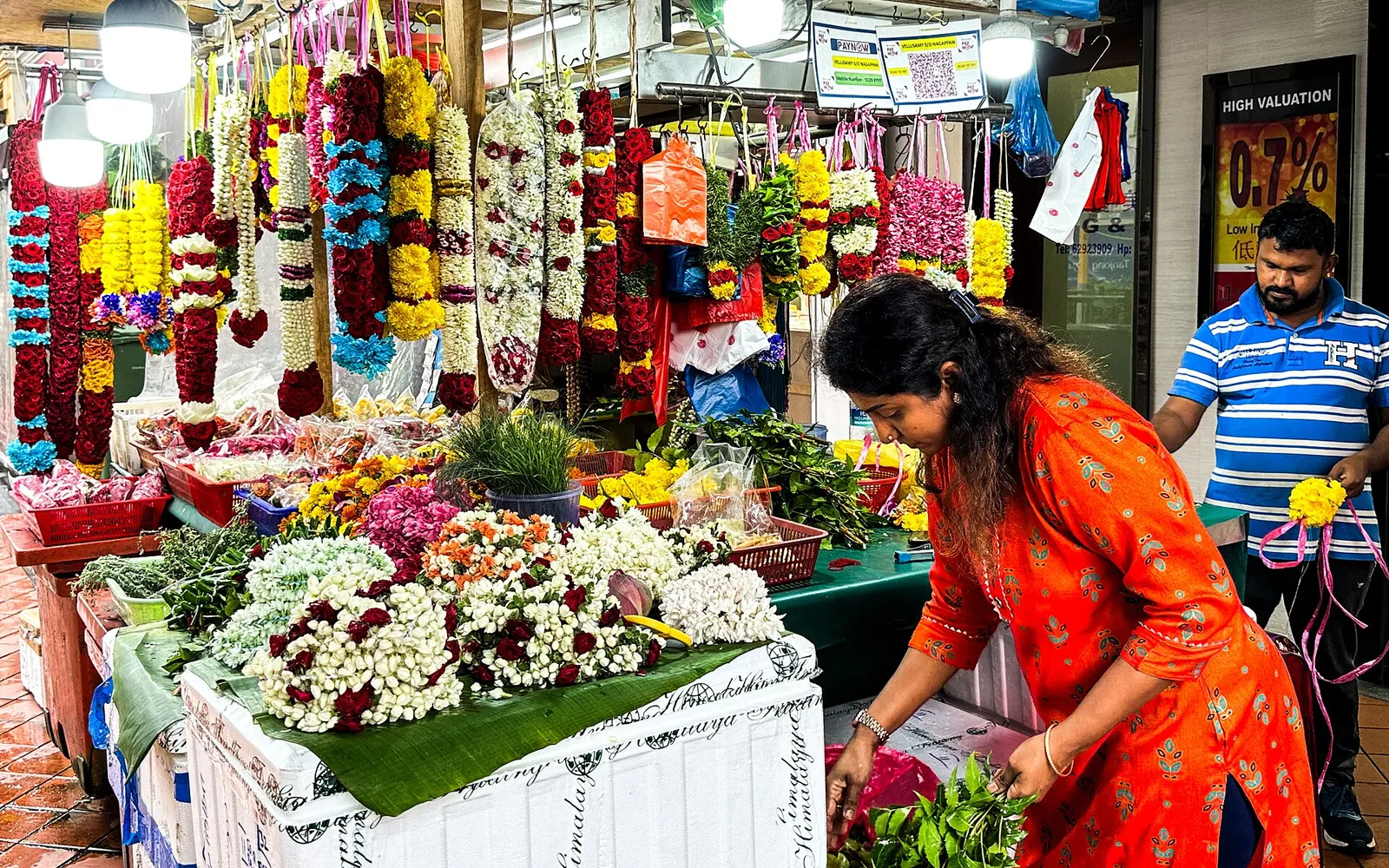
Common offerings include flowers, fruit, coconuts and small oil lamps. Many people buy jasmine and marigold garlands from flower stalls nearby.
Busier days and festivals
Tuesdays and Fridays are often busier, as these are important days for praying to the goddess. Navaratri, the nine nights of the goddess, is a special time here. The temple is also crowded around Deepavali, the festival of lights.
Sri Veeramakaliamman Temple guide: how to visit respectfully
Our Little India temple etiquette guide has more detail, but these are the key points.
- Dress modestly. Cover your shoulders and knees. A light scarf or sarong helps.
- Leave your shoes outside. Slip-on sandals make this easier.
- Walk clockwise. Follow the same direction as worshippers and keep to the sides.
- Do not walk in front of people praying. Wait, or go around behind them.
- Do not touch statues, offerings or lamps. Stand back during a puja.
- Check before taking photos. Follow the signs, never use flash and do not photograph people praying.
Getting there and what to do nearby
The temple is on Serangoon Road, a short walk from Little India MRT station and from Tekka Centre. Our Sri Veeramakaliamman Temple page has the location.
Food nearby
Vegetarian food is a good match for a temple visit. Komala Vilas and Ananda Bhavan both serve vegetarian Indian food on Serangoon Road. Try a thosai, a thin, crisp pancake made from rice and lentil batter. For more ideas, see South Indian restaurants or our list of dishes to try in Little India.
More to see and places to stay
The Indian Heritage Centre on Campbell Lane tells the story of Singapore's Indian community. To stay close, browse hotels in Little India and Jalan Besar, such as Holiday Inn Singapore Little India.
FAQs about Sri Veeramakaliamman Temple
- Is Sri Veeramakaliamman Temple free to enter?
Yes, entry is free. There are donation boxes if you would like to give, but it is your choice.
- Can non-Hindus visit Sri Veeramakaliamman Temple?
Yes, visitors of all faiths are usually welcome. Dress modestly, take off your shoes and follow any instructions from temple staff.
- Can I take photos inside the temple?
Rules can differ, so check the signs at the entrance or ask staff. Never use flash, and do not photograph people praying.
- How long does a visit take?
Most visitors spend around 20 to 30 minutes inside. Allow longer if a puja is taking place.
References
- Sri Veeramakaliamman | Hindu Temple in Singapore, Visit Singapore
- History - Sri Veeramakaliamman Temple, Sri Veeramakaliamman Temple
- Sri Veeramakaliamman Temple, National Heritage Board (Roots.sg)
- Sri Veeramakaliamman - Sri Veeramakaliamman Temple, Sri Veeramakaliamman Temple
- Temple Etiquette, Hindu Endowments Board