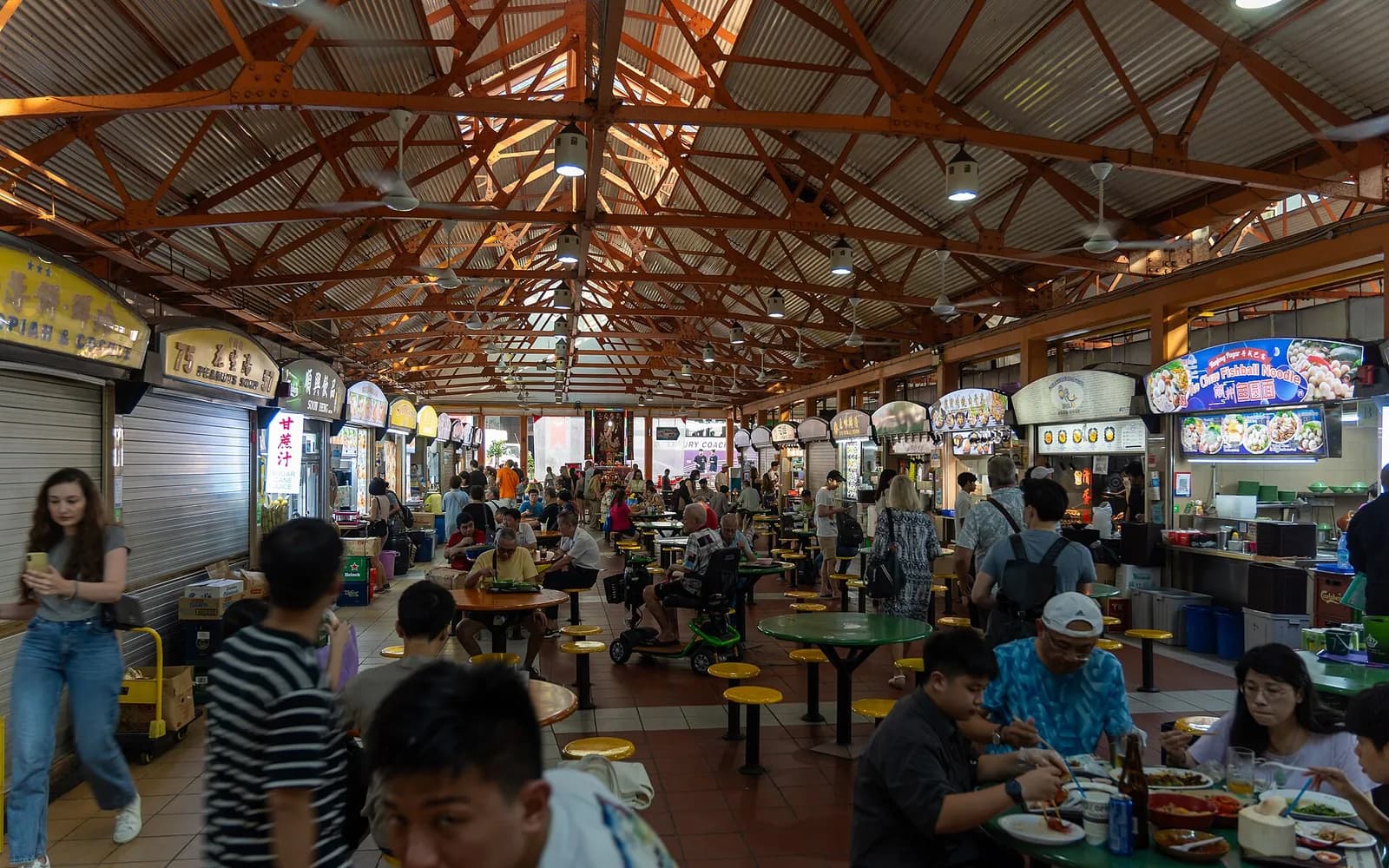

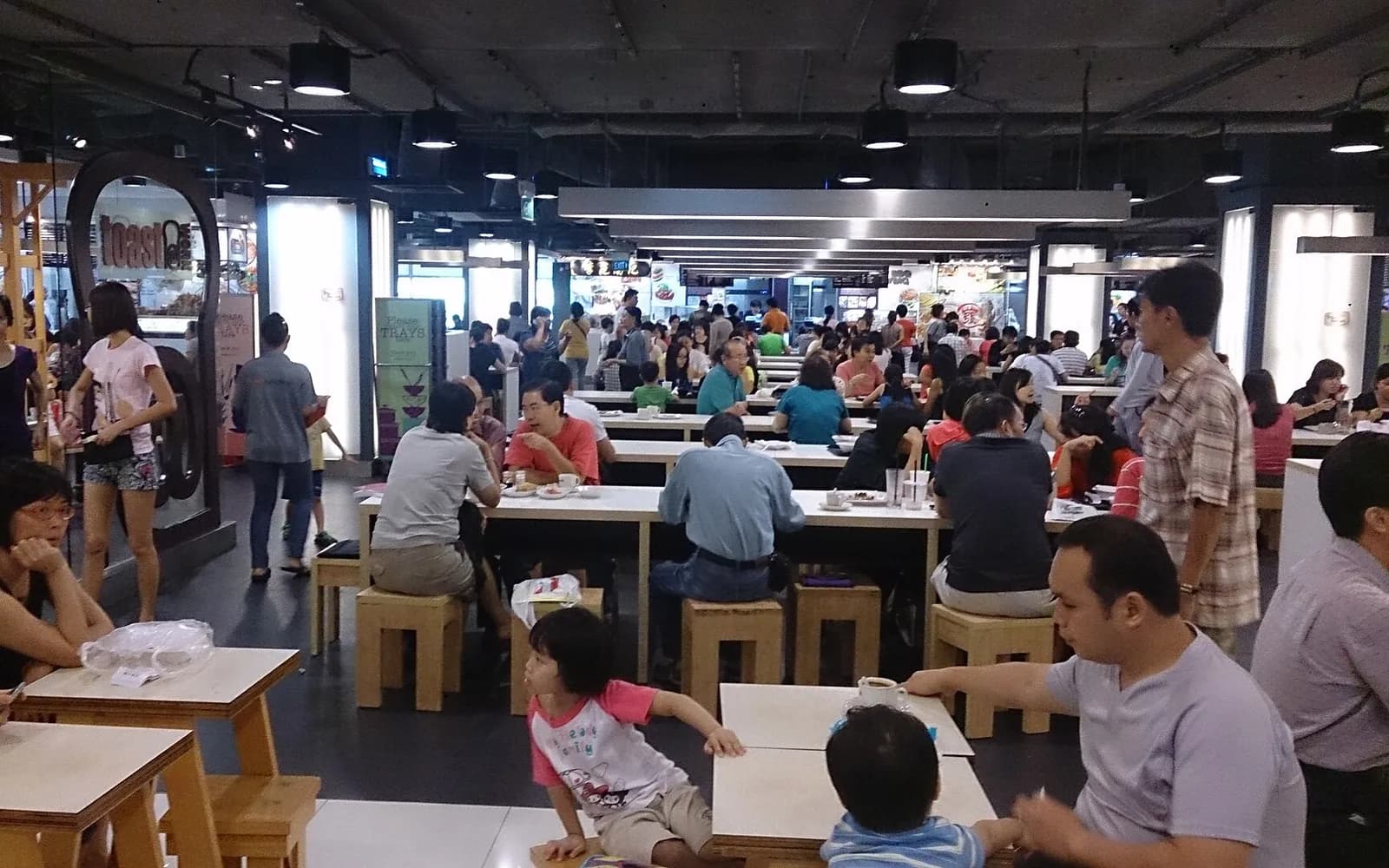
Once you know how to use a Singapore food court, mall meals become quick and cheap. Find a seat, then order and pay at each stall you want. Carry your tray to the table, and return it when you finish.
A food court is an air-conditioned food hall, usually in a mall or the airport, run by one company. Our guide to hawker centre vs food court explains how it differs from a hawker centre.
How to use a Singapore food court: the basics
Stalls line the walls and shared tables fill the middle. Each stall is a separate counter with its own menu, queue and payment. There is usually a drinks stall for coffee, tea and juice. Nobody takes your order at the table.
Most food courts follow the mall's hours, so check opening hours for early or late meals.
Step 1: Find a seat first
At busy times, find a seat before you queue. This matters most around midday and at weekend lunchtimes.
- A packet of tissues or an umbrella on a seat means it is taken. Locals call this chope, which means to reserve.
- Ask "Is anyone sitting here?" before you take a free seat. Sharing tables with strangers is normal.
- In a group, leave one person at the table while the others order.
Step 2: Order at each stall separately
Each stall takes its own orders, so you can buy noodles from one and a drink from another. Many stalls number their dishes on the menu board.
- Say the dish name or number when it is your turn.
- Say if you will eat here or take it away. Takeaway is called da bao locally.
- Ask for any changes now, such as no chilli.
- A noodle stall may ask if you want soup or dry noodles.
At an economy rice stall you point at dishes instead. Our guide on how to order economy rice explains how it works. The drinks stall uses local terms such as kopi-o, which means black coffee with sugar. Read how to order kopi first.
Step 3: Pay at the stall when you order
You pay each stall as you order. There is no bill at the end and no service charge, and tipping is not expected. Most stalls take contactless cards, and many accept QR code payments. A few may be cash only, so carry some small notes.
A main dish often costs roughly S$5 to S$12, depending on the mall and the dish. Prices change, so check the menu board. Food courts cost a little more than hawker centres, but far less than most restaurants.
Step 4: Collect your food
Simple dishes are often handed over on a tray straight away. Dishes cooked to order take longer. Some stalls give you a buzzer that beeps when your food is ready. Others call out the number on your receipt.
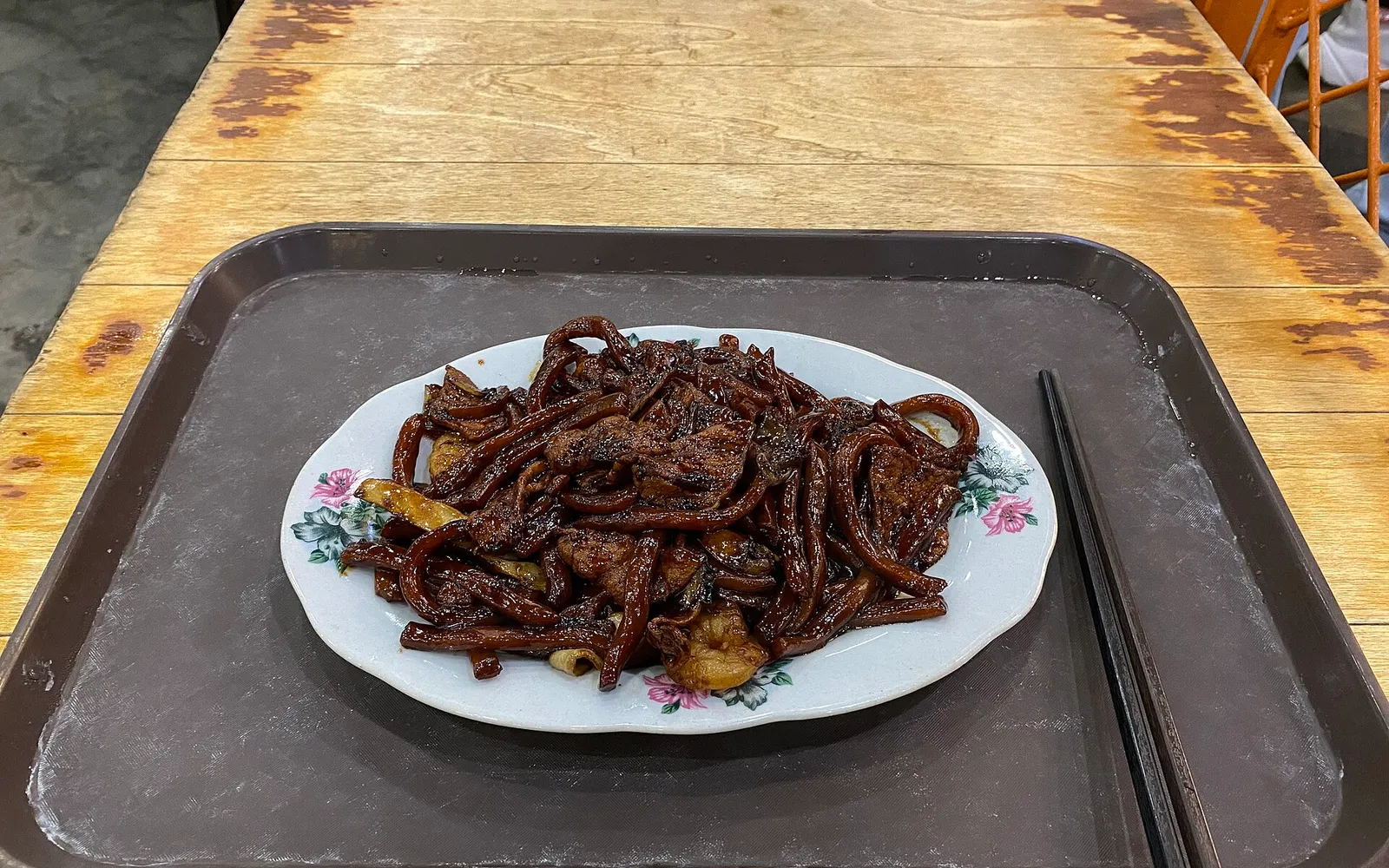
Before you leave the counter, take cutlery from the holder and any chilli or sauce you want. Napkins are not always given out, so carry a packet of tissues.
Step 5: Return your tray and clear the table
When you finish, take your tray, plates and cutlery to a tray return point, and put used tissues in the bin. Singapore's tray return rules cover food courts, hawker centres and coffee shops, and people who keep ignoring them can be fined.
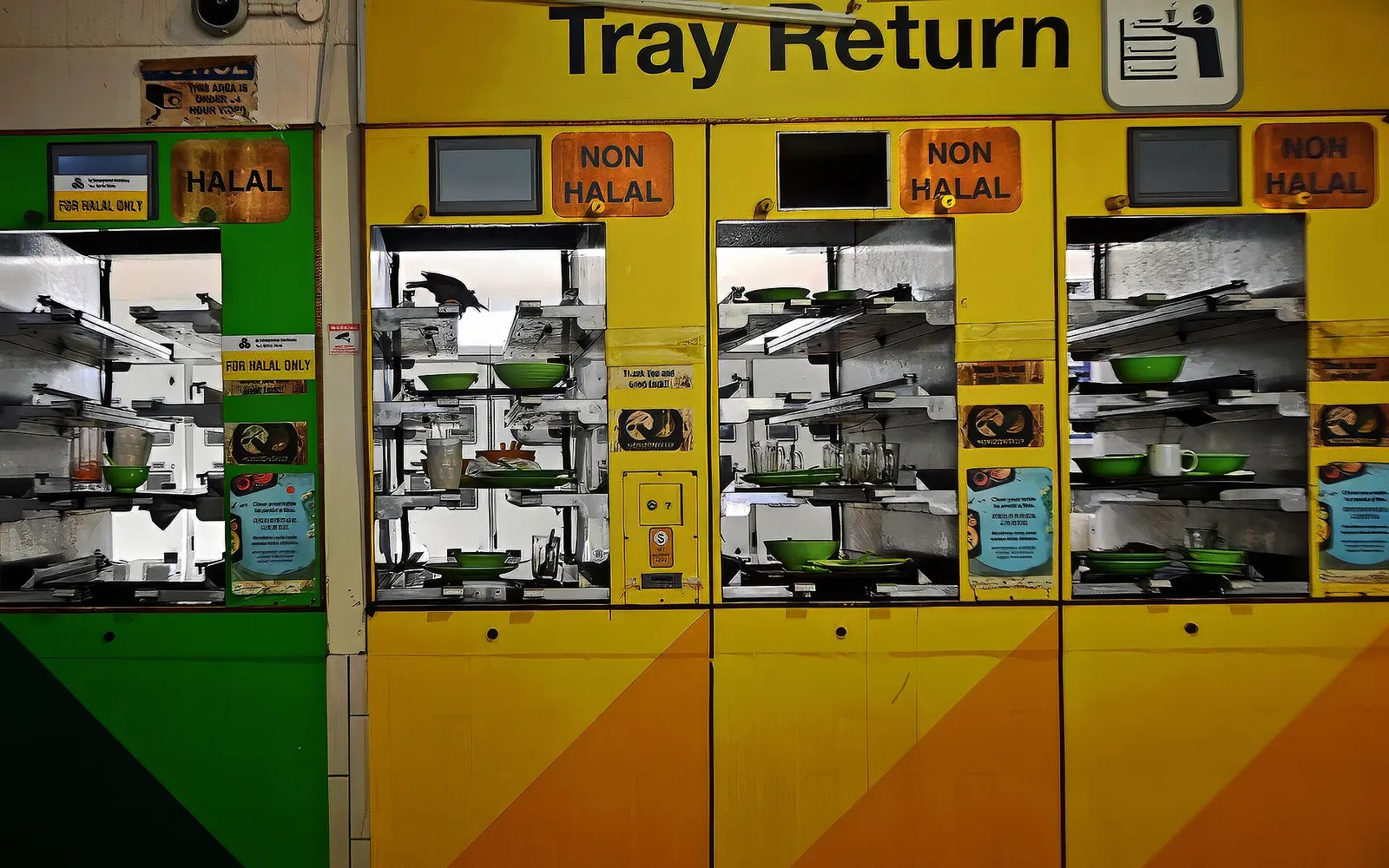
Many food courts have separate tray return points for halal and non-halal food, marked with signs or colours. Halal stalls keep their dishes apart, so return those to the halal point. If you eat halal food, look for the MUIS halal certificate at each stall, as not every stall is certified.
Our hawker centre etiquette rules apply in food courts too.
Food courts you may pass on your trip
Most large malls have a food court. Here are a few that visitors often pass.
- Orchard Road: ION Orchard and Wisma Atria both have food courts. For more, see cheap eats on Orchard Road and our Orchard Road page.
- VivoCity: this HarbourFront mall has a Kopitiam food hall on a basement level. The Sentosa Express monorail starts here, so it suits lunch before a Sentosa Island day out.
- Suntec City: this large mall near Marina Bay has a Food Republic food court.
- Changi Airport: the terminals have food courts, handy before a flight. See more restaurants in Changi and the airport.
Stalls and operators change from time to time, so check the mall directory when you arrive.
FAQs about Singapore food courts
- Do I pay before I eat at a food court?
Yes. You pay each stall when you order, and there is no bill at the end.
- Can I pay by card at a Singapore food court?
Most stalls take contactless cards. A few may be cash only, so carry some small notes.
- Can I sit anywhere in a food court?
Yes. All the stalls share the tables. Just avoid seats with tissues or an umbrella on them.
- Do I have to return my tray?
Yes. Returning your tray and clearing your table is a rule in Singapore food courts, hawker centres and coffee shops.
References
- Mandatory For Diners To Return Dirty Trays, Crockery And Clean Table Litter At Hawker Centres, Coffeeshops And Food Courts, National Environment Agency
- Hawker centre, Wikipedia
- About | Majlis Ugama Islam Singapura, Majlis Ugama Islam Singapura (MUIS)
- Non-halal utensils seen stacked on halal tray return station at Joo Koon's FairPrice Hub, Mothership