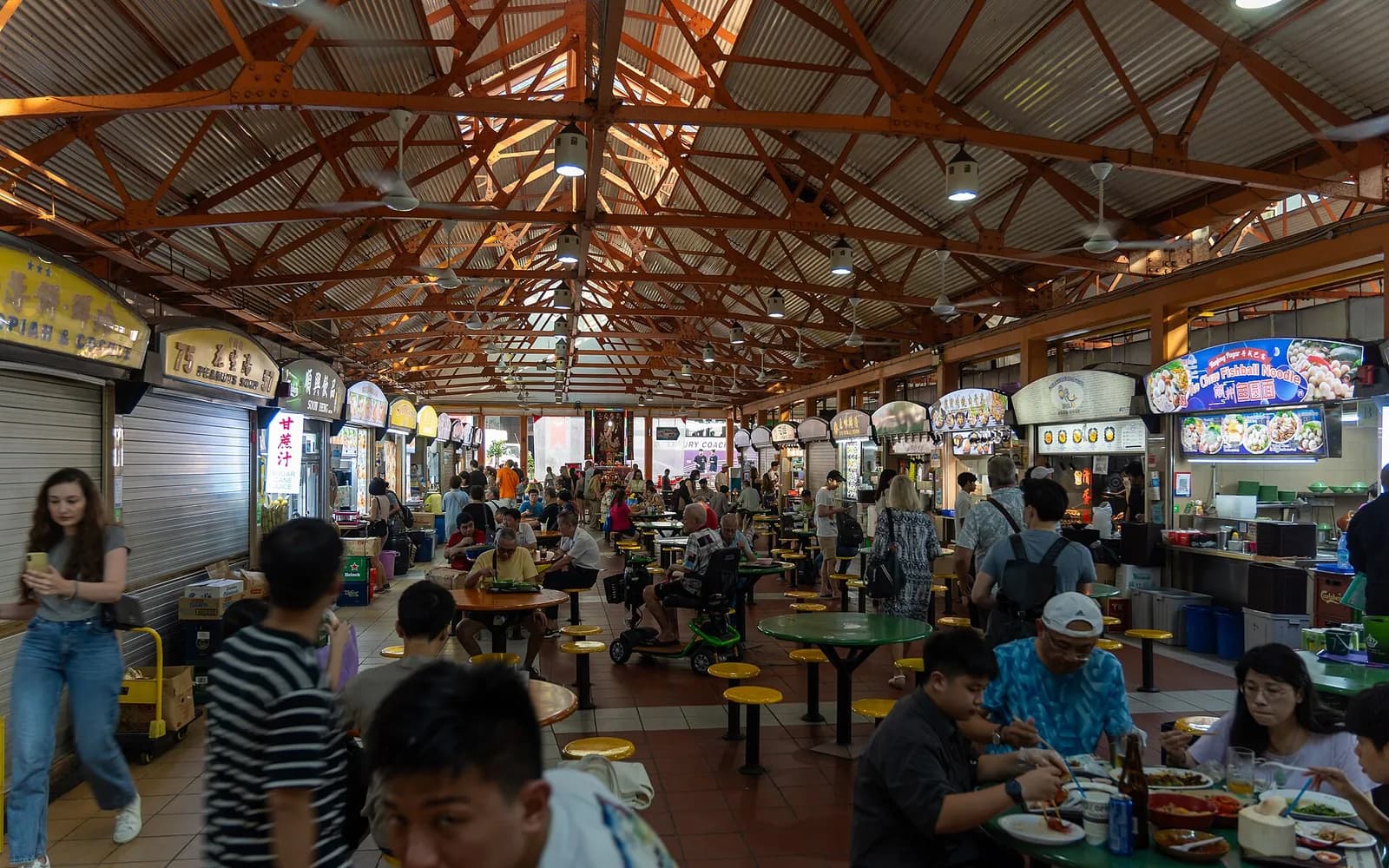


If you want to know how to order economy rice, the short answer is simple. Ask for rice, point at two or three dishes, and pay the price the server tells you. A plate with one meat and two vegetables often costs around S$4 to S$6 at a hawker centre, though prices change.
Economy rice is also called mixed rice or cai png, which means vegetable rice in Hokkien. It is one of the cheapest full meals in Singapore, and a key part of our guide on how to eat cheaply in Singapore. The tricky part is the price, which is rarely written down for each dish.
What an economy rice stall looks like
You will see a glass counter with rows of trays. A busy stall can have 15 to 30 cooked dishes. Expect fried fish, chicken, pork, egg dishes, tofu, curries and leafy greens.
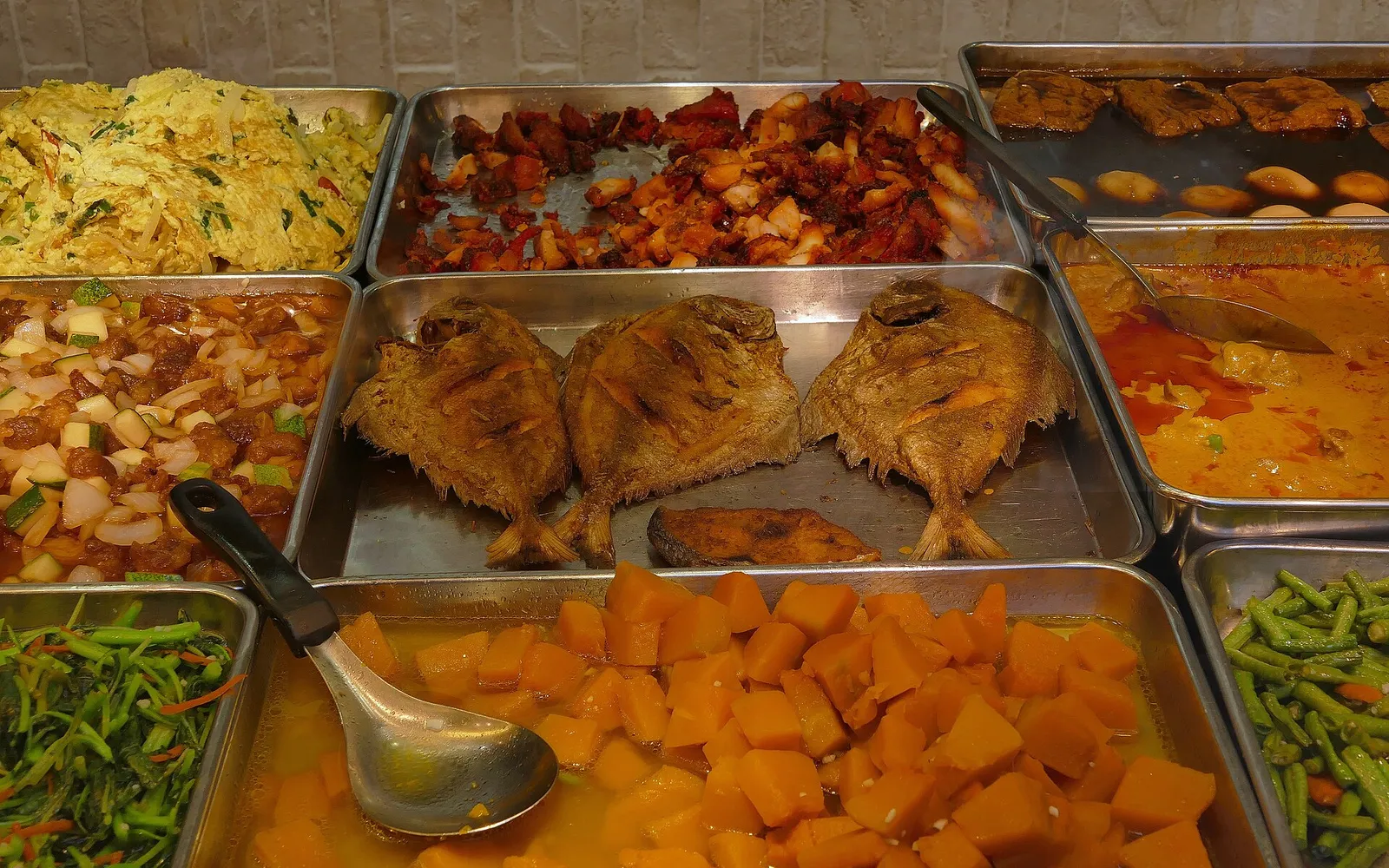
Most stalls serve plain white rice as the base. Some also offer porridge or fried noodles instead. You find these stalls in most hawker centres, coffee shops and food courts. Large centres such as Chinatown Complex Food Centre and Lau Pa Sat usually have at least one.
The dishes are cooked in batches and topped up through the day. Lunch is when the choice is widest.
How to order economy rice step by step
- Look first. Scan the trays while you queue, so you know what you want.
- Choose your base. Say "rice" when it is your turn. The server puts it on a plate or in a box.
- Point at your dishes. Point and say the name if you know it. In most stalls the server does the scooping, so do not use the serving spoons yourself.
- Say dine in or takeaway. Takeaway is called da bao locally. Some stalls charge a little extra for the box.
- Ask for sauce if you like. Many stalls will pour some curry sauce over the rice if you ask.
- Pay. The server adds up the total and tells you the price. Pay by cash or, where offered, by card or QR code.
New to hawker stalls in general? Our guide on how to order at hawker stalls covers queueing and paying in more detail.
How economy rice pricing works
There is usually no menu with a price for each dish. Instead, the server works out the price from two things:
- How many dishes you pick. Each extra dish adds to the total.
- What type of dish it is. Vegetables, tofu and egg dishes cost the least. Chicken, pork and fried fish cost more. Seafood such as prawns or squid usually costs the most.
Some stalls post a simple board, such as one price for rice with one meat and two vegetables. Others do not. Each stall sets its own prices, so the same plate can cost different amounts in different places. Food courts in malls usually charge more than hawker centres and coffee shops.
If you are unsure, ask "how much?" before you add another dish. Servers hear this question all the time, and it saves surprises at the end.
Choices that keep the bill low
A few simple choices make a big difference to the final price.
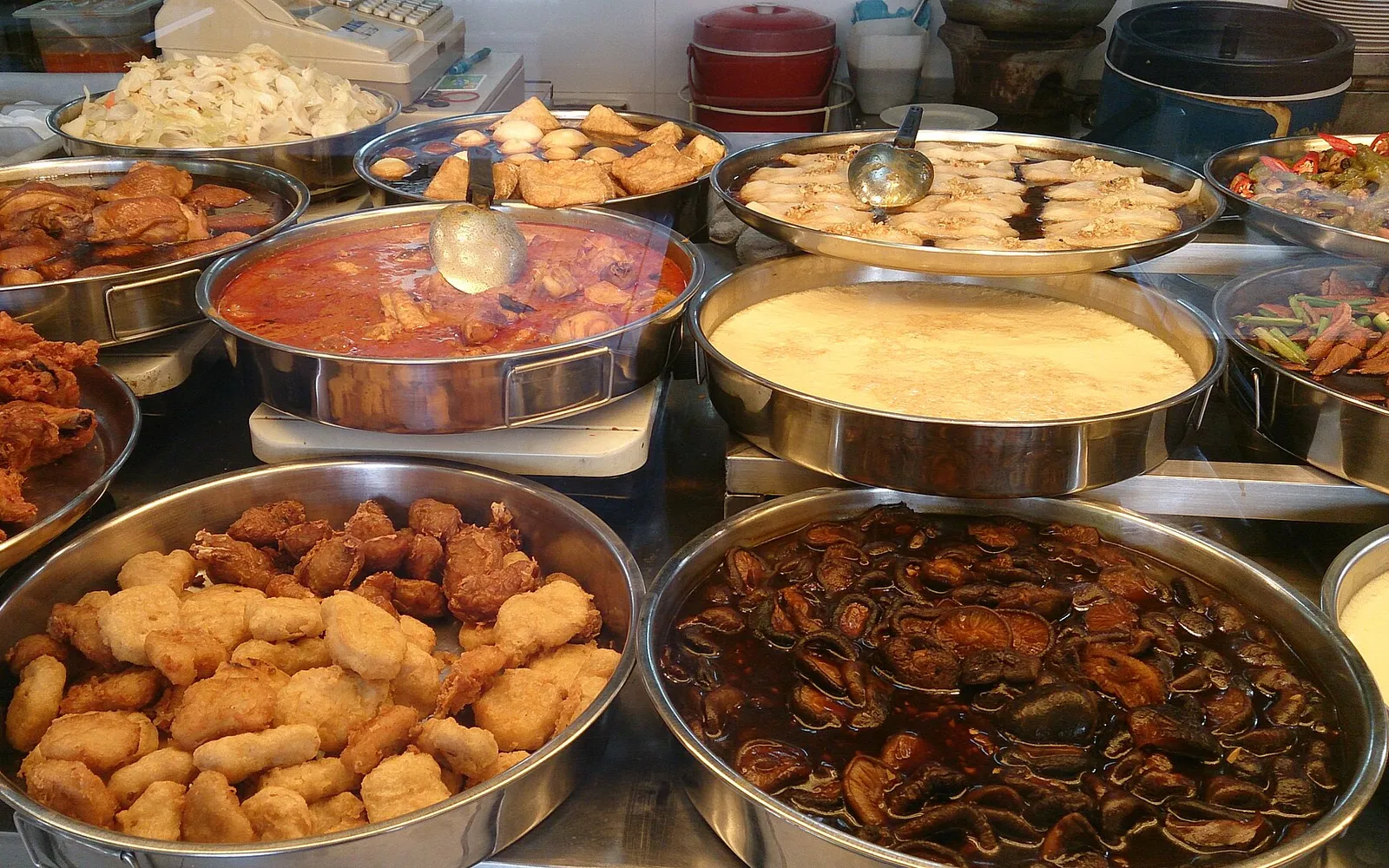
- Pick one meat dish and two vegetable, tofu or egg dishes. This is the standard good-value plate.
- Choose stir-fried or braised dishes over large pieces of fried fish or chicken.
- Skip prawns, squid and other seafood if you are watching costs.
- Use curry sauce for flavour instead of adding a second meat.
- Ask for more rice if you are hungry. It costs far less than another dish.
- Eat in to avoid any takeaway box charge.
For more filling plates on a budget, see our list of cheap meals for big appetites.
Other mixed rice stalls to try
The same pick-and-point idea works at other kinds of stalls too. They are worth trying once you know the system.
Nasi padang
Nasi padang is the Malay and Indonesian version, with rich curries, rendang and sambal dishes. You pay by dish in the same way. Try Warong Nasi Pariaman in the Bugis and Kampong Glam area, or browse more places for nasi padang.
Indian rice and curry stalls
Indian rice stalls serve rice with vegetable curries, dhal and fried fish or chicken. You will find many in Little India, including at Tekka Centre. Find more budget ideas in our Cheap Eats guides.
FAQs about economy rice
Is economy rice the same as mixed rice?
Yes. Economy rice, economic rice, mixed rice and cai png all mean the same thing: rice with your choice of cooked dishes.
Why did my plate cost more than my friend's?
The price depends on the number and type of dishes. Meat, fish and seafood cost more than vegetables, tofu and eggs.
Are there vegetarian options at economy rice stalls?
Most stalls have several vegetable, tofu and egg dishes. Some are cooked with meat stock or dried shrimp, so ask if you are strict.
Can I get economy rice to take away?
Yes. Say "takeaway" or da bao, and the food goes into a box. Some stalls charge a small fee for the box.