
Most of the best things to do in Chinatown are free and close together. You can visit three major places of worship, browse the market lanes and eat at well-known hawker centres, all on foot. Half a day covers the main sights.
Chinatown MRT station, on the North East and Downtown lines, puts you in the middle of it all. One exit opens straight onto Pagoda Street.
Things to do in Chinatown: the main temples
Three places of worship stand within a short walk of each other. Each is free to enter and still used for daily prayer. Cover your shoulders and knees, and follow the signs inside.
Buddha Tooth Relic Temple
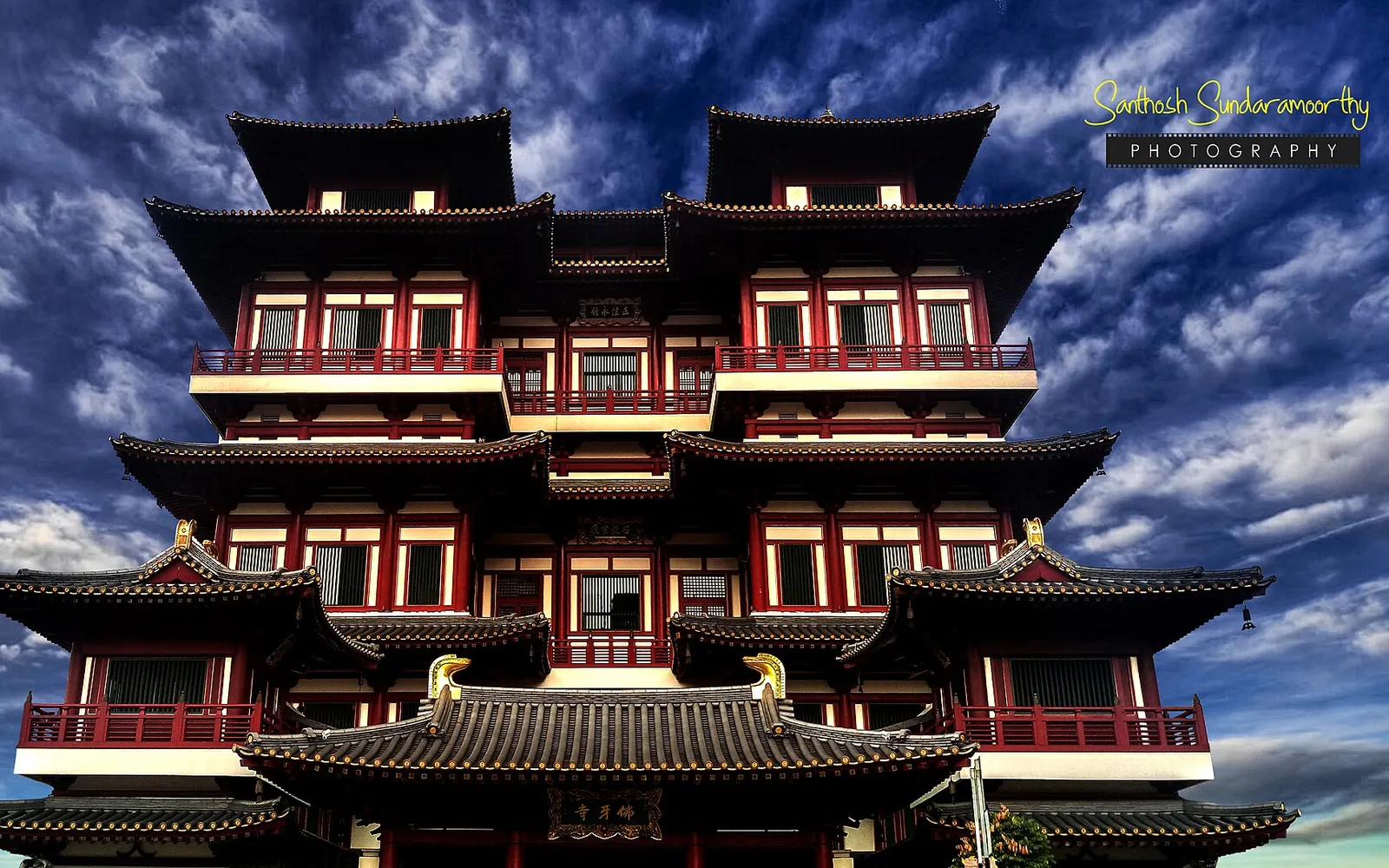
The Buddha Tooth Relic Temple on South Bridge Road is a large red temple in the Tang dynasty style. Inside are prayer halls, a museum of Buddhist art and a rooftop garden with a big prayer wheel. The roof garden sometimes closes for works, so check before you go. Keep your voice low, and do not photograph people while they pray.
Sri Mariamman Temple
A few minutes along the same road, Sri Mariamman Temple is Singapore's oldest Hindu temple. Its tall gateway tower, called a gopuram, is covered in painted statues of gods. Remove your shoes before you go in, then look up at the painted ceilings.
Thian Hock Keng Temple
On Telok Ayer Street, Thian Hock Keng Temple is one of the oldest Chinese temples in Singapore. It honours Mazu, goddess of the sea, to whom early migrants gave thanks for a safe voyage. Look for carved dragons on the roof ridge.
Pagoda Street and the market lanes
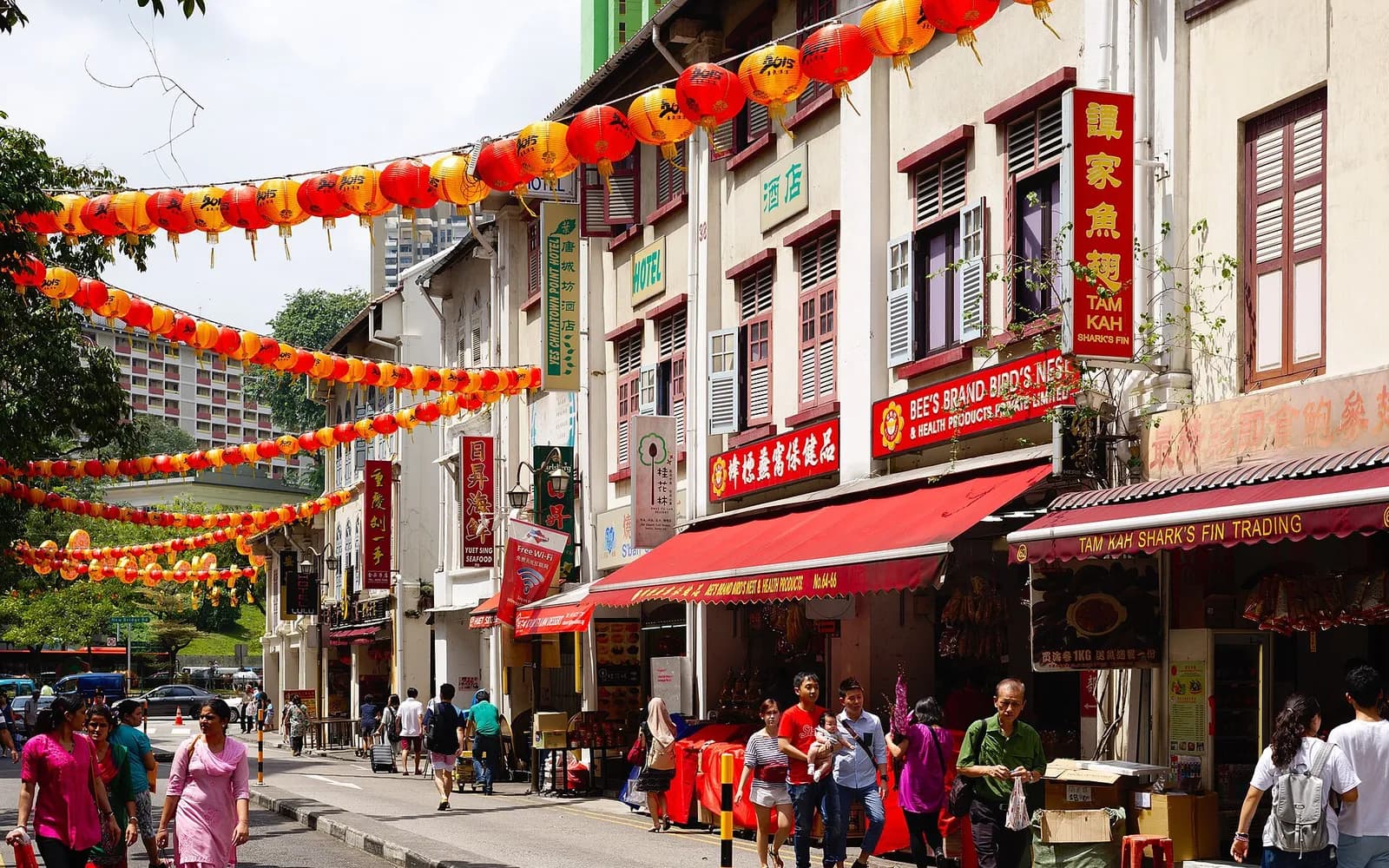
Pagoda Street, Trengganu Street, Temple Street and Smith Street form the Chinatown street market. Shophouse fronts are hung with red lanterns, and stalls spill onto the covered walkways.
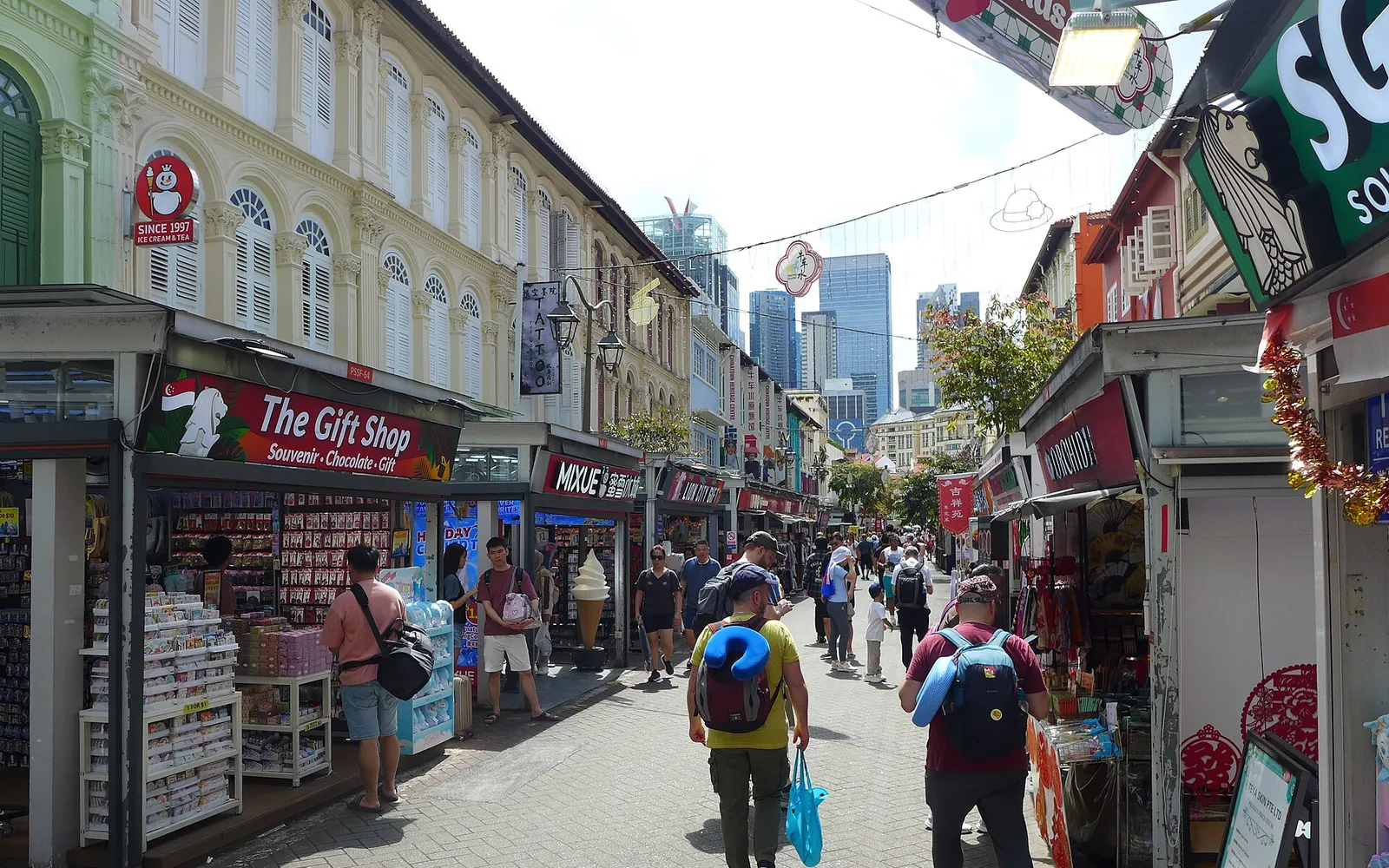
- Souvenirs: magnets, chopsticks, fans, silk purses and small gifts.
- Tea and dried goods: loose tea, dried mushrooms and Chinese herbs.
- Snacks: egg tarts, mooncakes in season and bak kwa, a sweet grilled dried meat.
The Chinatown Heritage Centre on Pagoda Street shows how early migrants lived in cramped shophouse rooms. It charges for entry, so check that it is open before you go. For the history behind the streets, follow our Chinatown Heritage Walk.
Shophouses and quieter streets
Shophouses are narrow buildings with a shop below and a home above. Many here have been restored with bright paint and wooden shutters. The covered walkway in front, called a five-foot way, gives shade from sun and rain.
For quieter streets, walk uphill to Ann Siang Hill and Club Street, where restored rows hold small shops and cafés. Keong Saik Road, a short walk away, has more shophouse restaurants. Our guide to things to do in Tanjong Pagar and Keong Saik covers that side.
For a free, air-conditioned break, visit the Singapore City Gallery on Maxwell Road. Its large model of the city centre shows how Singapore is planned.
Hawker centres and local food
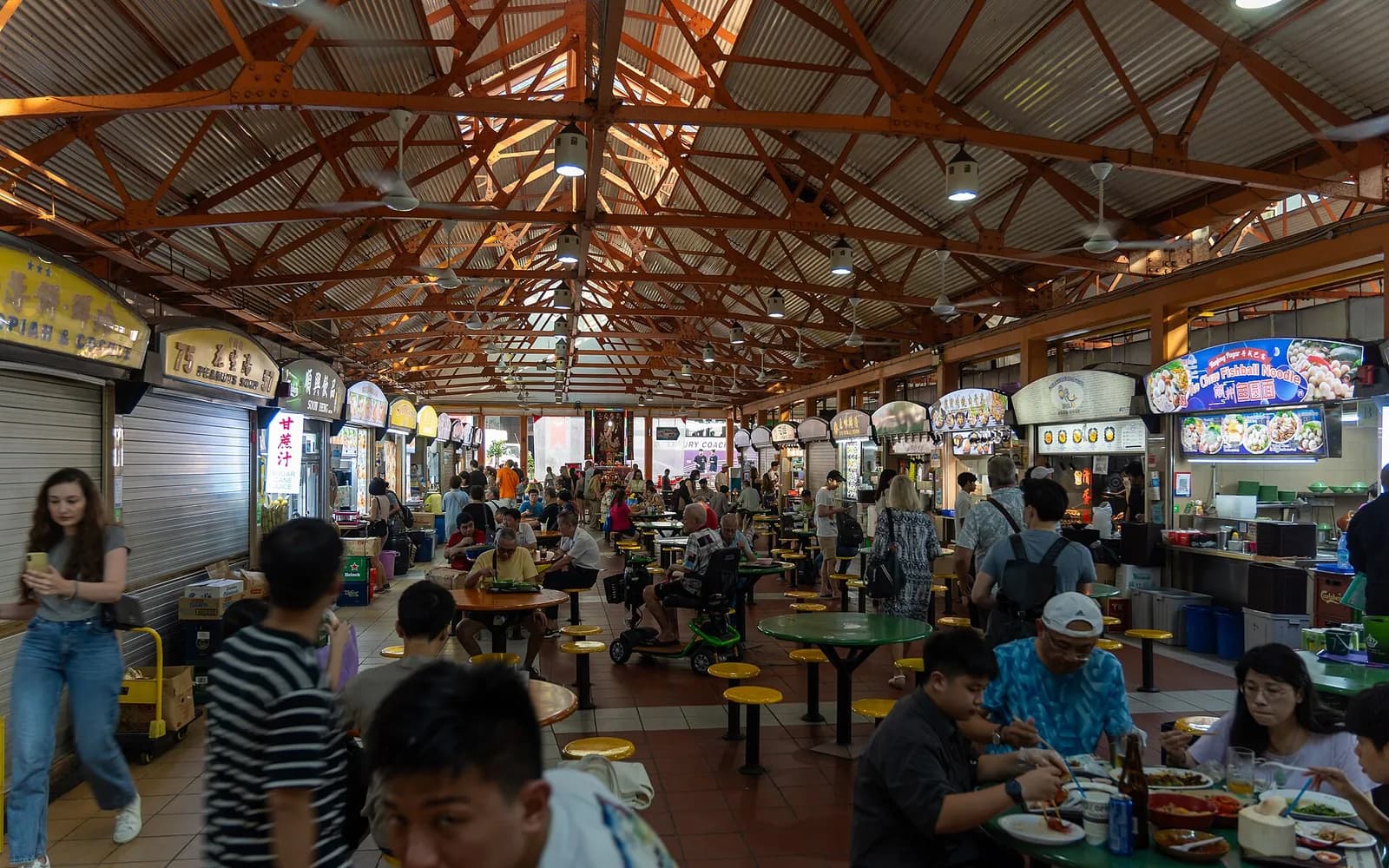
Chinatown has several large hawker centres. These are open-sided food halls with many small stalls, and you pay each stall when you order.
- Maxwell Food Centre: across the road from the Buddha Tooth Relic Temple. It is home to Tian Tian Hainanese Chicken Rice, which often has a lunch queue.
- Chinatown Complex Food Centre: on Smith Street, upstairs from a wet market. Its hundreds of stalls sell roast meats, noodles and dumplings.
- Hong Lim Market & Food Centre: on Upper Cross Street, known for its noodle stalls.
For something sweet, Tong Heng on South Bridge Road sells traditional Cantonese pastries such as egg tarts. To eat your way around the area, follow our Chinatown cheap eats crawl. Read hawker centre etiquette first, so you know how seats and trays work.
Festive light-ups and busy times
Chinatown is at its most colourful in the weeks before Chinese New Year. Lanterns and large figures of the zodiac animal light up the main roads. A street bazaar sells festive snacks, flowers and decorations, and evenings get very crowded.
Some stalls close over the holiday itself, so check what is open during Chinese New Year. Lanterns go up again for the Mid-Autumn Festival, when shops sell mooncakes.
Getting there and how long to stay
- Chinatown MRT: North East and Downtown lines, beside Pagoda Street.
- Maxwell MRT: Thomson-East Coast Line, next to the Buddha Tooth Relic Temple.
- Telok Ayer MRT: Downtown Line, close to Thian Hock Keng Temple.
Allow three to four hours for the temples, the market lanes and one meal. Add an hour or two for a museum or the quieter streets.
Want to stay close by? A Hotel Chinatown is a boutique hotel on Keong Saik Road, or browse all hotels in Chinatown and Tanjong Pagar. More area guides are on our Chinatown page.
FAQs about Chinatown
- Is it free to visit the temples in Chinatown?
Yes. The Buddha Tooth Relic Temple, Sri Mariamman Temple and Thian Hock Keng Temple are free to enter.
- What should I wear to Chinatown temples?
Cover your shoulders and knees. Some temples lend shawls at the door. At the Hindu temple, you must remove your shoes.
- Is Chinatown worth visiting at night?
Yes. The lanterns are lit and the restaurants stay busy. Some stalls and temples close in the evening, so check opening hours.
References
- Buddha Tooth Relic Temple & Museum in Singapore, Visit Singapore
- Sri Mariamman Temple, National Heritage Board (Roots.gov.sg)
- Thian Hock Keng, National Heritage Board (Roots.gov.sg)
- Chinatown Complex Market and Food Centre, National Heritage Board (Roots.gov.sg)
- Singapore City Gallery, Urban Redevelopment Authority